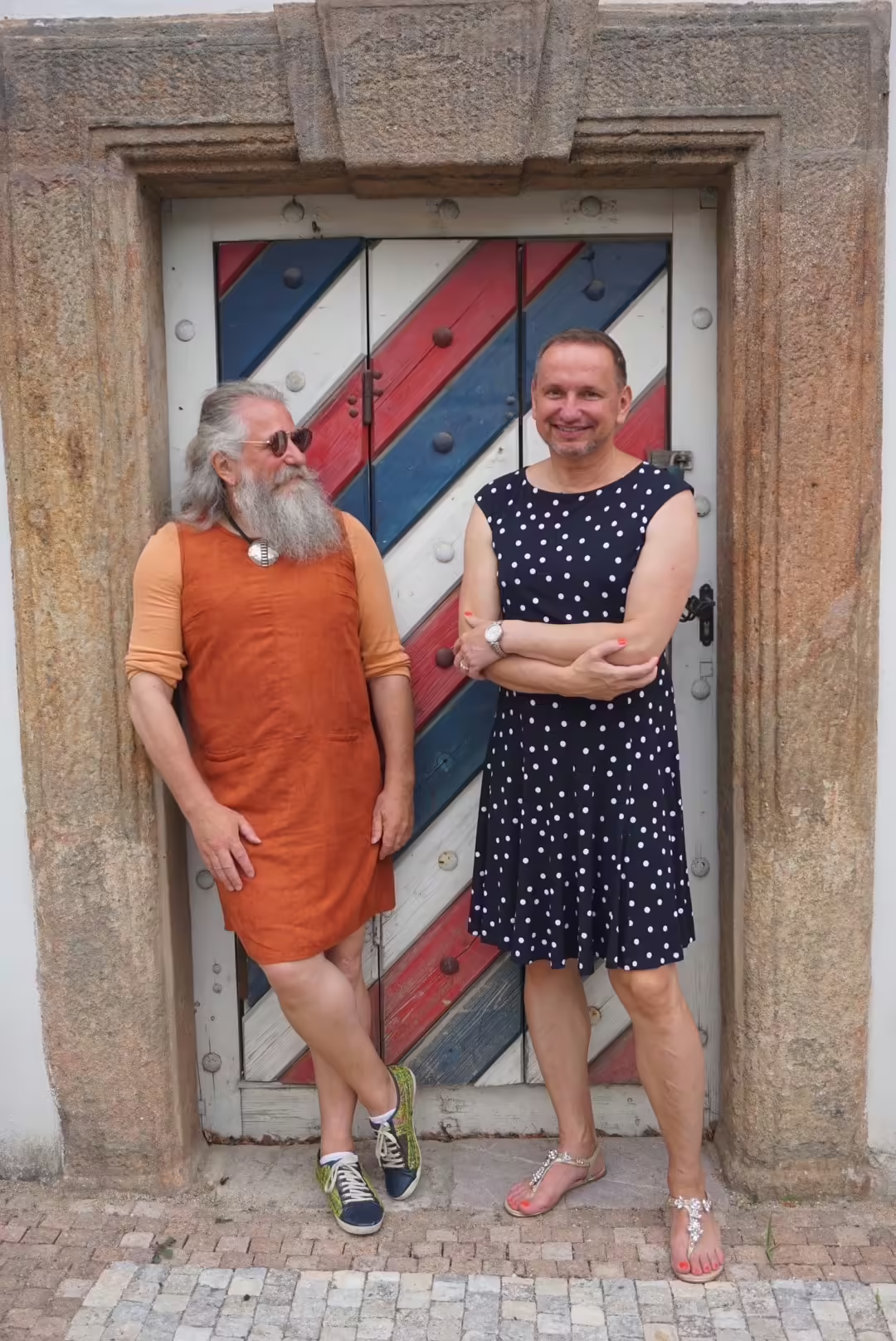
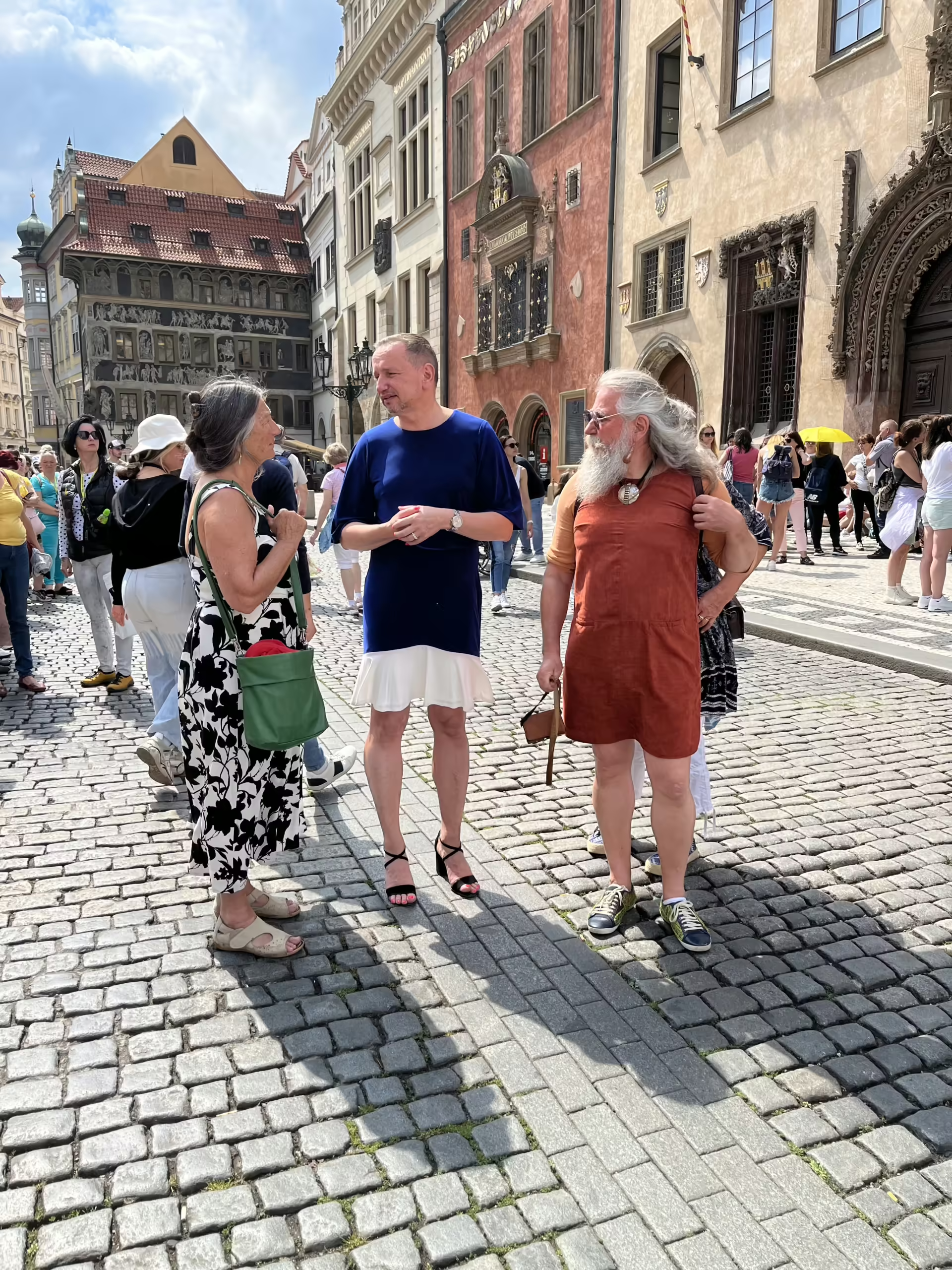
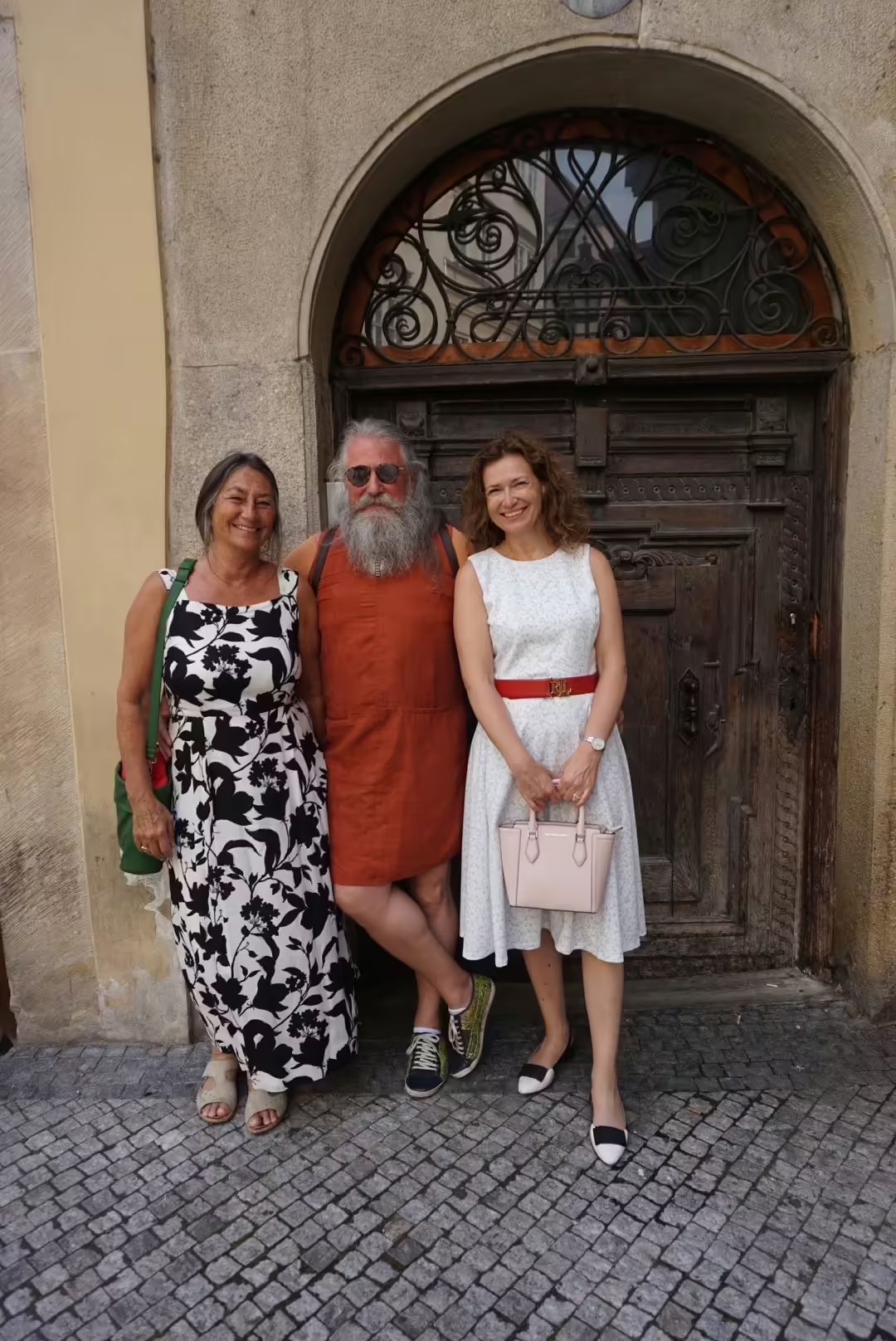
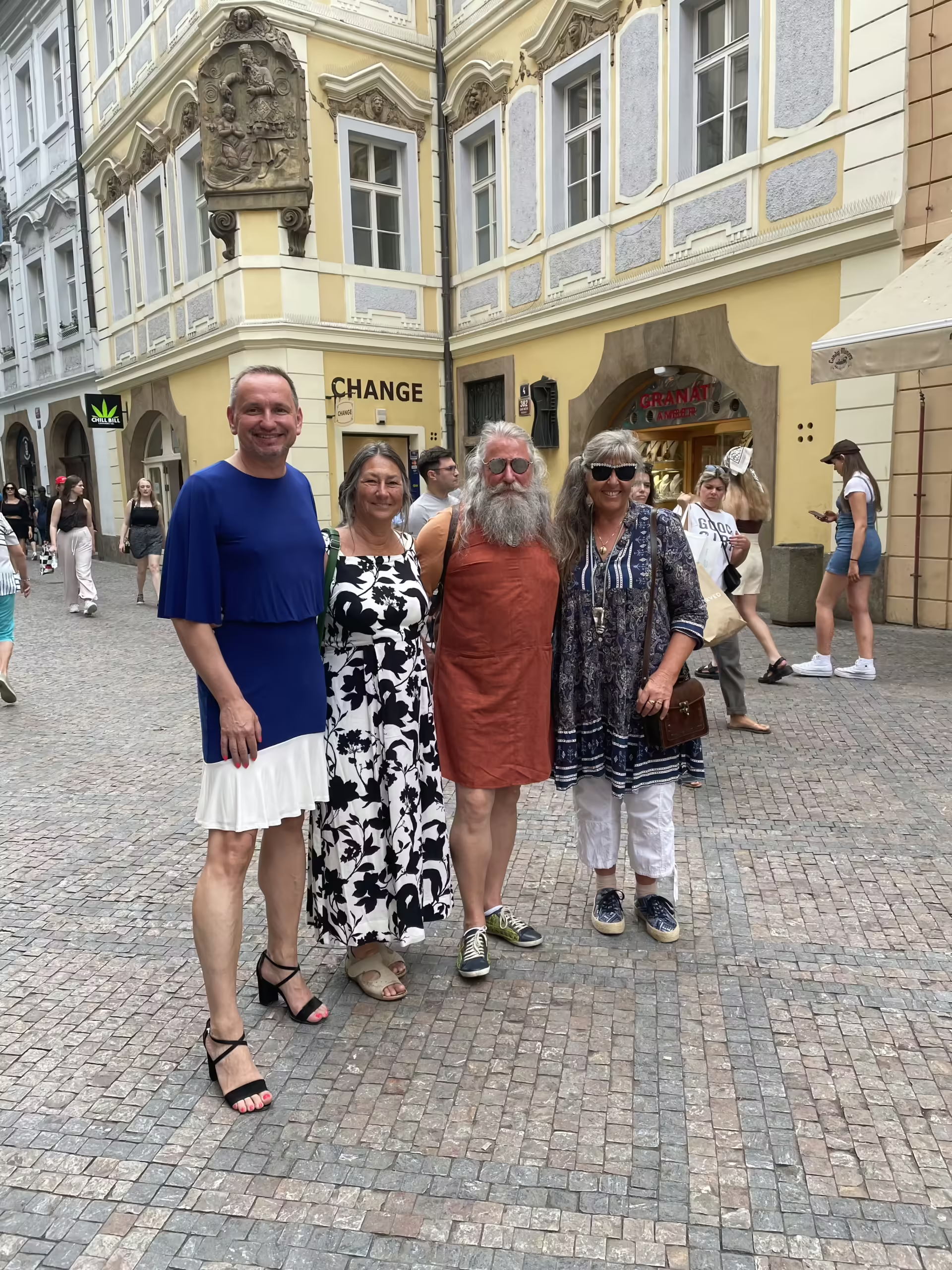
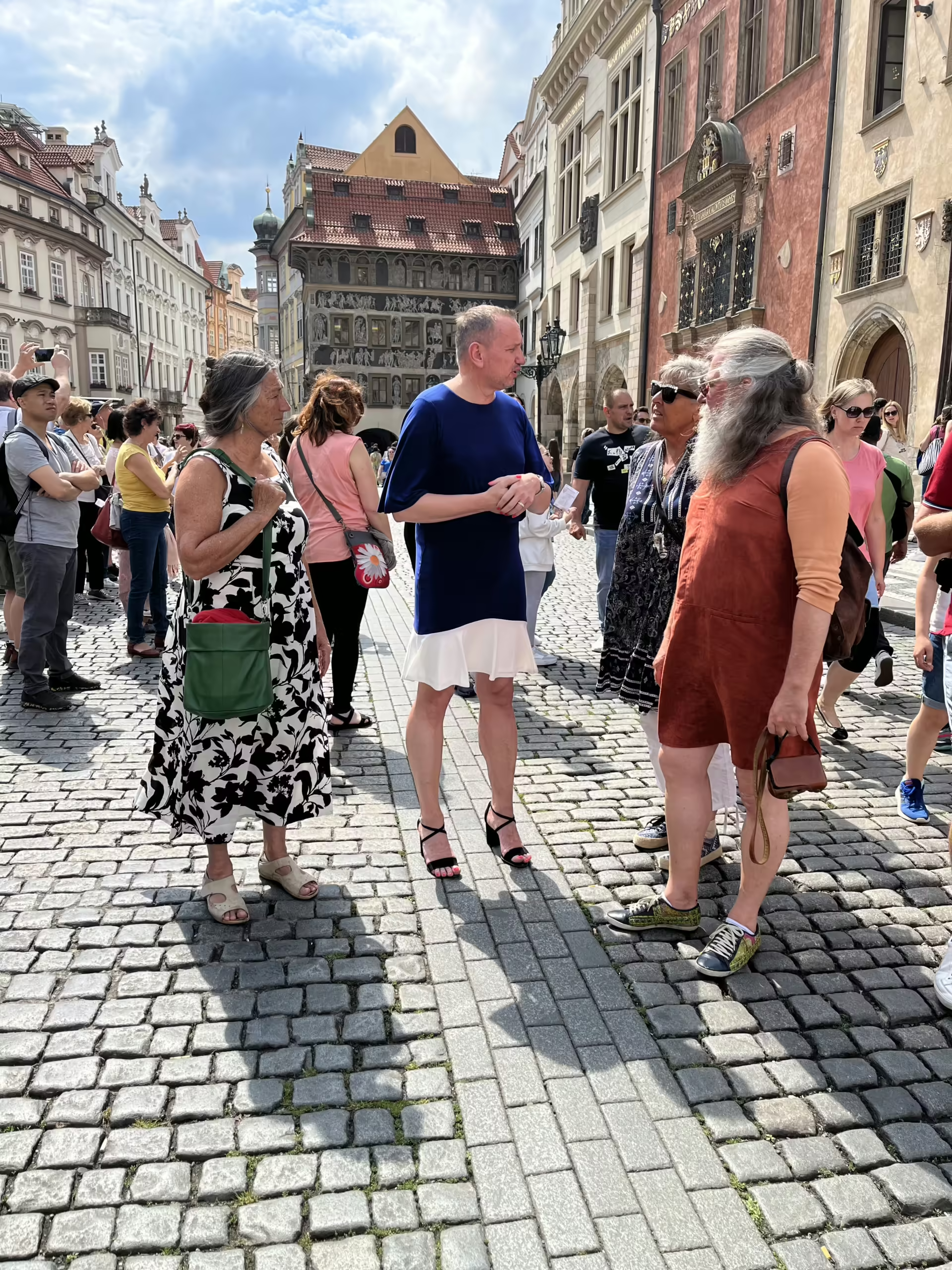
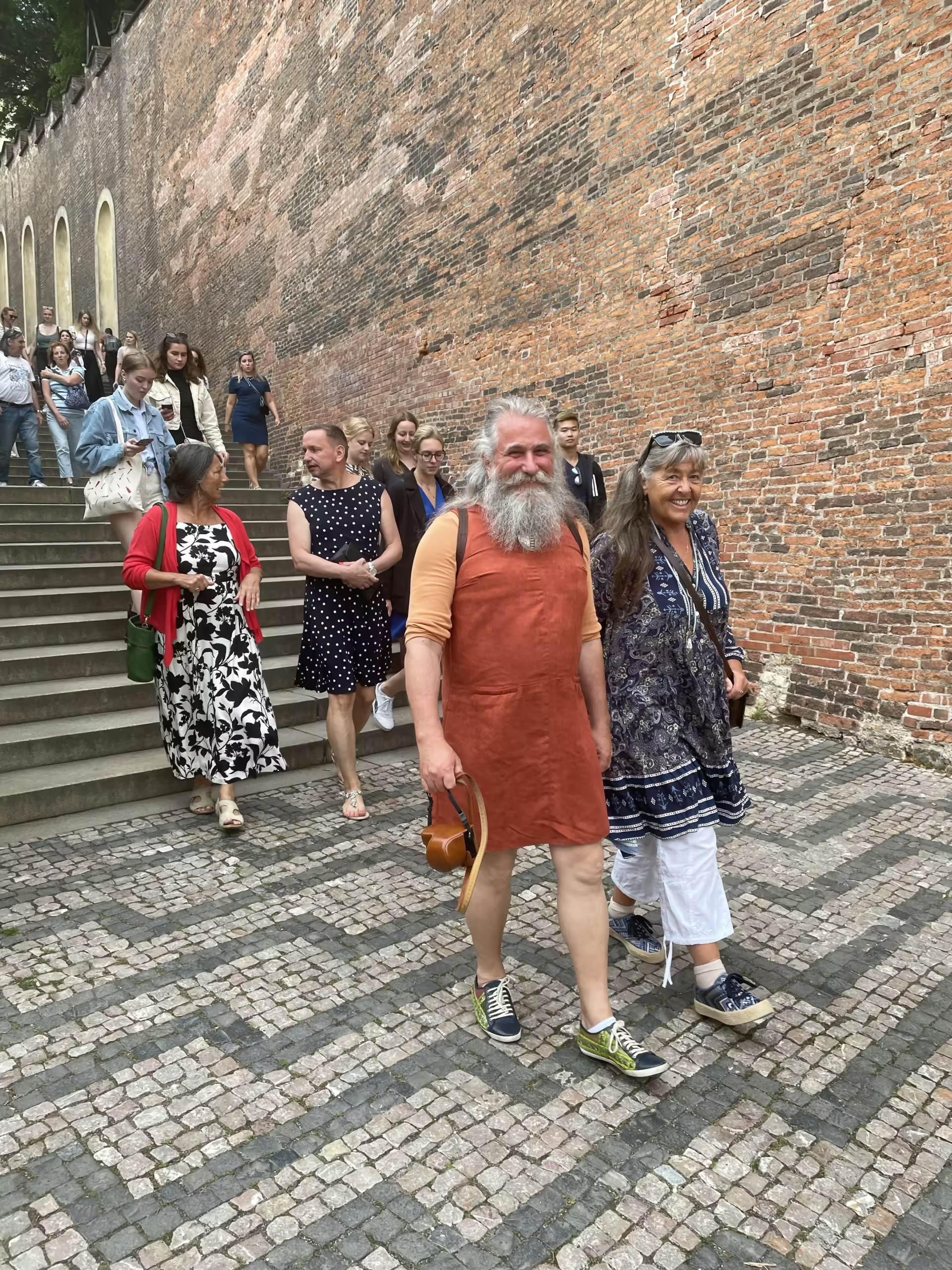
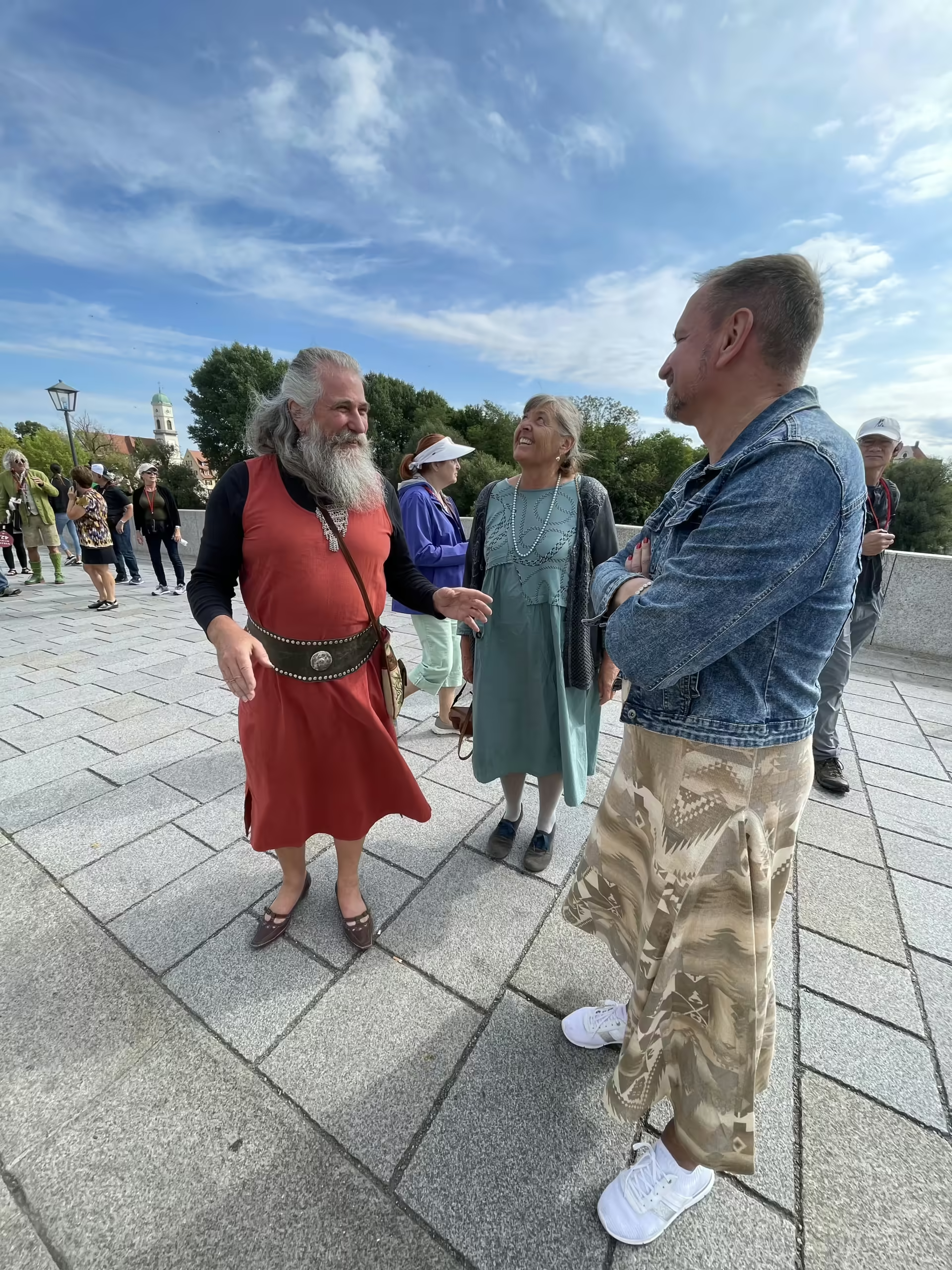
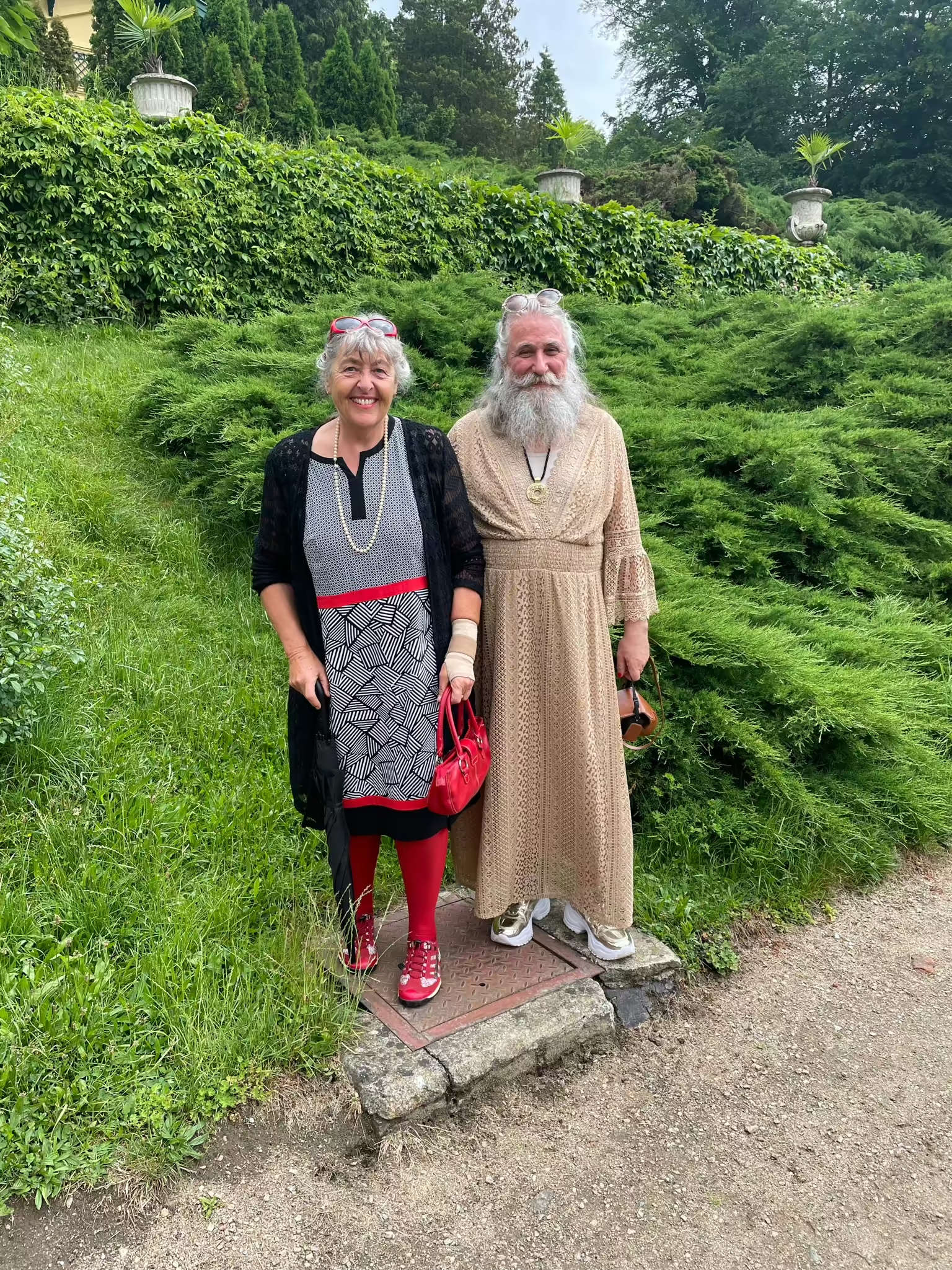
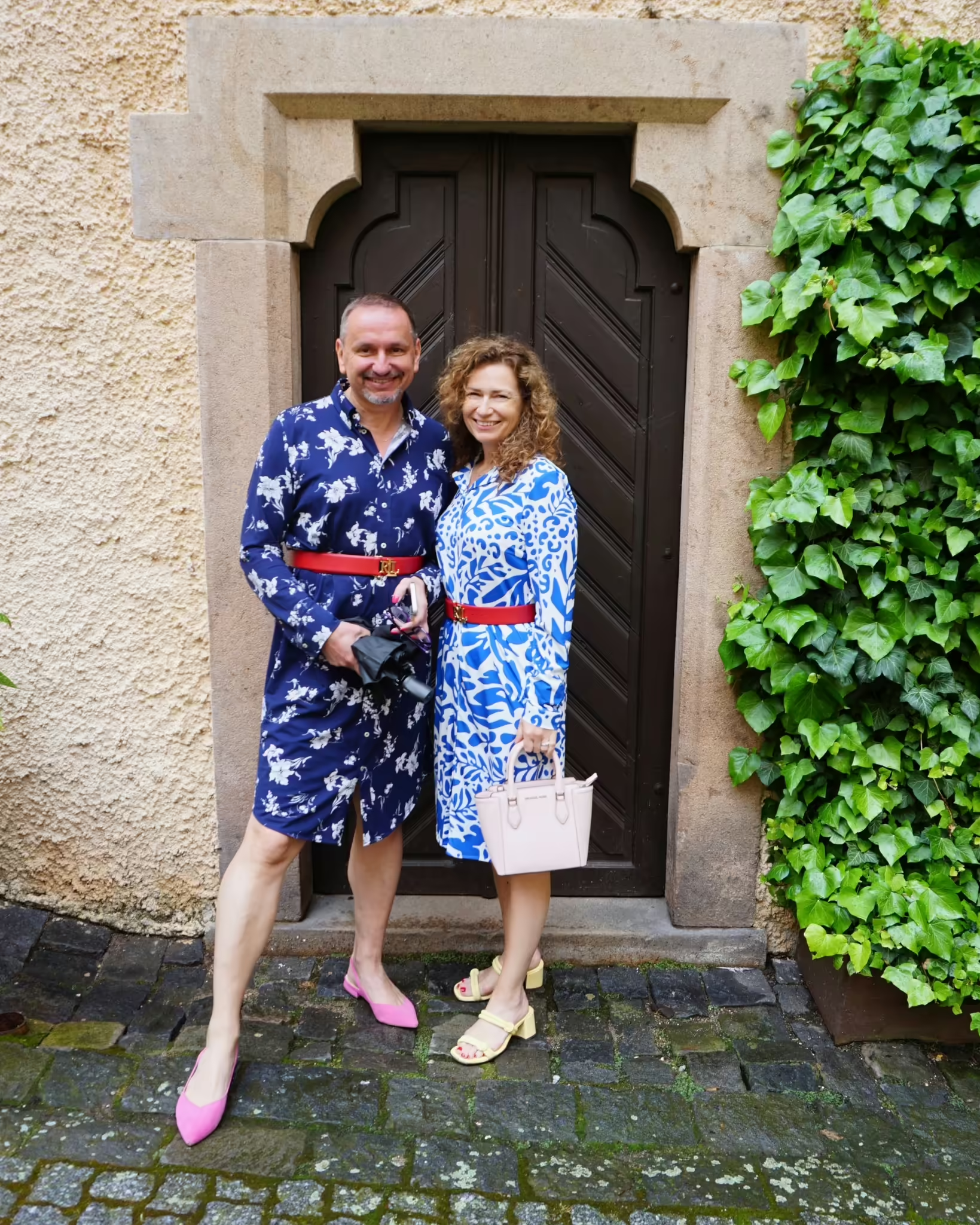
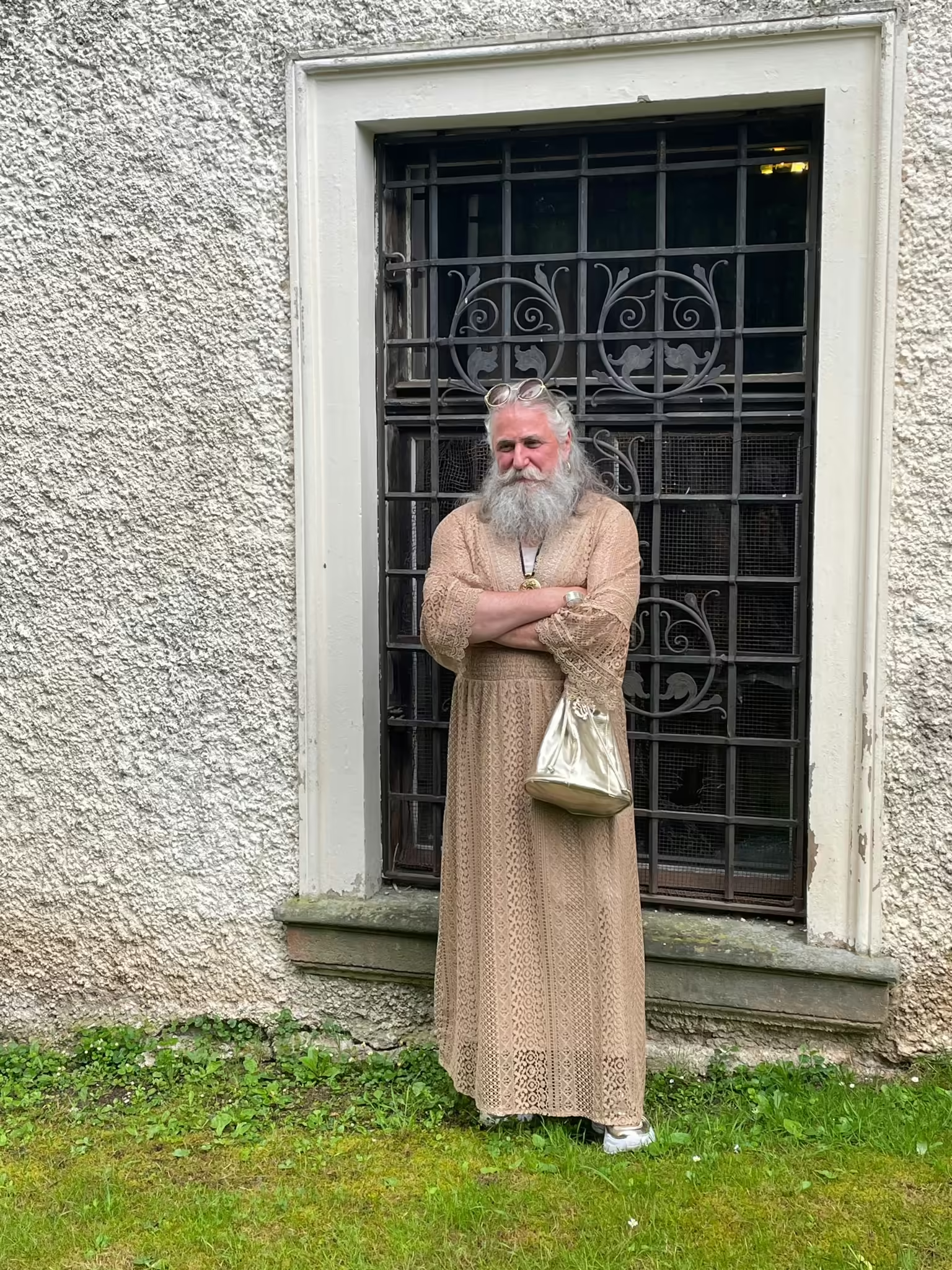
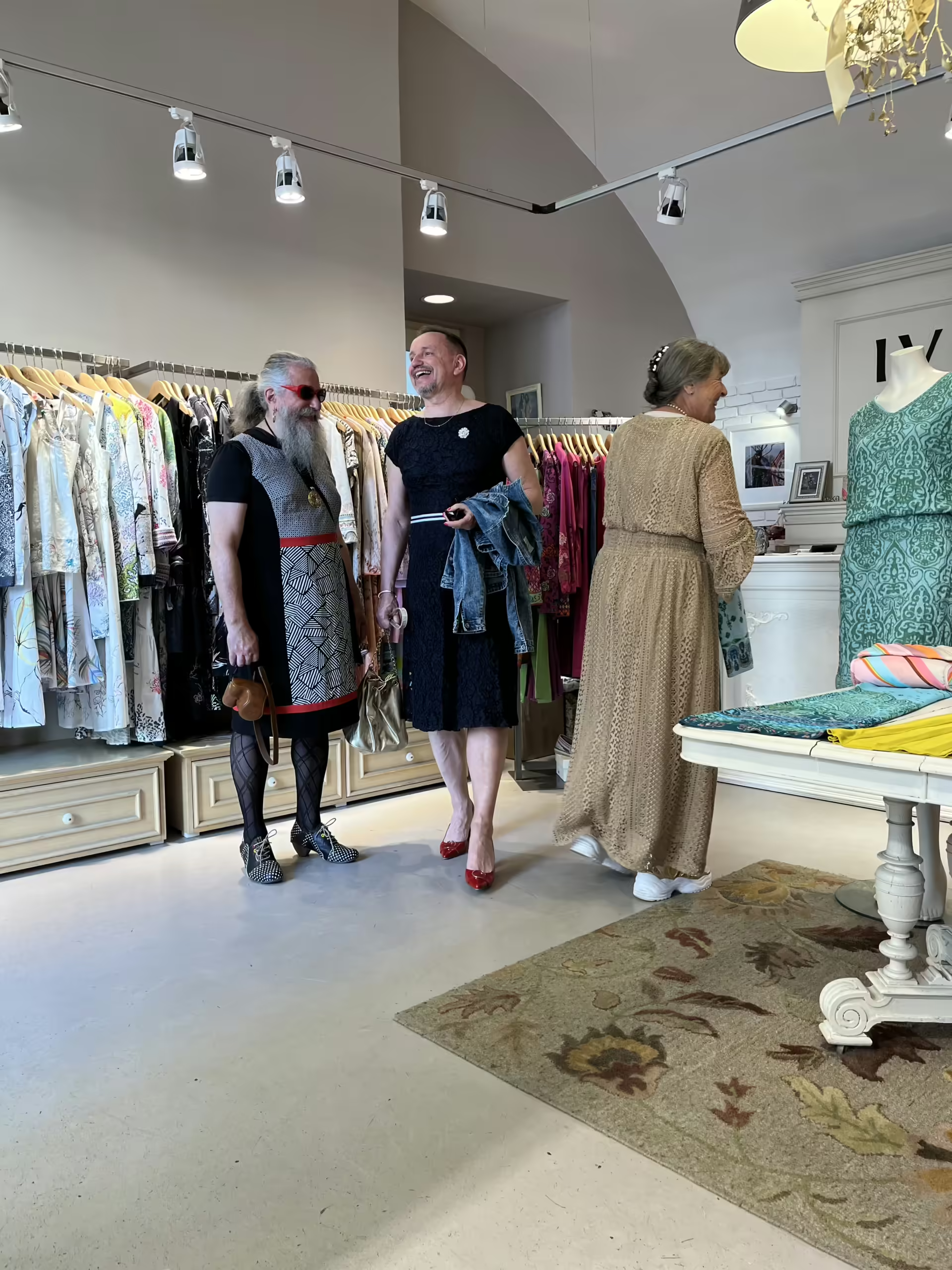
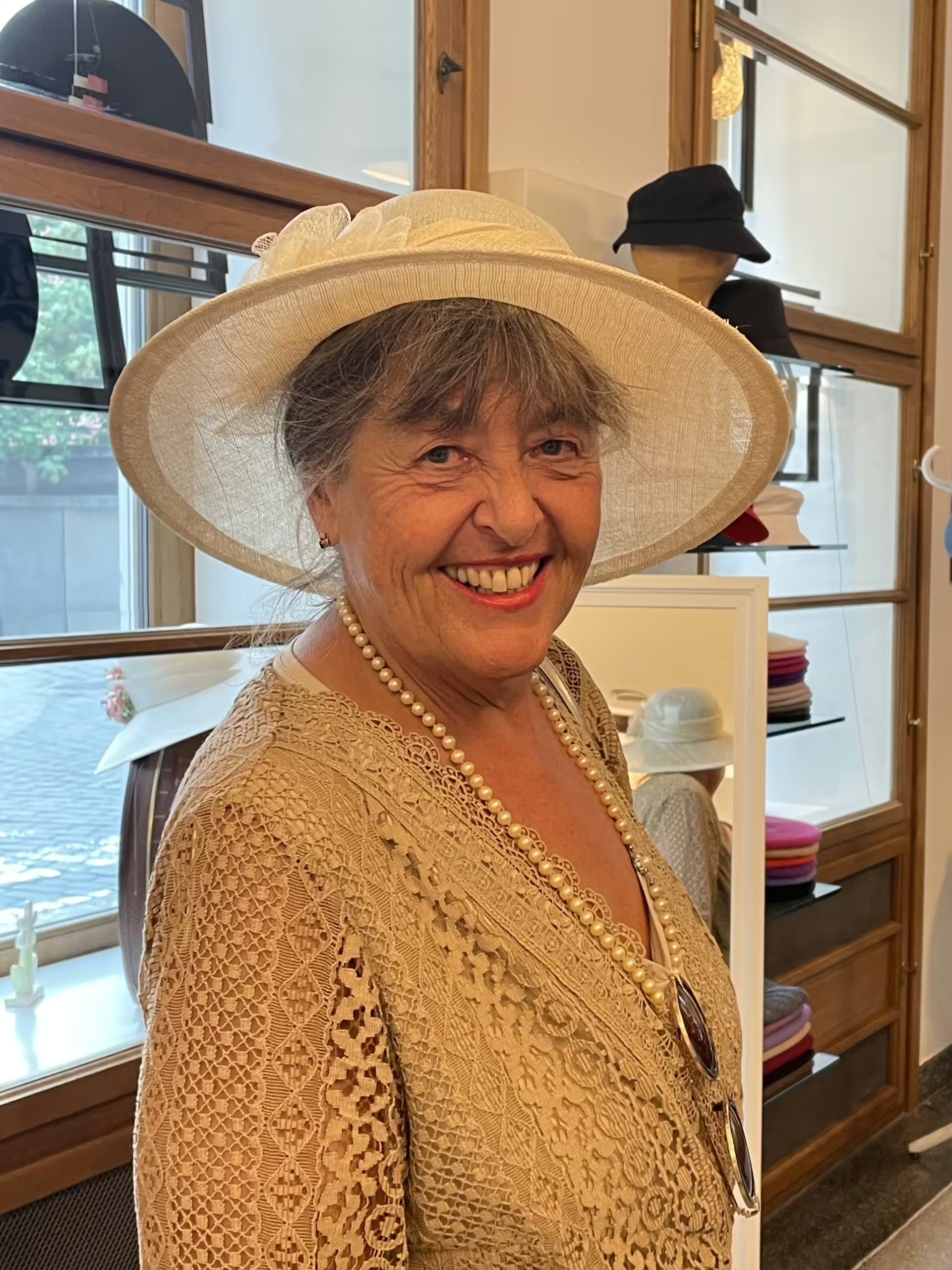
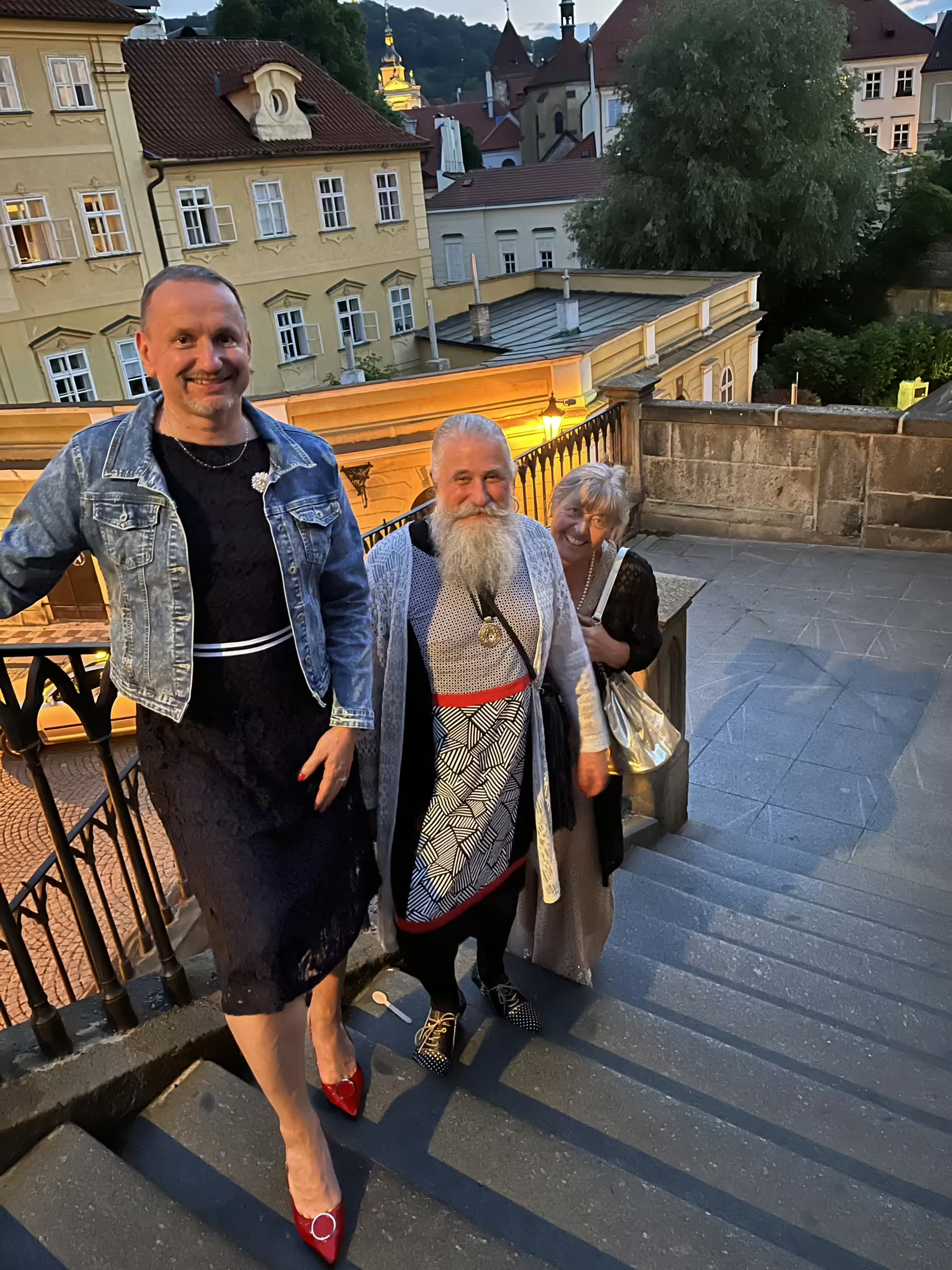
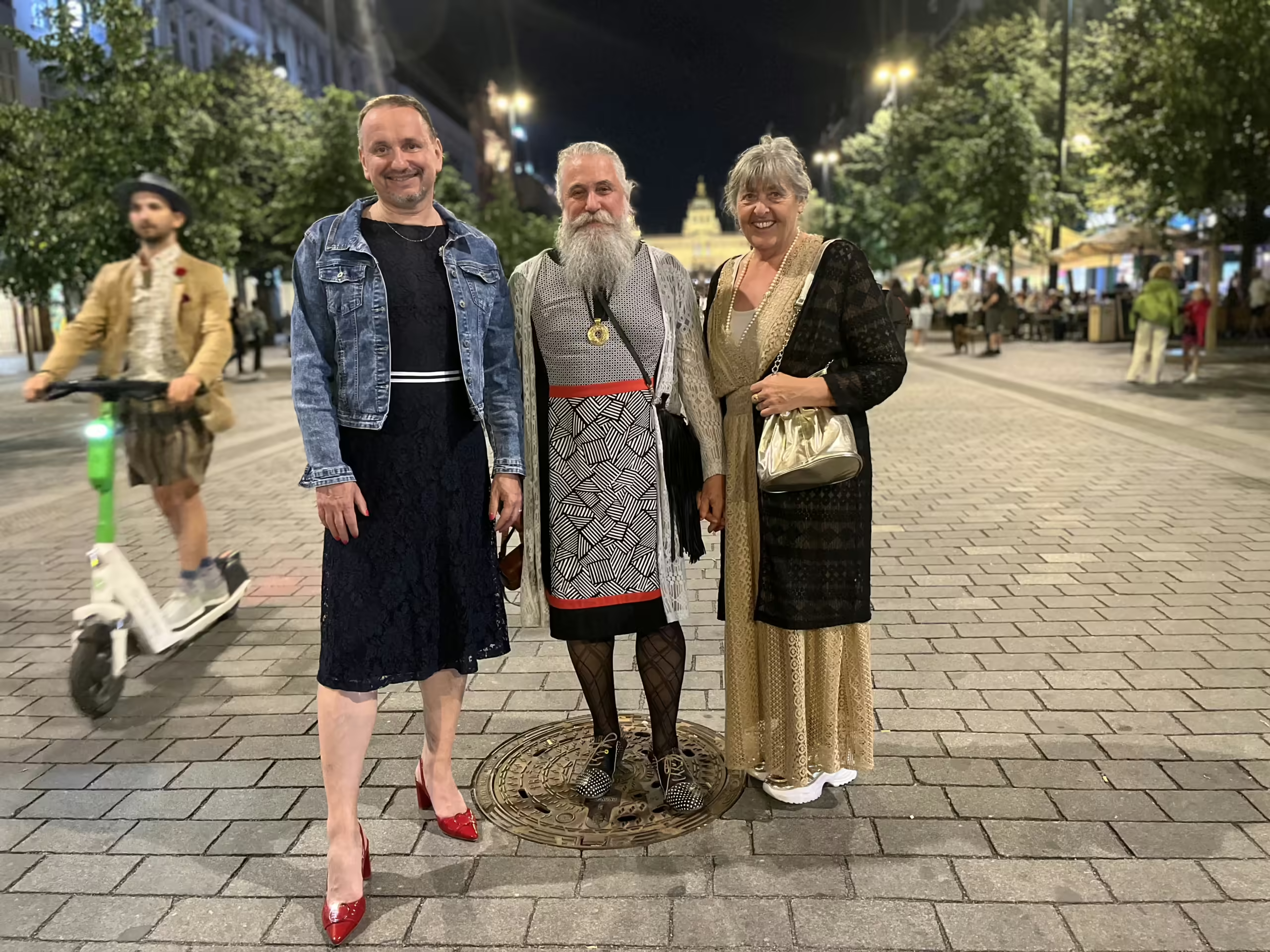
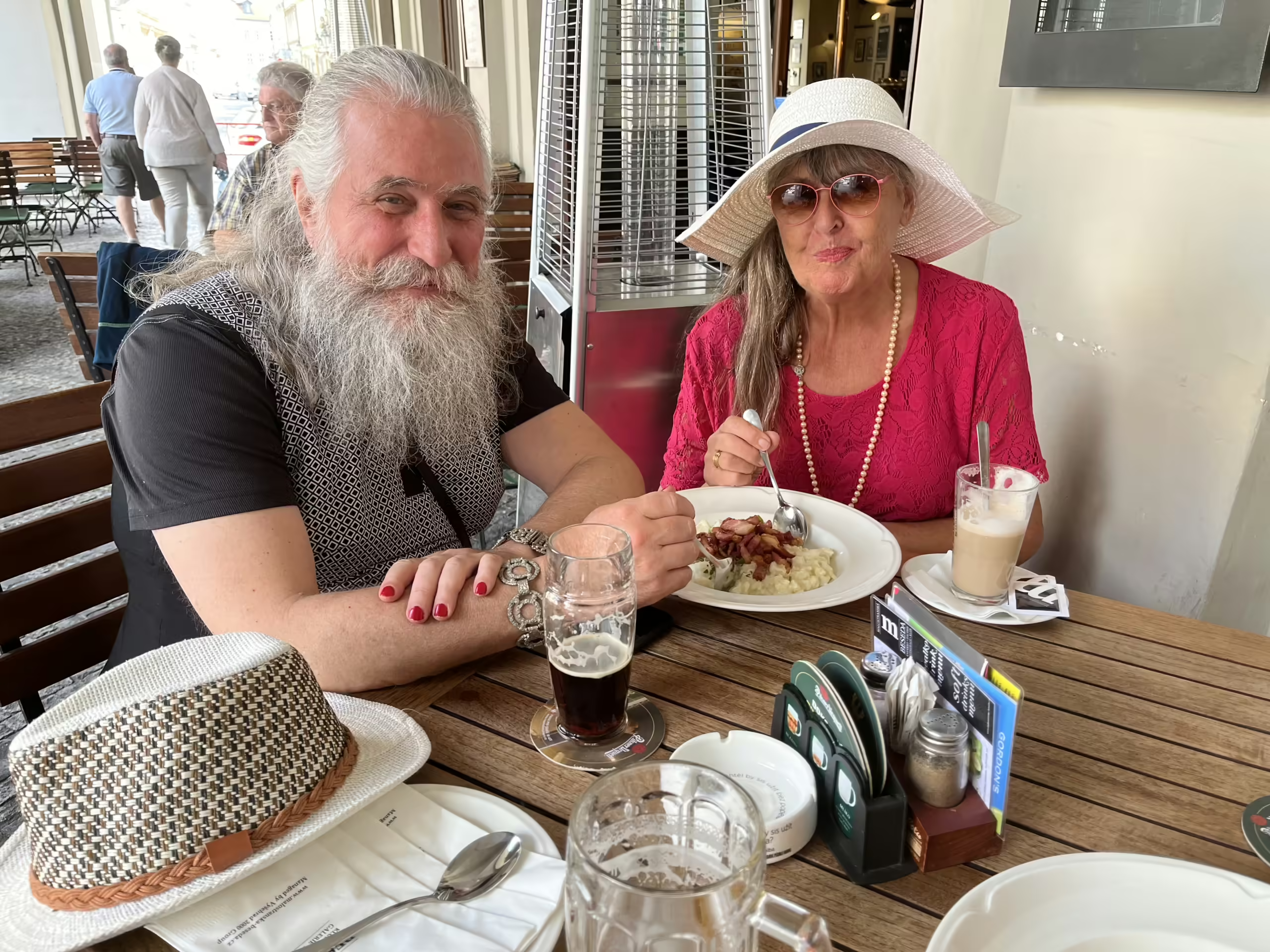
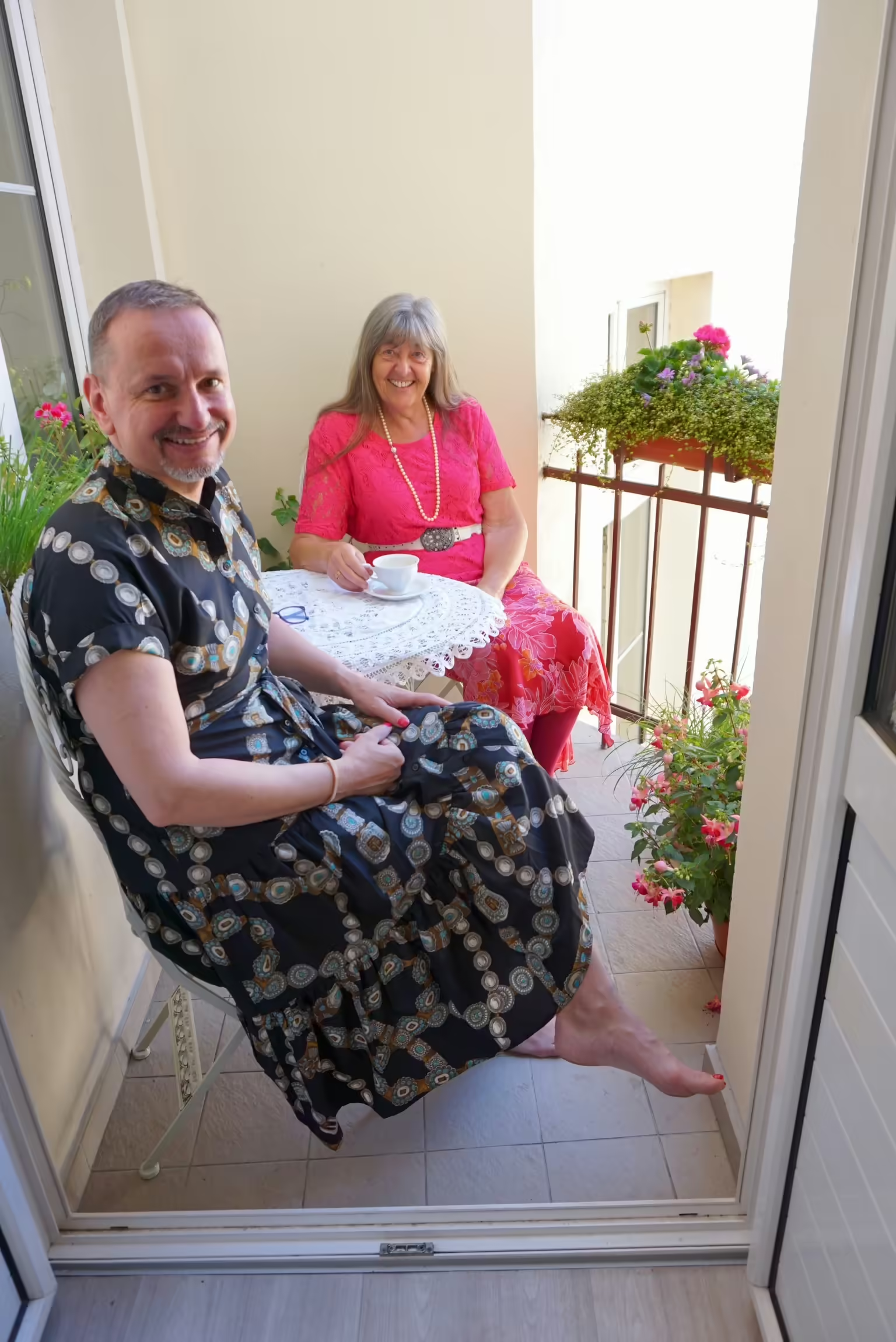
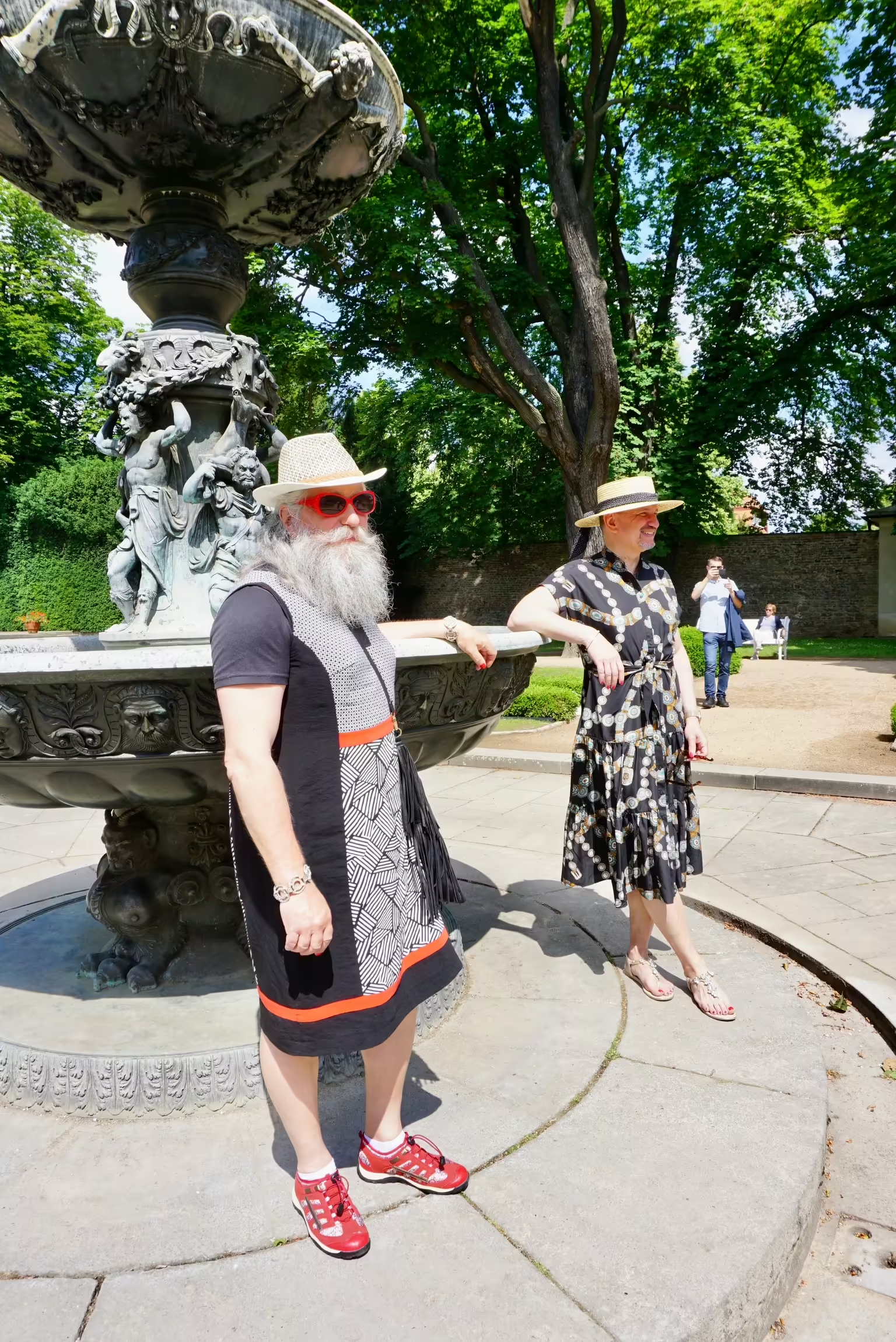
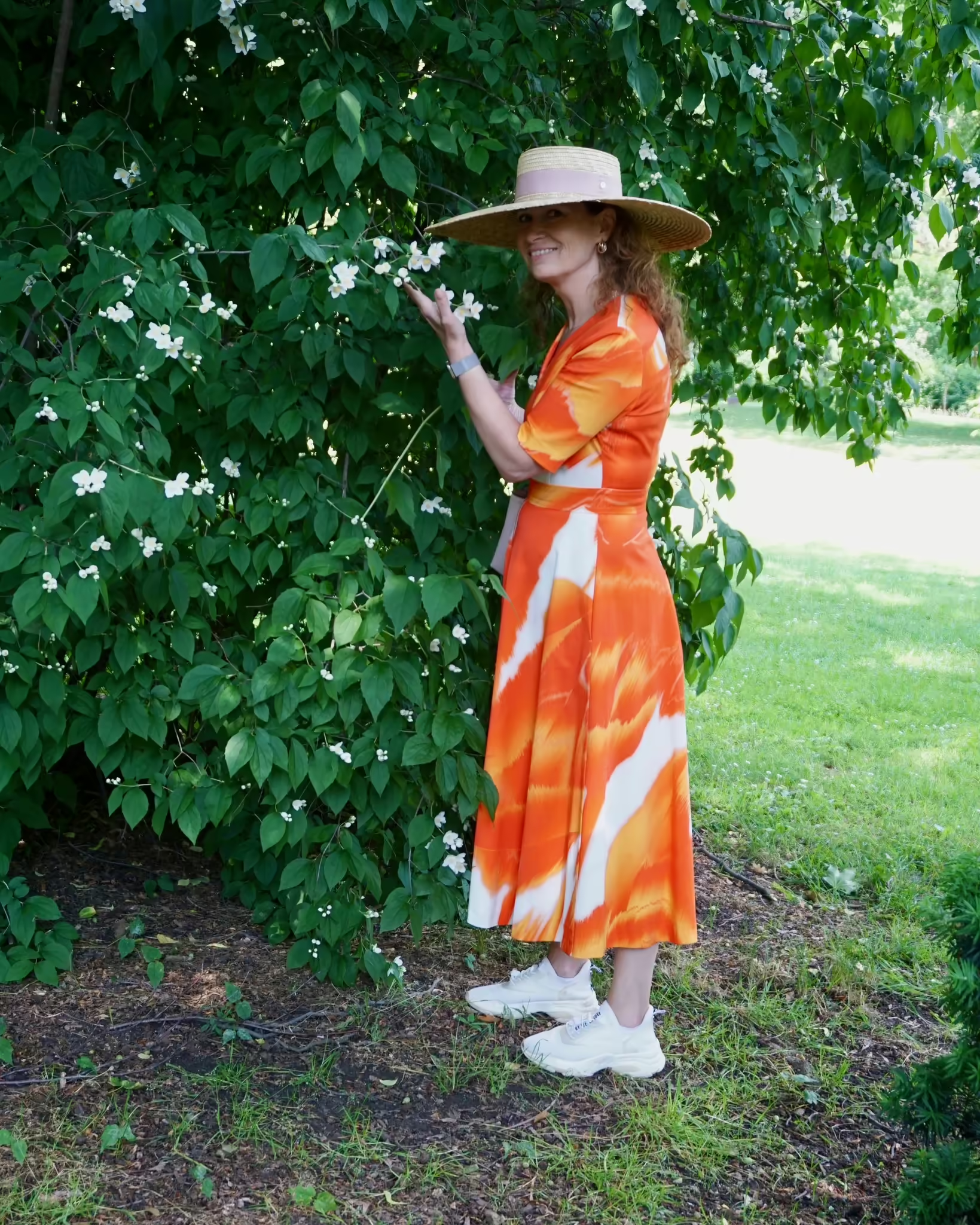
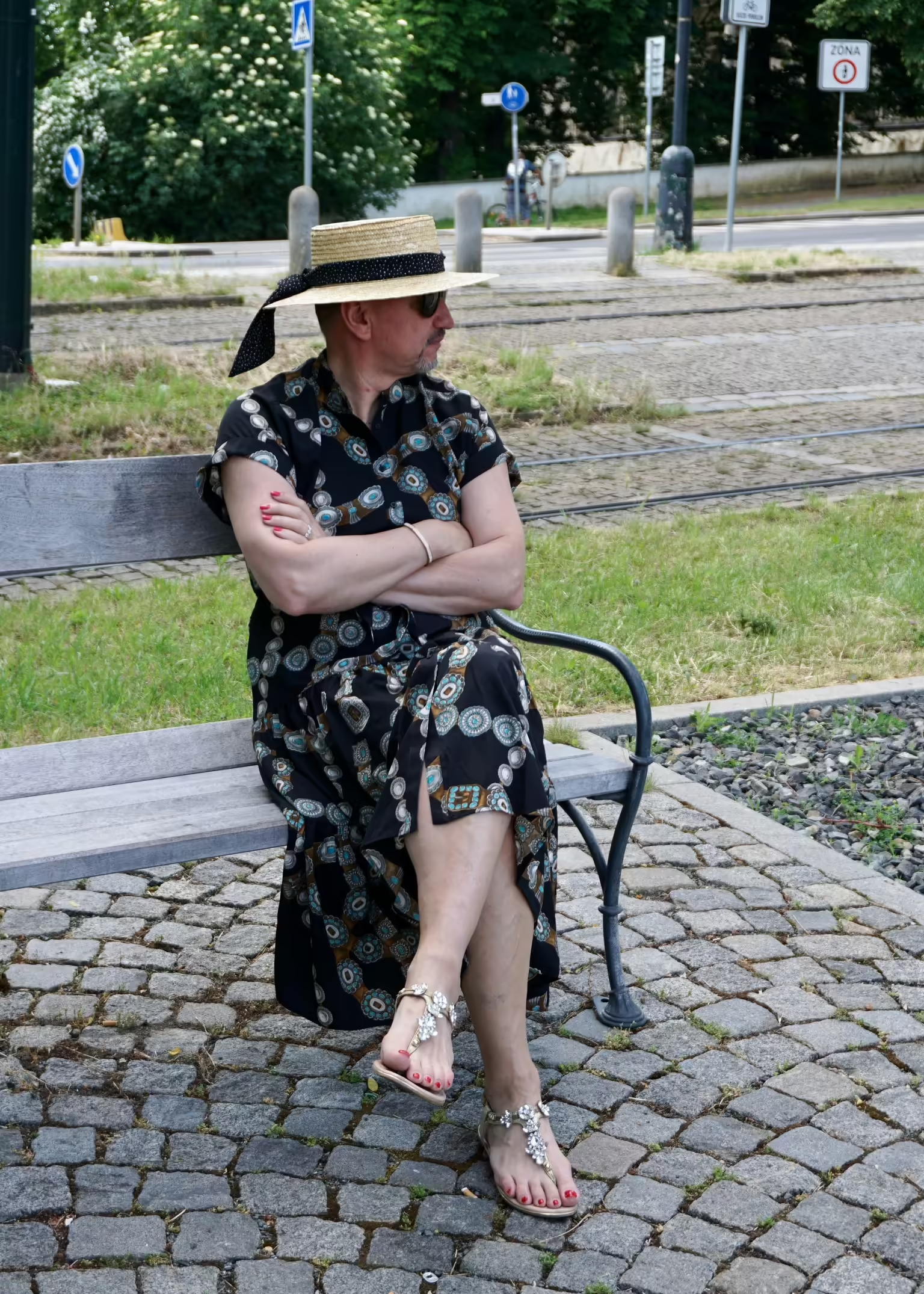
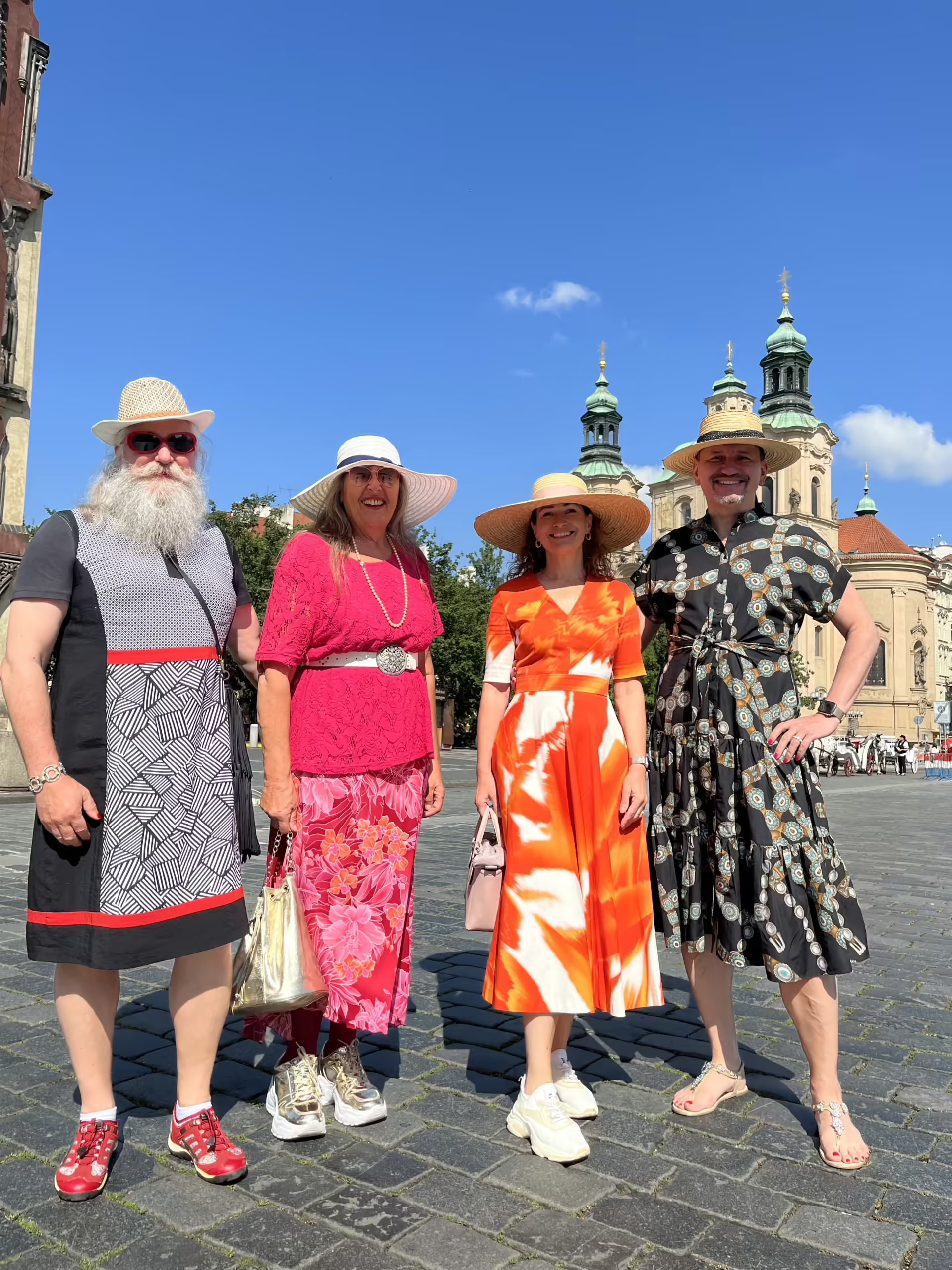
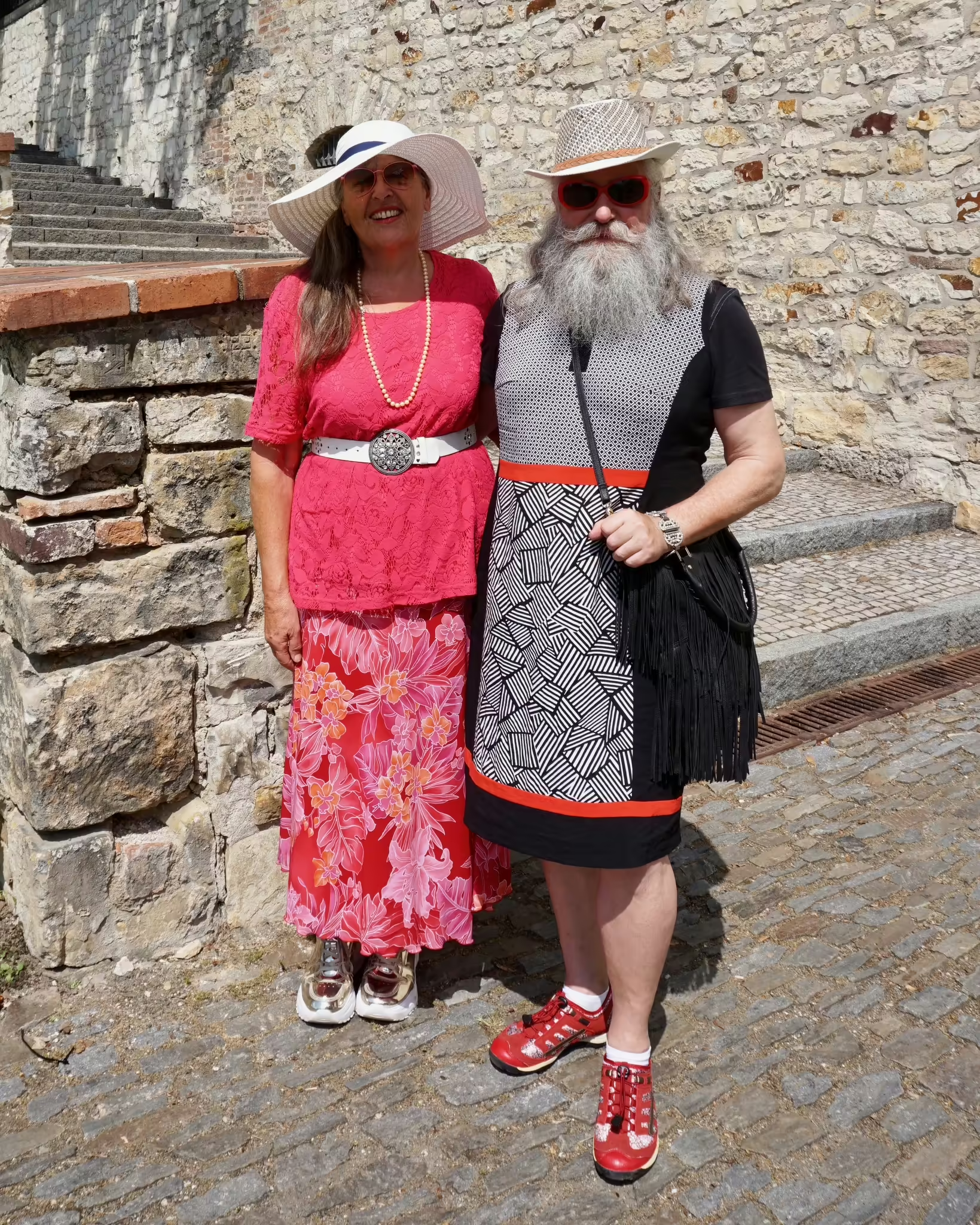
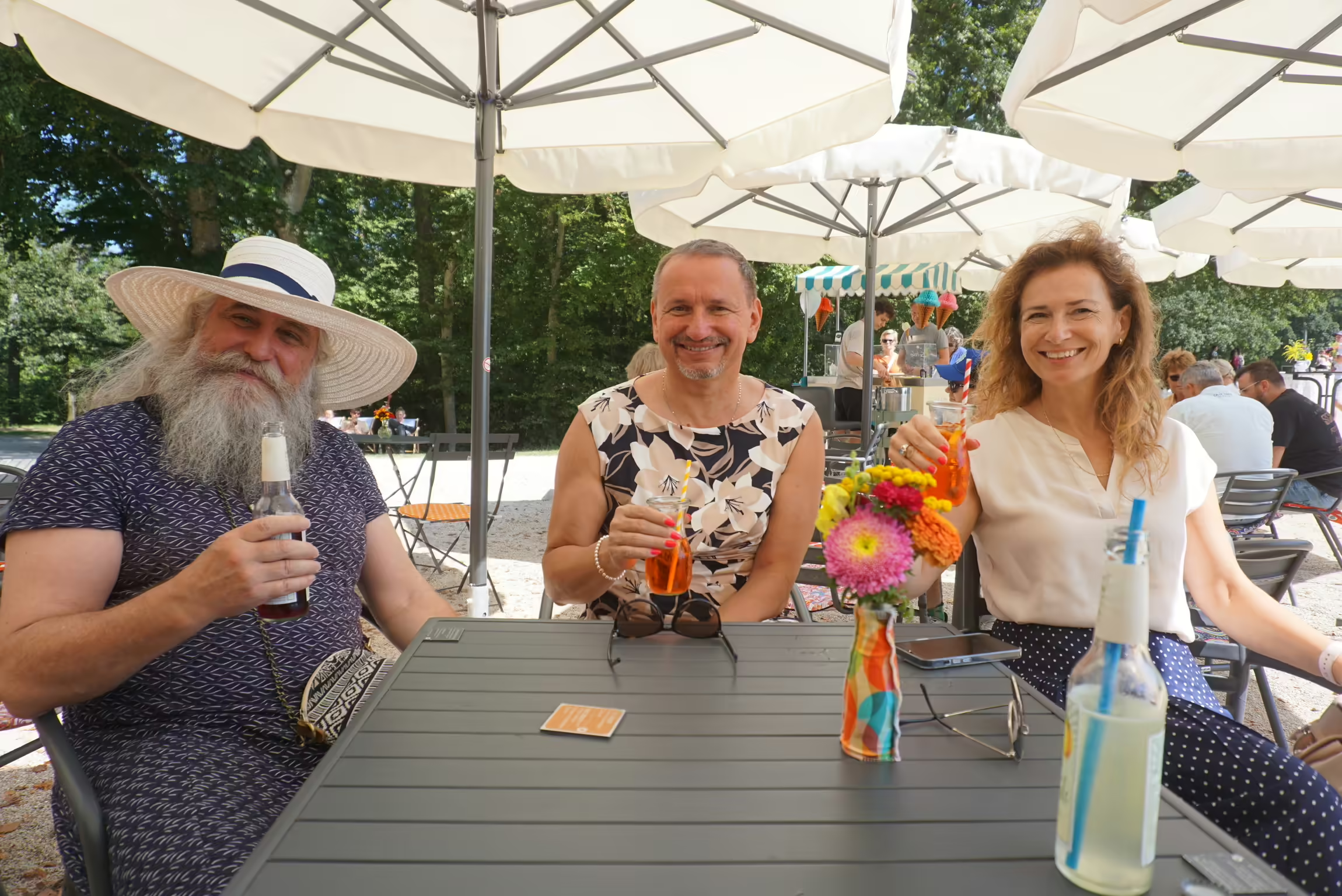
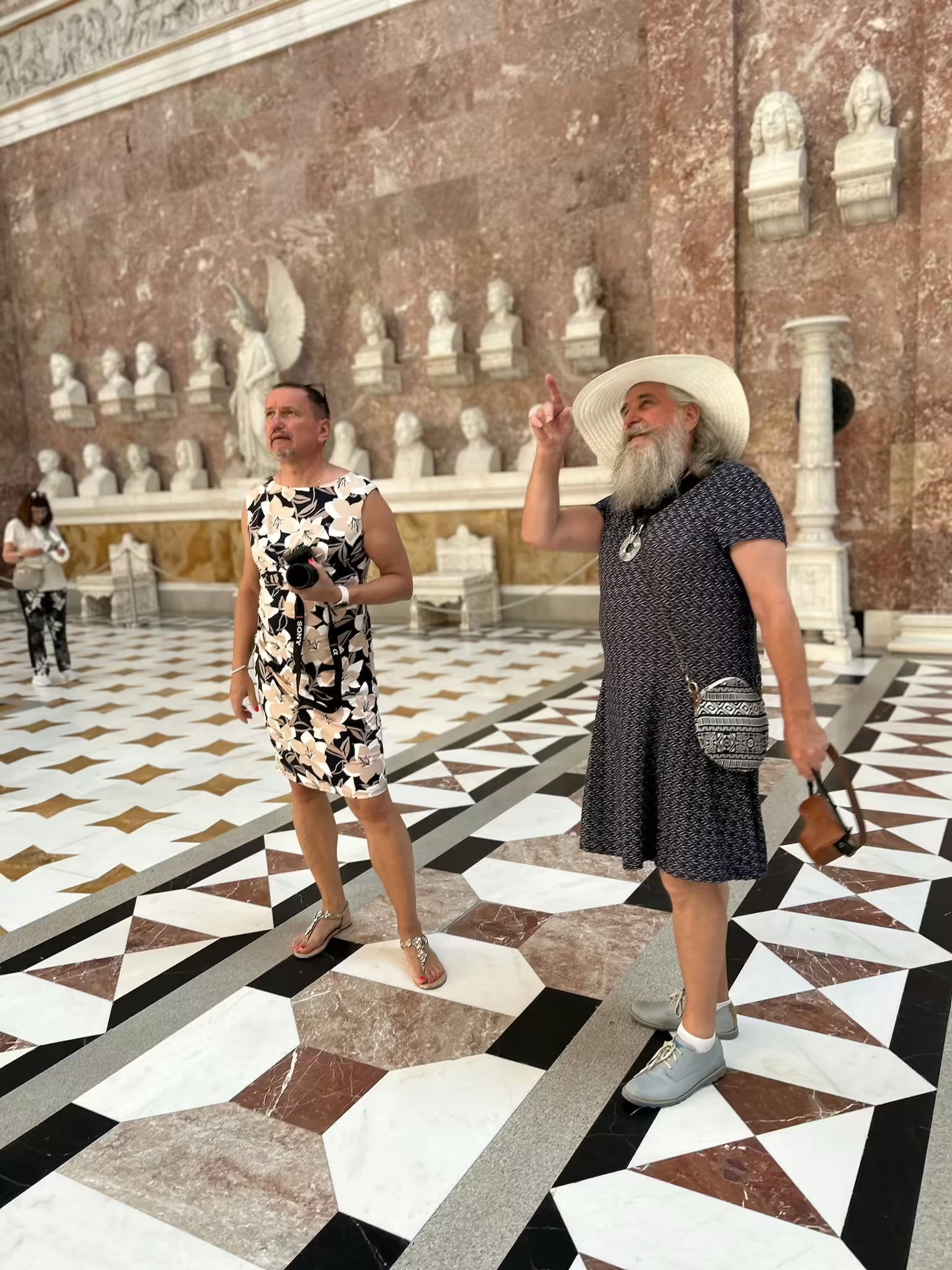
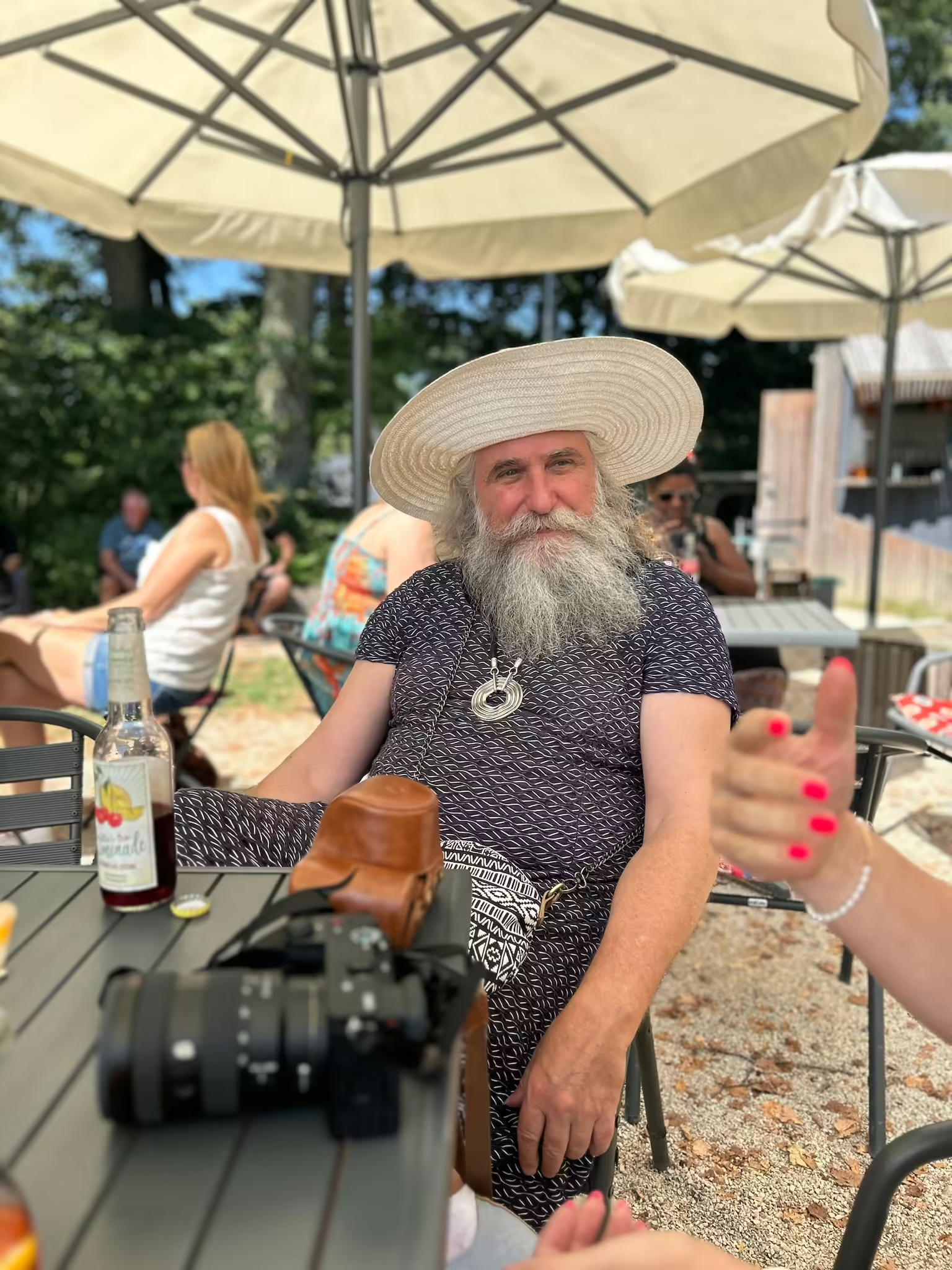
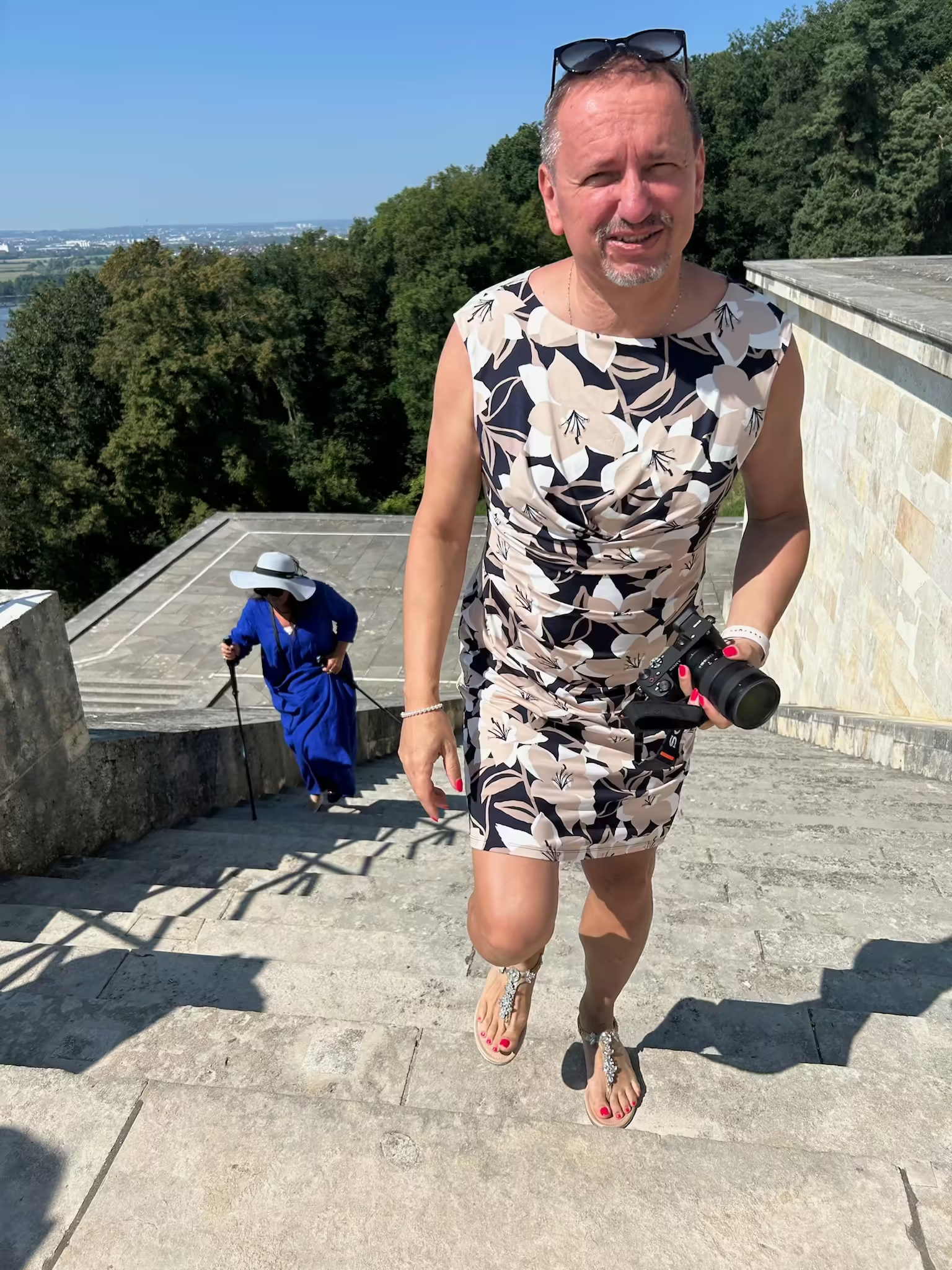
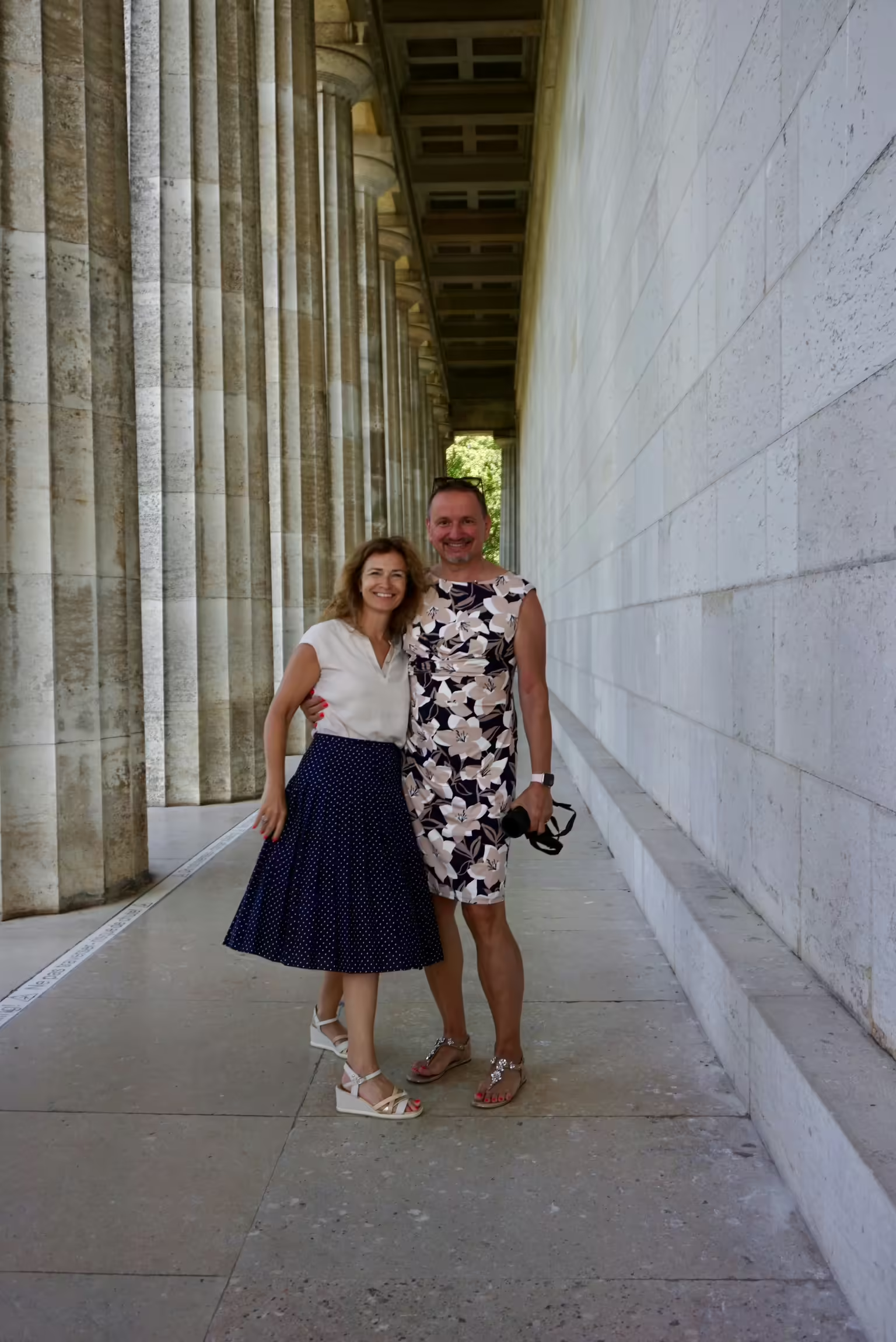
This visit to the State Opera actually took place earlier in the spring, but as life sometimes gets busy, not every story finds its way onto the blog right away. We’ve decided to revisit a few memorable moments and share them retrospectively, and this unforgettable evening certainly deserves its place among them.
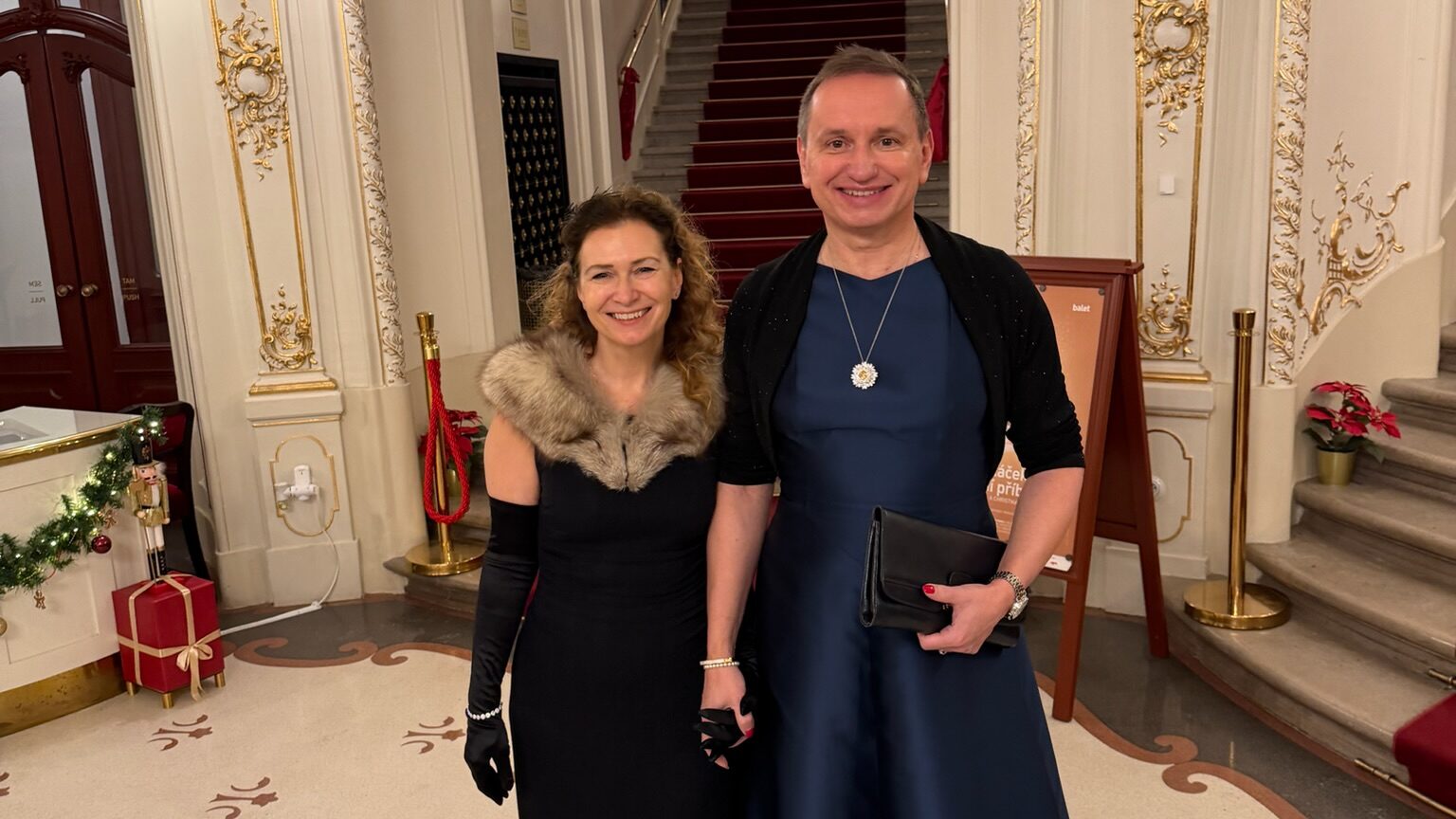
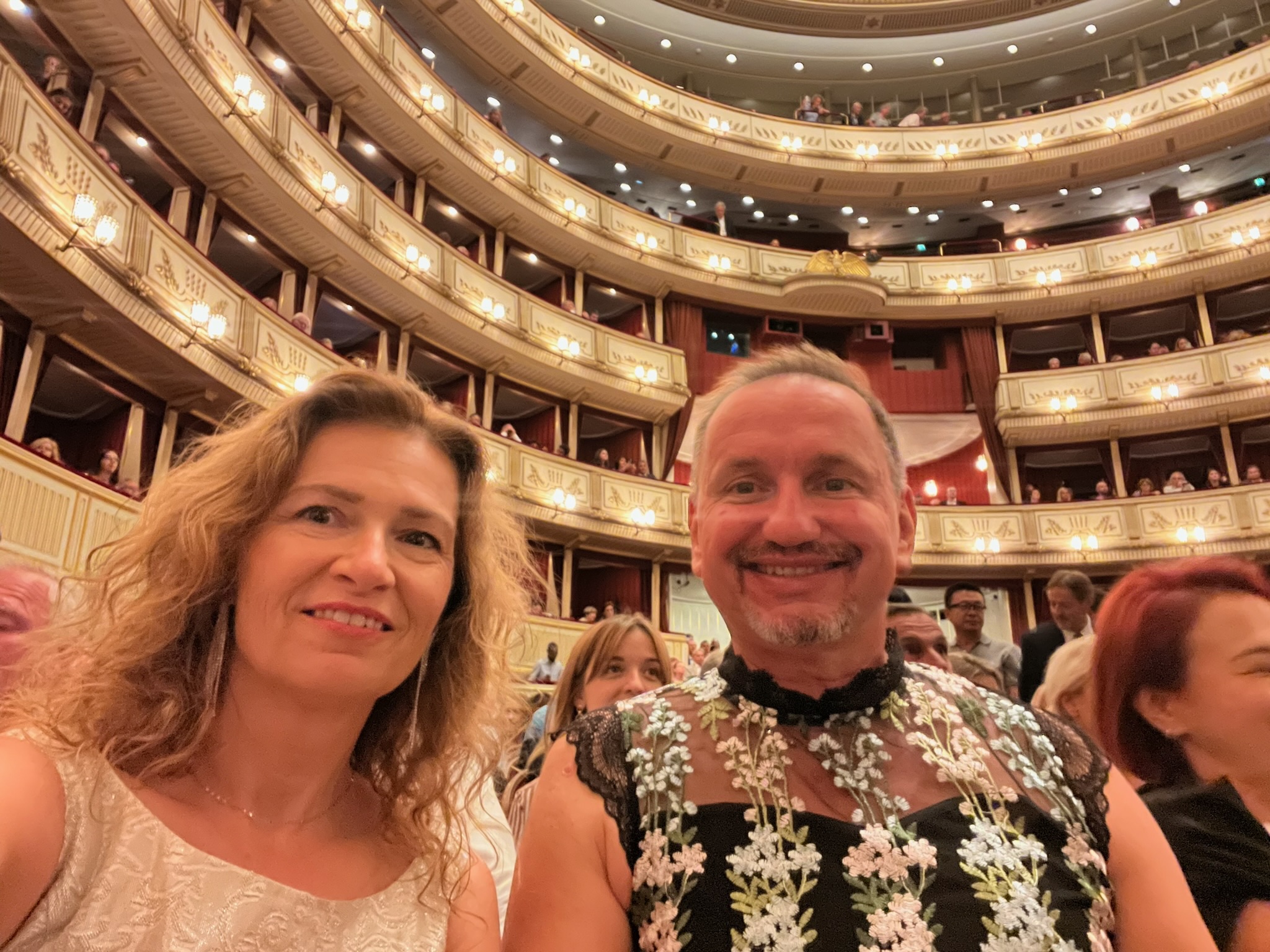
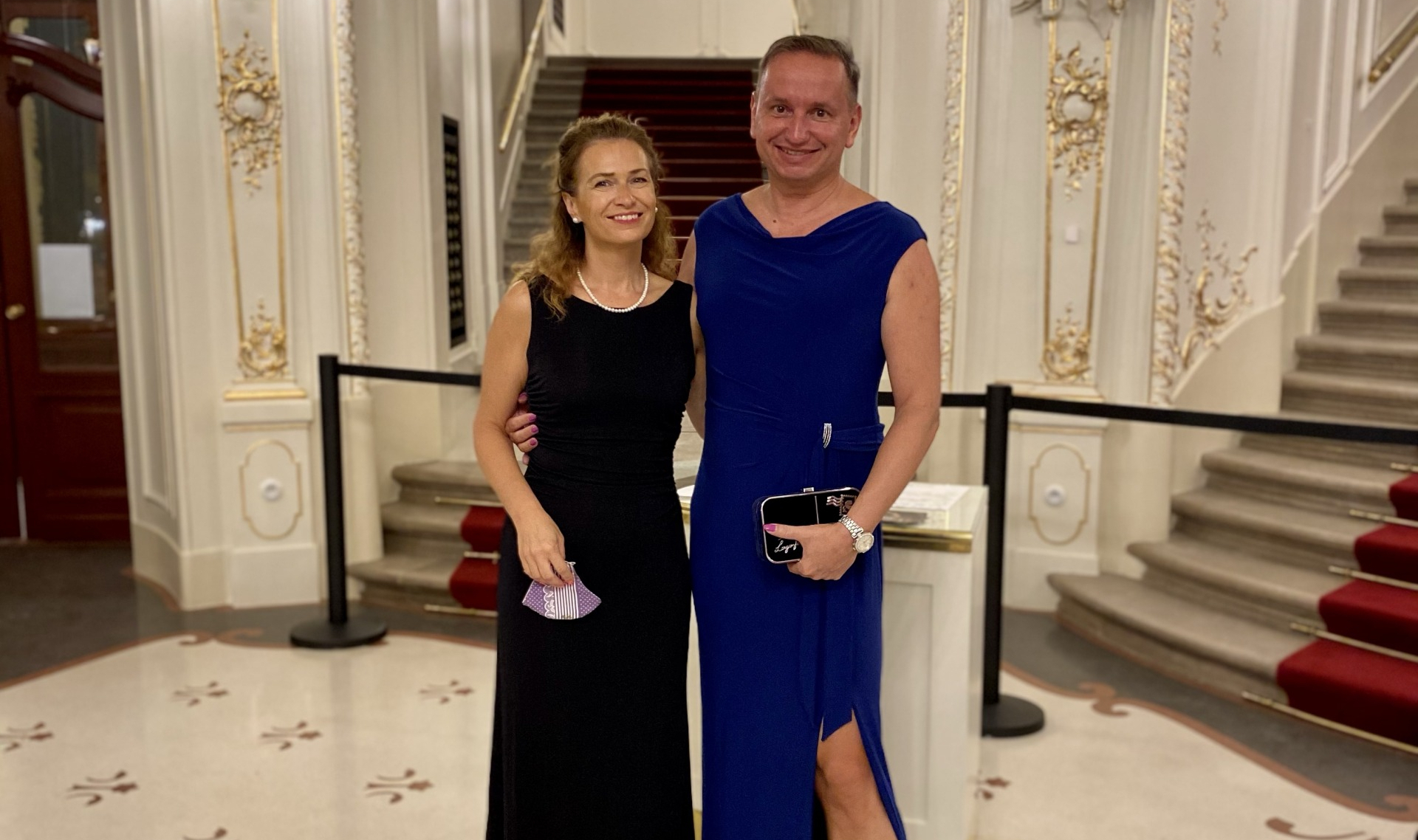
We treated ourselves to a special evening out at the State Opera to see Puccini’s La Bohème. The performance itself was wonderful, but we enjoyed the evening even more because, at the last minute, we managed to find a beautiful evening gown for Vlasta.
The dark navy dress turned out to be a perfect choice and was beautifully complemented by the vibrant fuchsia Jimmy Choo pumps that Vlasta received from Míša for Christmas. Once the outfit was complete, it was clear that all the effort had been worth it. Vlasta looked fantastic and, most importantly, felt wonderful, which is what truly matters.
That said, as we often joke, Míša still managed to look even more stunning. 😊 And when you think about it, if we claimed the opposite, there would probably be something a little unusual about that. 😀
As usual, we attracted quite a bit of attention. Some people smiled, others took a second look, but we’re used to that by now. We see it as part of our journey and a reminder that everyone should be free to be themselves and enjoy life’s beautiful moments without unnecessary limitations.
And that is exactly what this evening was about. A magnificent opera, a beautiful setting, elegant outfits, and most importantly, time spent together. What more could we ask for? ✨👠🎭
At the turn of June and July, we spent two weeks sailing along the Croatian coast with friends. Together with Míša, Max, and our crew, we set off from Sukošan and headed south via Murter, Vodice, Rogoznica, Trogir, and all the way to Stari Grad on Hvar before making our way back north. In Trogir, we swapped part of the crew, which gave each week of the trip its own unique atmosphere.
This year brought a heatwave across much of Europe, and Croatia was no exception, so swimming became a daily routine. The end of the trip also delivered a bit of excitement when we were caught in a strong windstorm with gusts reaching around 40 knots. Luckily, everything worked out well, and we returned home with plenty of great memories, photos, and yet another reason to come back next year. ☀️⛵🌊
Sometimes you meet people with whom every moment is fun. People who enrich you and share the same sense of humor. People who entertain you from the first to the last moment.
And that’s exactly what Ingrid and Markus are like. This post is about them and our fun encounters.
It started subtly and slowly. Over the years that Míša and I have been writing our blog and sharing our stories on social media, you realize you’re not alone. People like you are all around. You follow each other, write to each other, like photos. But you rarely meet in real life. And when the opportunity arises, you often hesitate. You don’t know each other, and apart from wearing skirts or dresses, you might not have much in common. There can be awkward silences and clock-watching.
It was the same with Ingrid and Markus, who contacted us via Instagram in June 2022, saying they were in Prague and asking if we wanted to meet. We had been following them for a long time, liked their style, sense of fashion, and the fact that, like Míša and me, they were married. They seemed nice and happy. But even so, we hesitated. In the end, curiosity won, and we decided that meeting for coffee wouldn’t hurt. And thank goodness we did.
We met wonderful, kind, and smart Ingrid & Markus with their beautiful friend Cathy and formed a friendship that we value. We found that we share a joy for traveling, discovering new things, and many other values. We were surprised at how much we had in common.
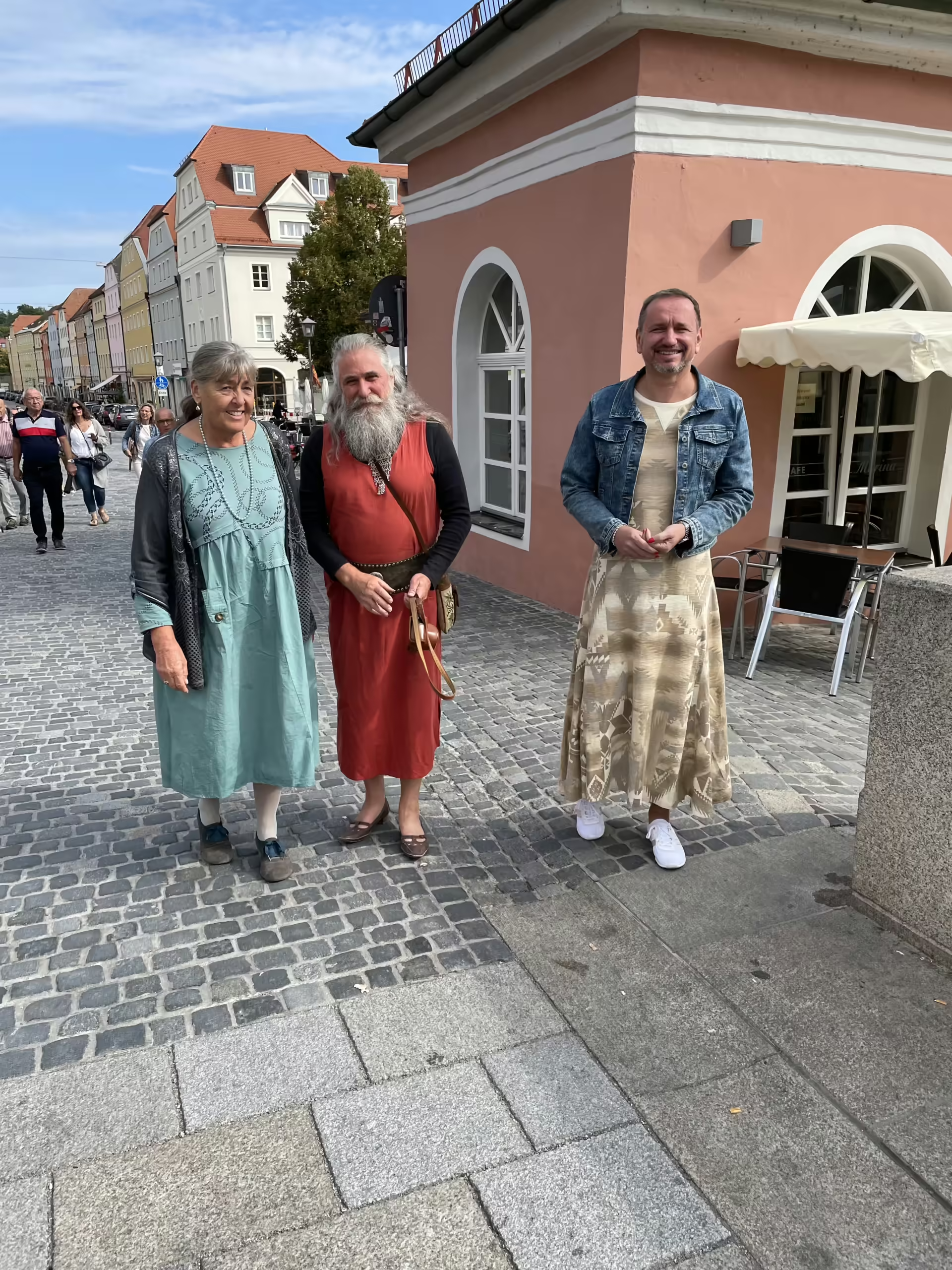
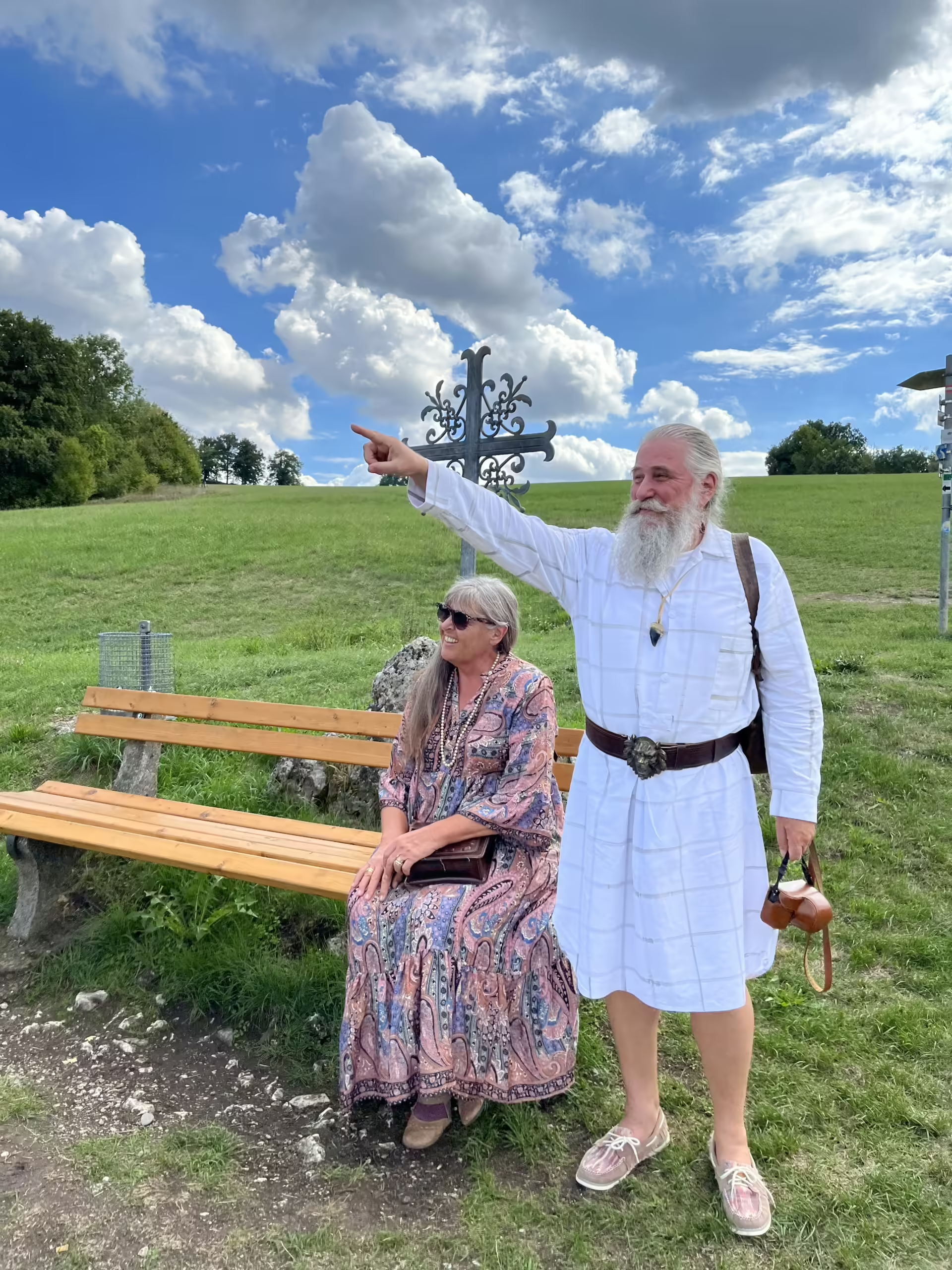
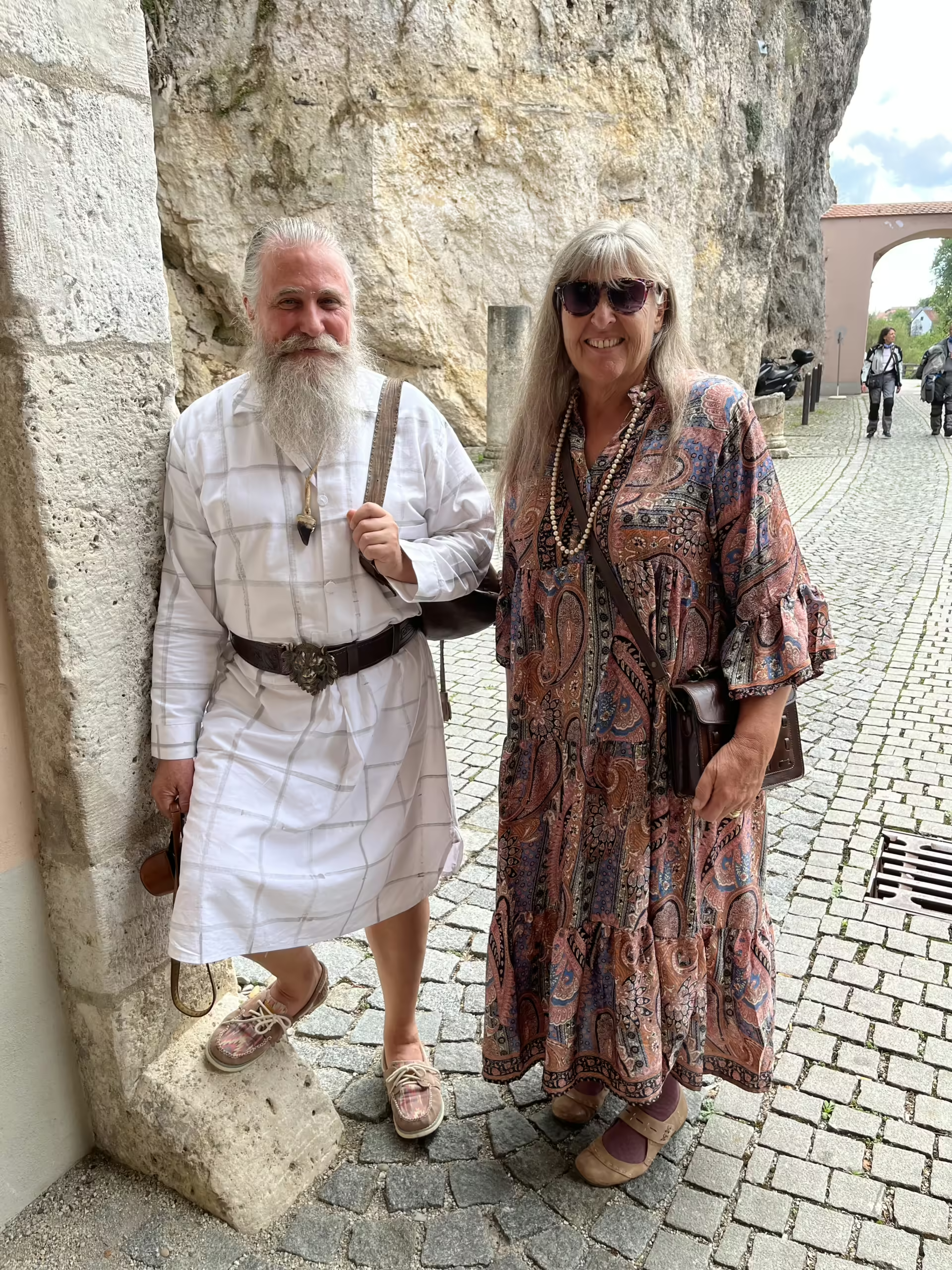
What started as a coffee turned into whole day of exploring Prague, and since then, we have visited each other several times and enjoyed our time together exploring Bavaria and the Czech Republic.
Our Very First Meeting in Prague – June 2022
As we mentioned earlier, our first meeting turned from a planned short coffee into a full day of exploring Prague with Ingrid, Markus, and Cathy. We visited classic tourist spots like the Old Town Square, the Prague Astronomical Clock, and Prague Castle, and eventually ended up in a charming café at the Písek Gate. This gate, built in 1721 by architect Giovanni Battista Alliprandi based on a design by František Vogot, was part of Prague’s baroque fortifications.
In 1741, during the War of Austrian Succession, Charles Albert of Bavaria stormed through this gate into Prague, which was defended by only a handful of untrained townspeople and students.
For Ingrid and Markus, this wasn’t their first visit to Prague – they first came shortly after the Velvet Revolution in 1989. They had plenty of funny stories from that time, reminding us of our communist past. We laughed at them, but also realized that we wouldn’t want to experience those times again.
September 2022 – Bavaria
Regensburg
Regensburg, known as Řezno in Czech, is the only preserved medieval city in Germany and one of the oldest cities in the country. The fourth largest city in the state of Bavaria is located in a bend of the Danube River, where the Naab and Regen rivers flow into it. The river Regen gave the city its name. Its older form is reflected in the name of the Celtic fortress Radasbona, which stood on this site, and around 70 AD in the name of the Roman military camp Castra Regina. This camp was expanded in 179 by Marcus Aurelius, but it was destroyed by the Germans in the 4th century.
On the ruins of the Roman settlement, a city began to grow again, where in 739 Saint Boniface founded a bishopric. For more than two hundred years, this diocese included the Czech lands until the Prague bishopric was established. In 788, Charlemagne made Regensburg a residence of the Carolingians, turning the city into the political heart of the empire and a flourishing trade center. Its peak of prosperity was reached in the 12th century when it became a free imperial city, remaining so until the end of the Holy Roman Empire in the early 19th century. From 1663 to 1802, the Imperial Diet even met here.
More than two thousand years of history are reflected at every step. In the medieval core, listed as a UNESCO World Heritage Site in 2006, there are 984 protected buildings. These include the Stone Bridge over the Danube from the 12th century, the old town hall with the Imperial Hall where the Imperial Diet met, the cathedral with its amazing stained glass windows, a museum protecting church treasures, the historic Adler-Apotheke pharmacy, and the only preserved Roman gate north of the Alps called Porta Praetoria, which formed the northern entrance to Castra Regina. Also worth visiting is the museum dedicated to the court astrologer of Rudolf II, Johannes Kepler, who lived and died here.
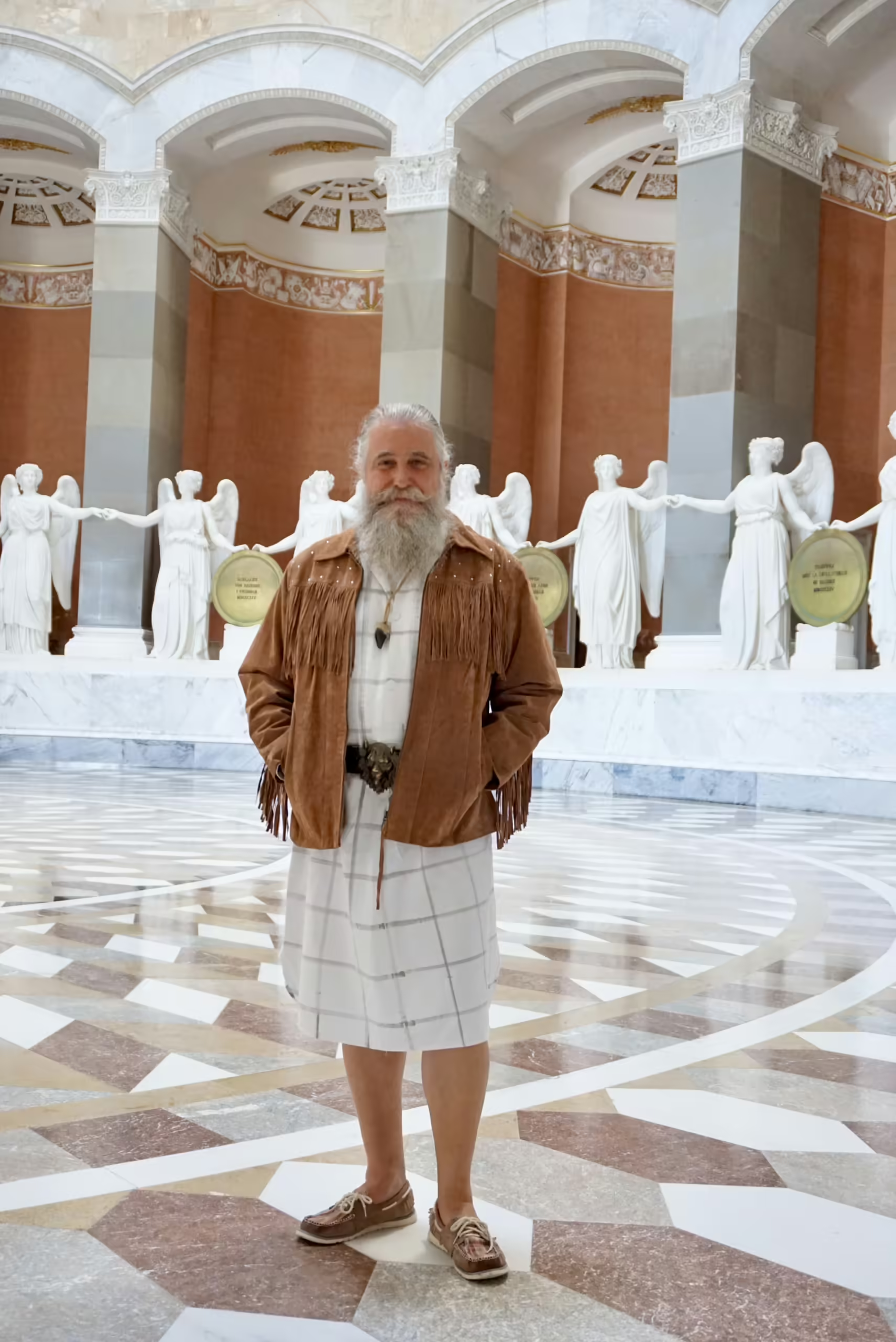
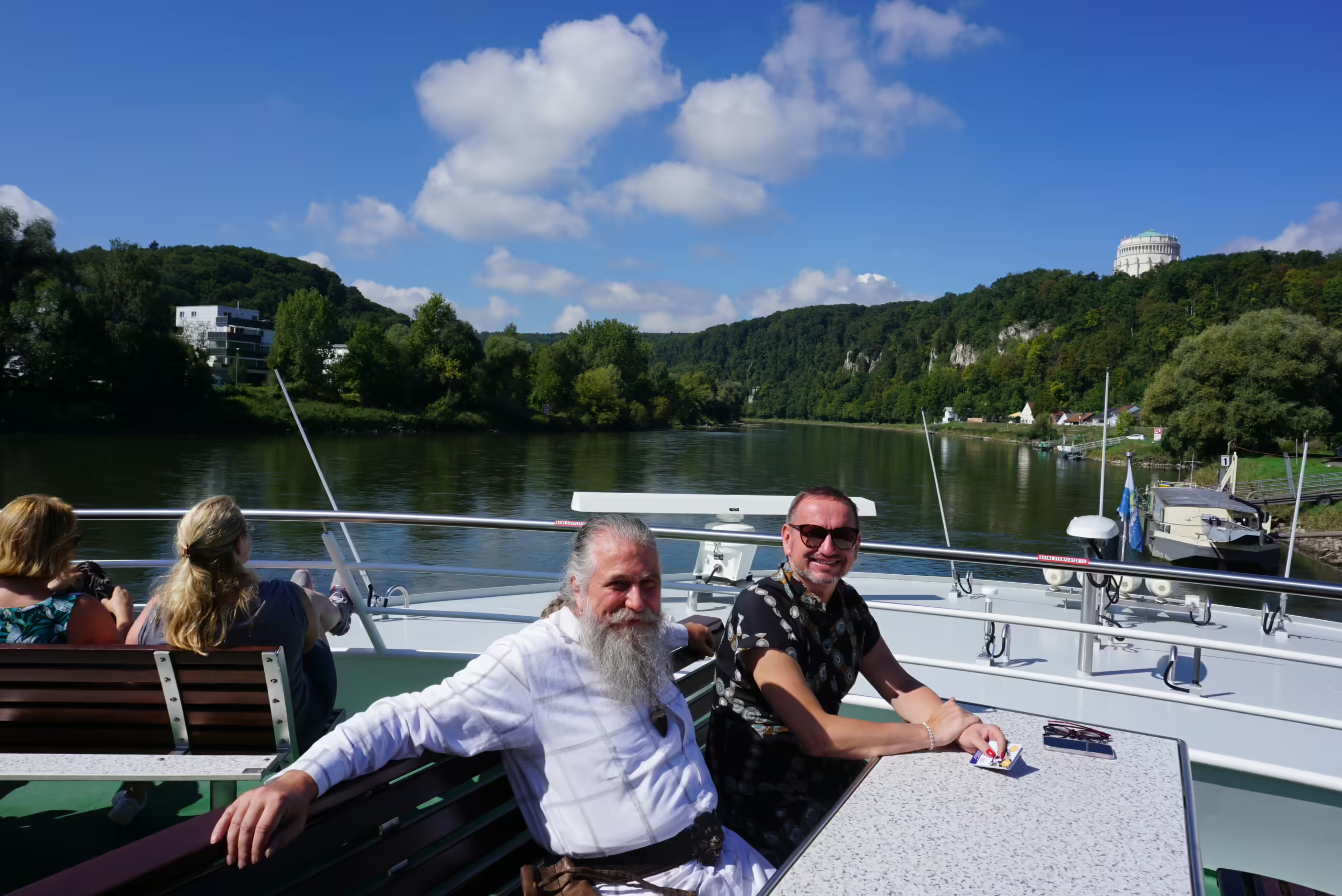
The Liberation Hall on the Michelsberg near Kelheim is one of the most important buildings of the 19th century. century in Germany. Built by King Ludwig I and designed by Leo von Klenze. It is one of the large, architecturally designed national monuments, in this respect only comparable to the Walhalla near Regensburg, also built by Klenez, the Völkerschlachtdenkmal and the Kyffhäuserdenkmal.
Kloster Weltenburg, Danube river
Weltenburg is truly a special place, one in which the artistic impact, the clerical and intellectual power of the Abbey and its church meet the beauty of the river landscape of the Danube Gorge and the force of nature that is the Danube.
On a culinary level, this matchless beauty is optimally complemented by the oldest abbey brewery of the world, with its premiered beers, and our Klosterschenke restaurant.
Follow Me! On Instagram! 😀Great outfits!What a smile 🙂
June 2023
Kitchen Prelude 😀
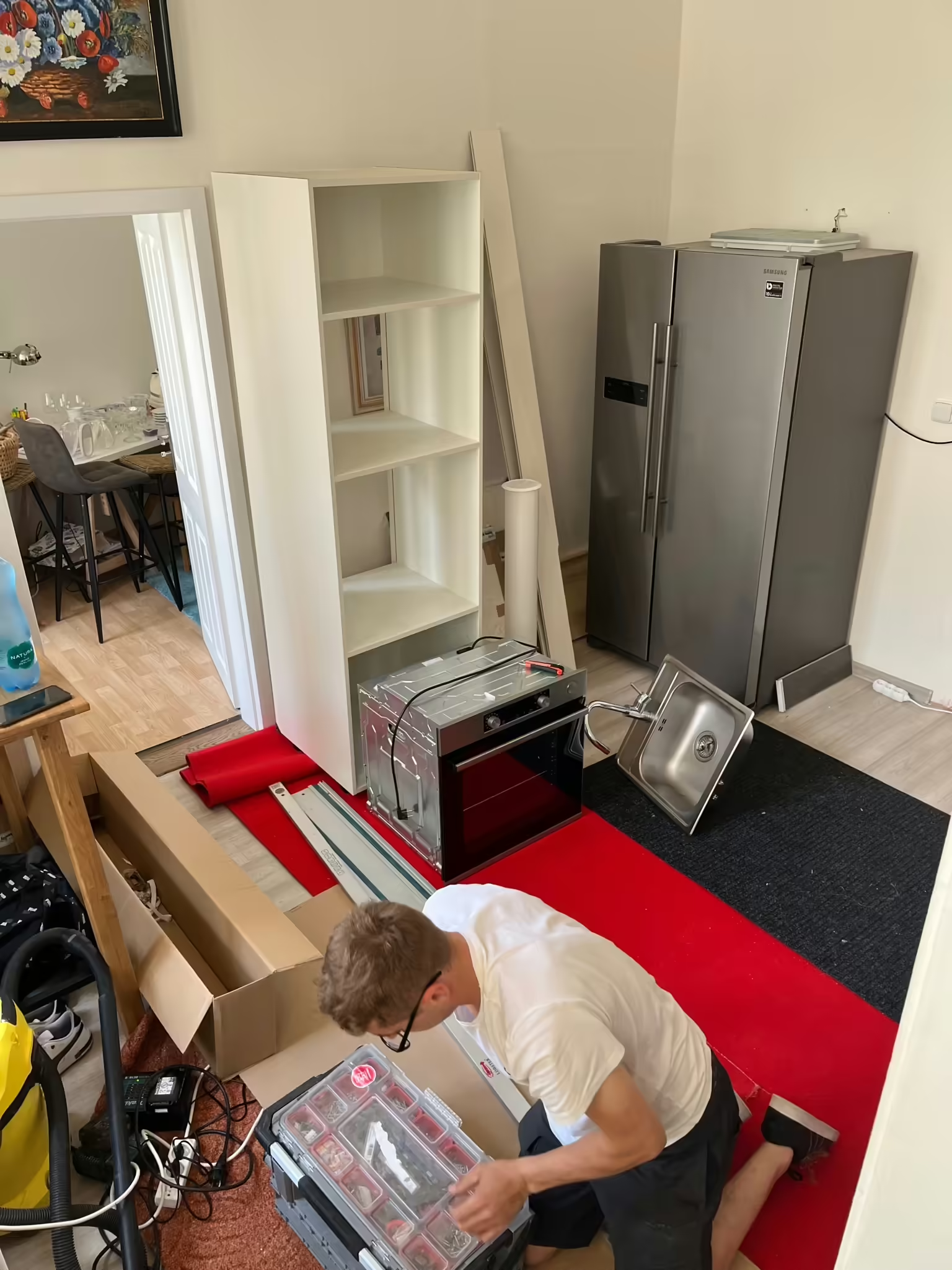
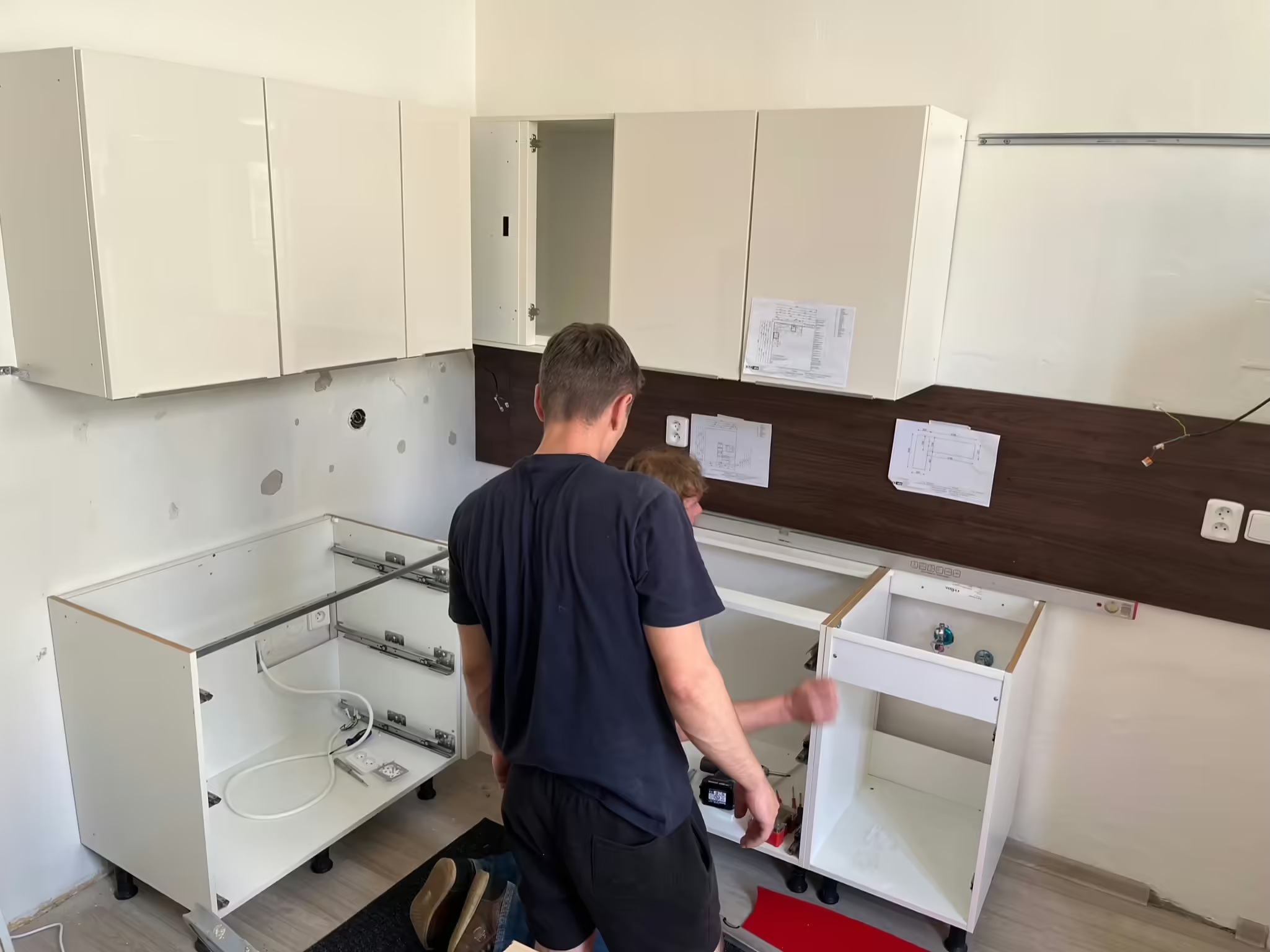
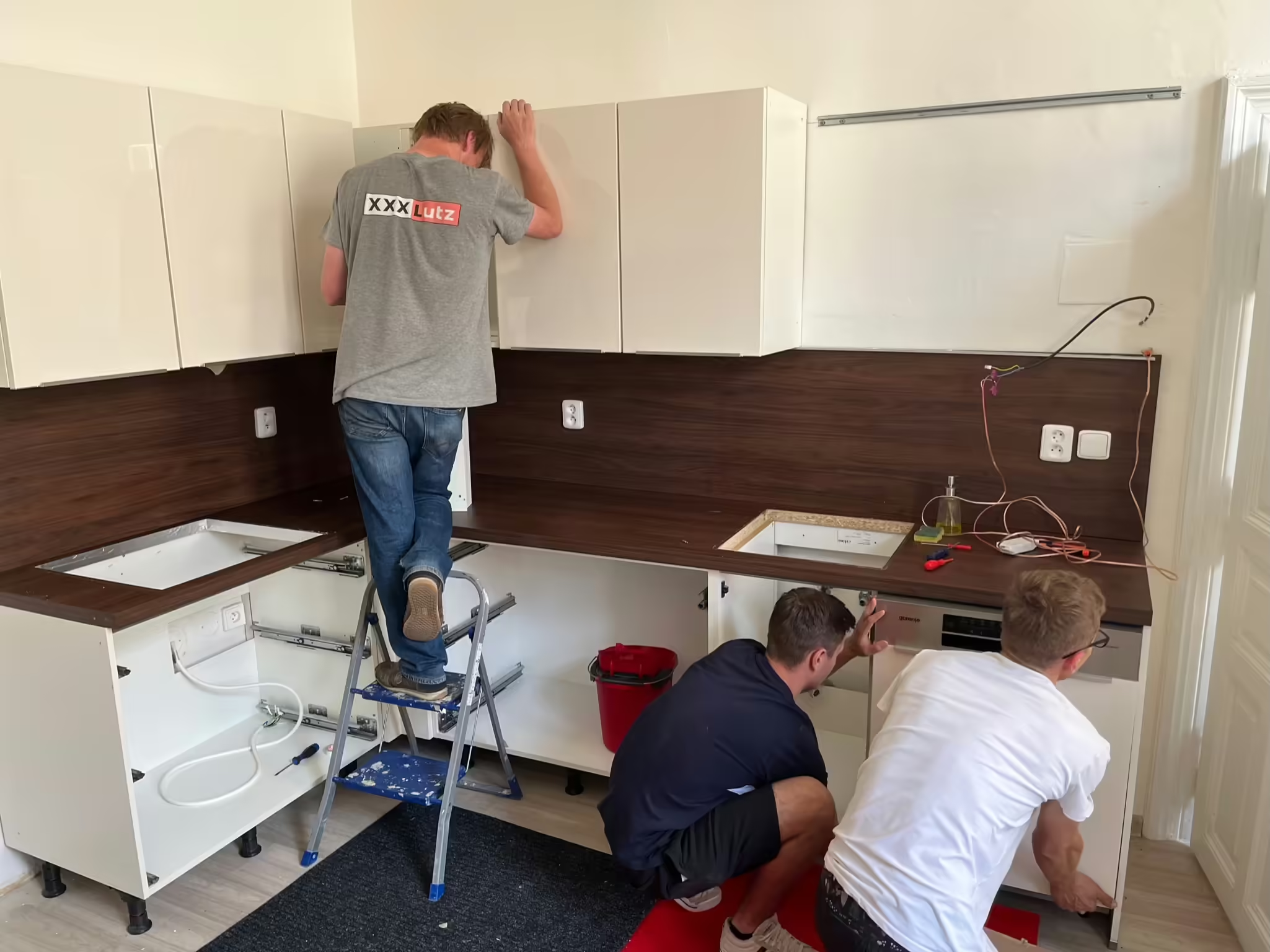
We had arranged for Ingrid and Markus to come over on Friday around six in the evening. But we also had some workers coming in the morning to fix our poorly installed kitchen. We asked the workers how long it would take, and they estimated about 2-3 hours. So we thought it would work out perfectly – the kitchen would be done by lunchtime, we’d clean up, and when Ingrid and Markus arrived, we’d be all set.
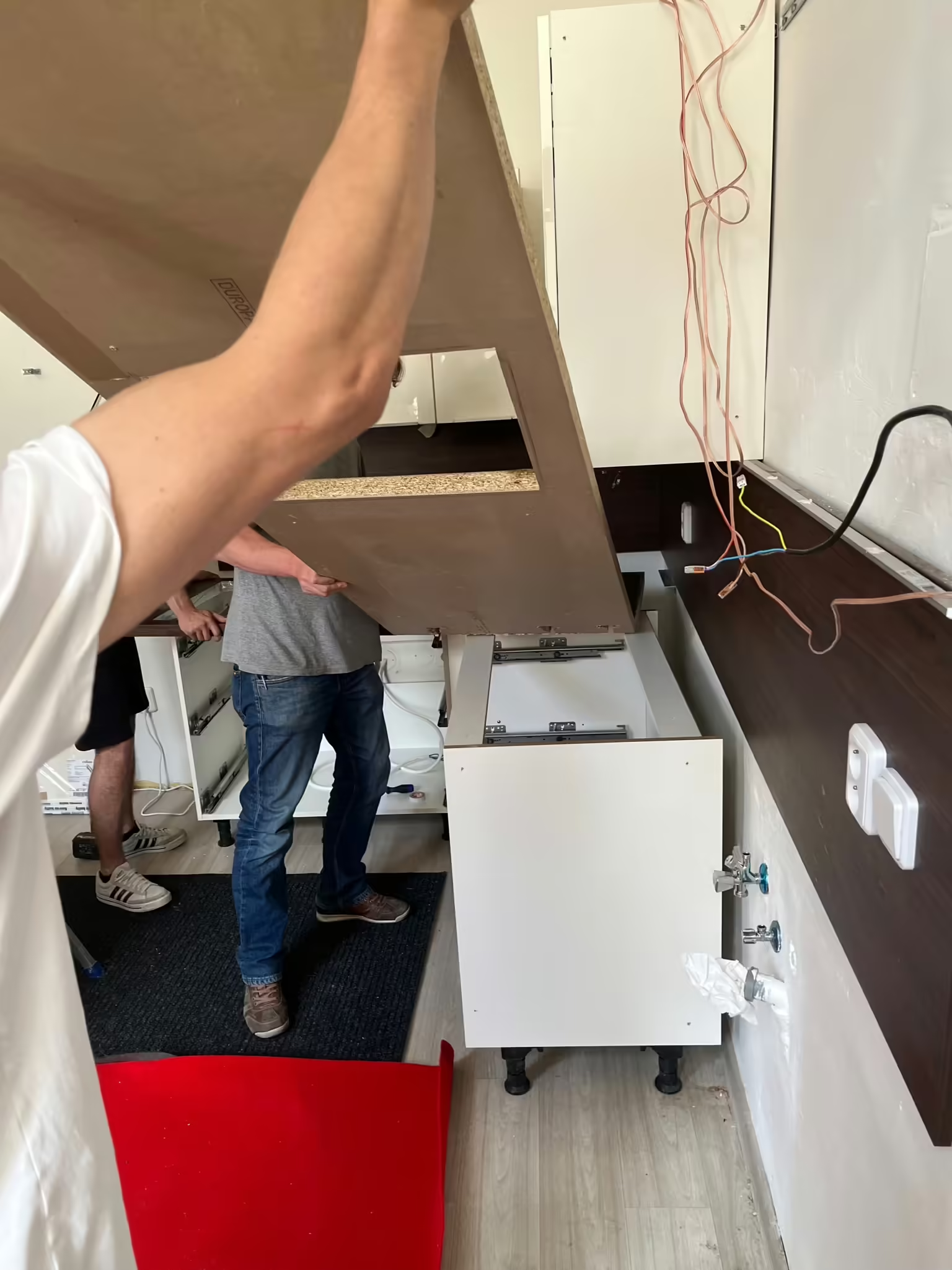
But as things often go, it didn’t quite turn out that way. When the workers arrived, they realized they couldn’t just fix it; they had to basically dismantle the whole kitchen and then reassemble it correctly. They said they should be done by six. So we hoped for the best. As six o’clock approached and the kitchen was still far from finished, our nerves started to fray. It looked like the installation would be delayed by about half an hour, which would still be okay.
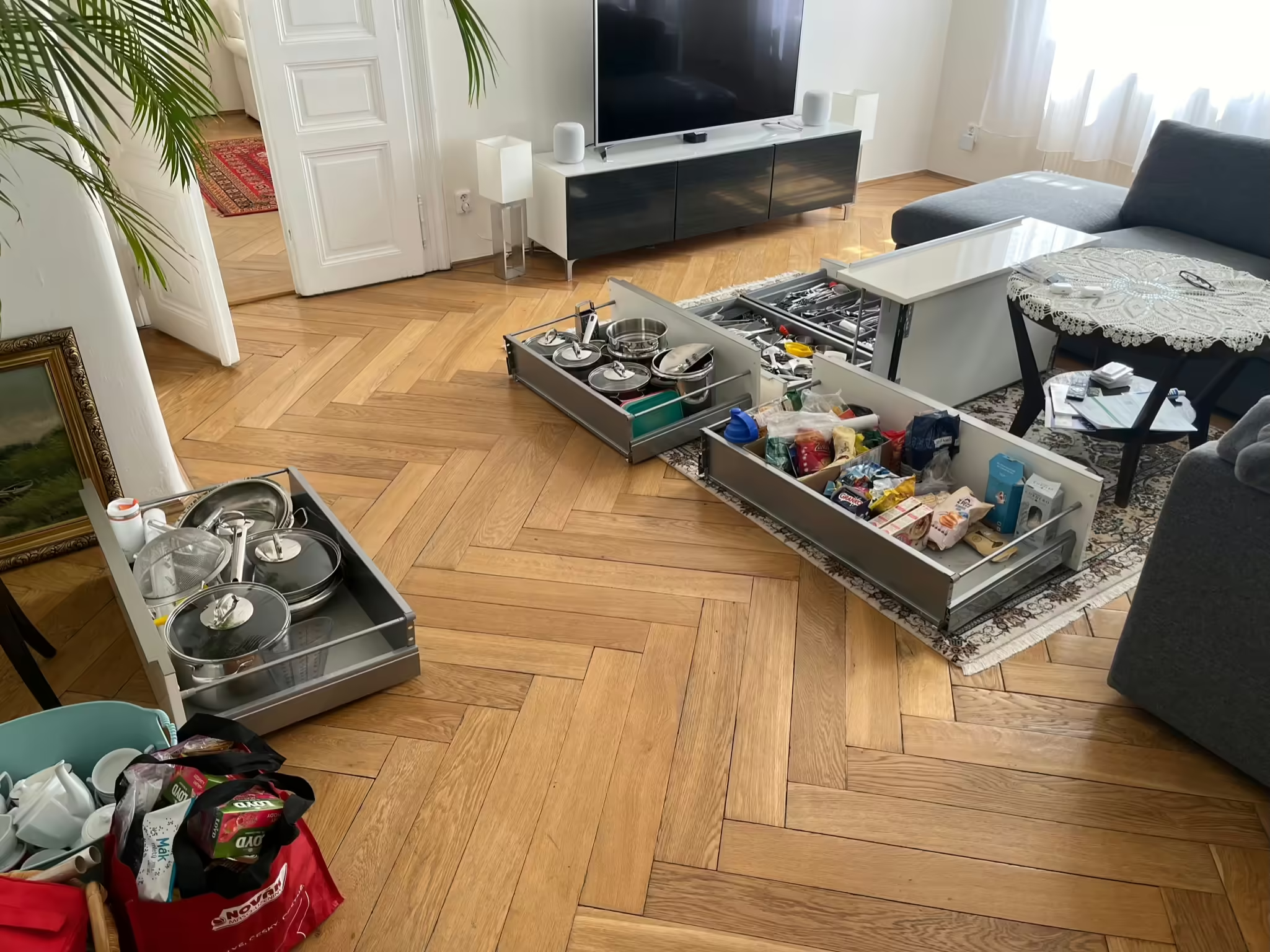
In the meantime, Ingrid and Markus arrived, and we seated them in the living room, where the entire contents of the kitchen were spread out on the floor. Luckily, we have a big living room, so everything fit.
Everything seemed fine, the guys in the kitchen were packing up, and one of them had the bright idea to secure the side panel of the dishwasher with one more screw into the wall. And as he did, he… drilled into a water pipe. 😀
Try finding a plumber on a Friday evening. It all turned out fine in the end, but the kitchen wasn’t finished until ten o’clock at night. 😀
This building that started as a late 13th century Gothic castle belonged over the years to some of the most prominent historical figures. The last owner was the heir to the Austro-Hungarian crown Archduke Franz Ferdinand d´Este who, was, together with his wife Sophia, assassinated in Sarajevo in 1914.
The picturesque Konopiště Castle is located just a short distance from Prague, but most tourists who visit Prague never make it here. This is a great pity because the castle has a rich history and well-preserved interiors and exteriors, including a beautiful botanical garden and a castle park. We were glad to have secured the last three tickets for the second castle tour – the private rooms – in English. So, in the end, Míša had to wait for us in the castle courtyard.
Interestingly, we had prepared a Viennese breakfast at home before our departure in the morning, and then during the castle tour, we came across an almost identically set table.
Follow me! This way, on Instagram! 😀
Prague – Day 1
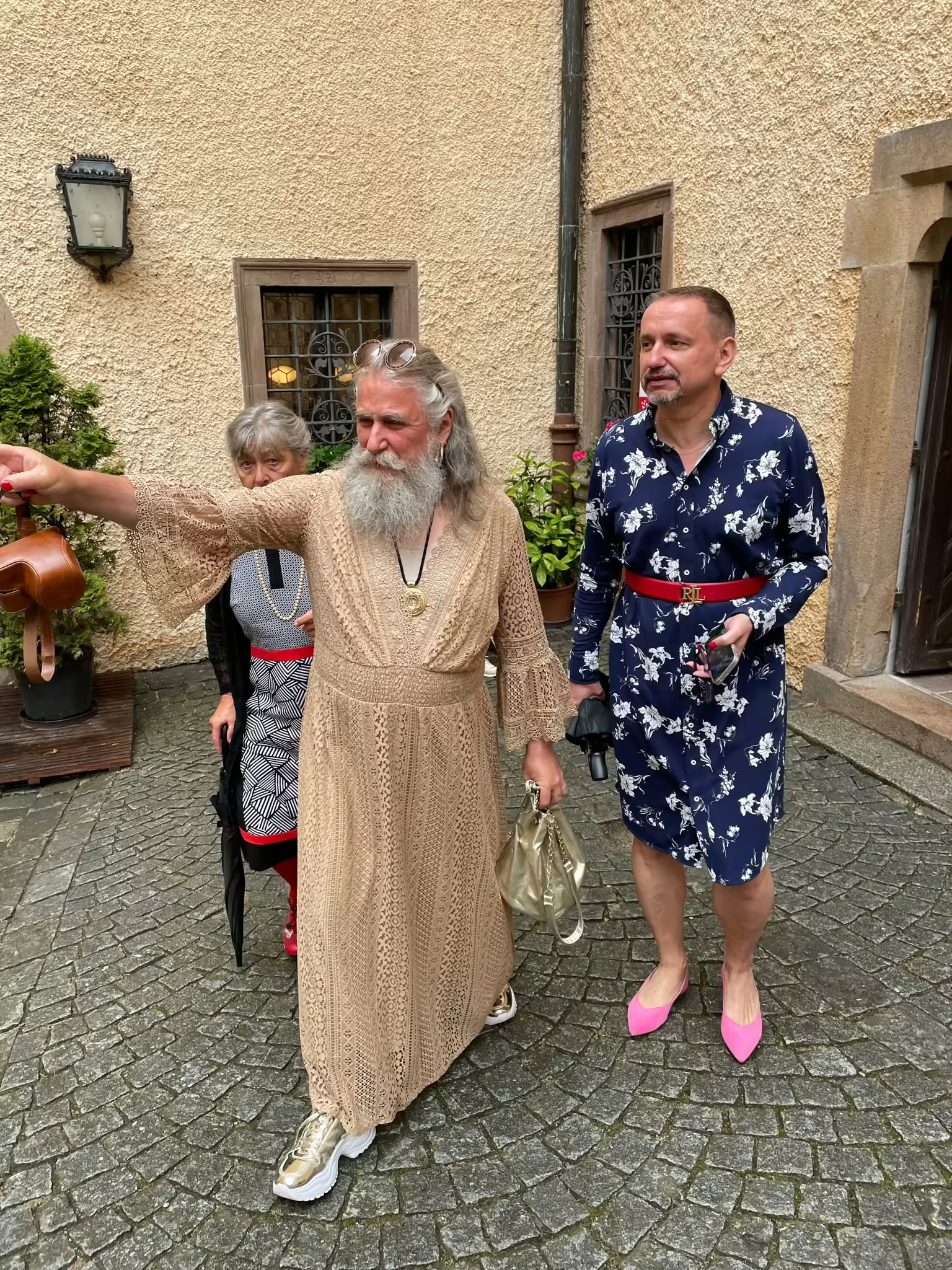
Fun fact, in case you didn’t notice – Ingrid and Markus swapped clothes during the day. 😉
Prague – Day 2
August 2024 – Bavaria
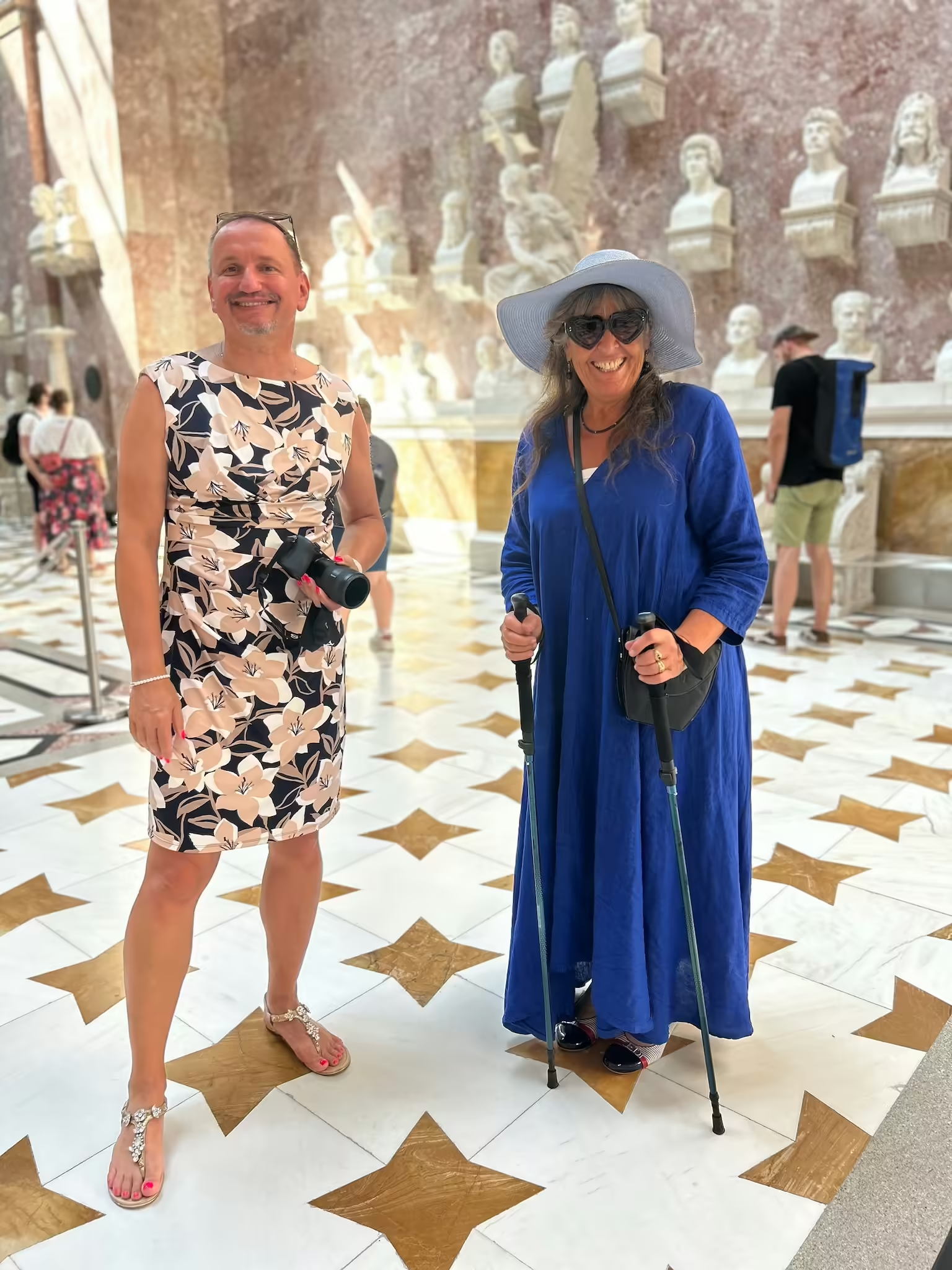
Walhalla
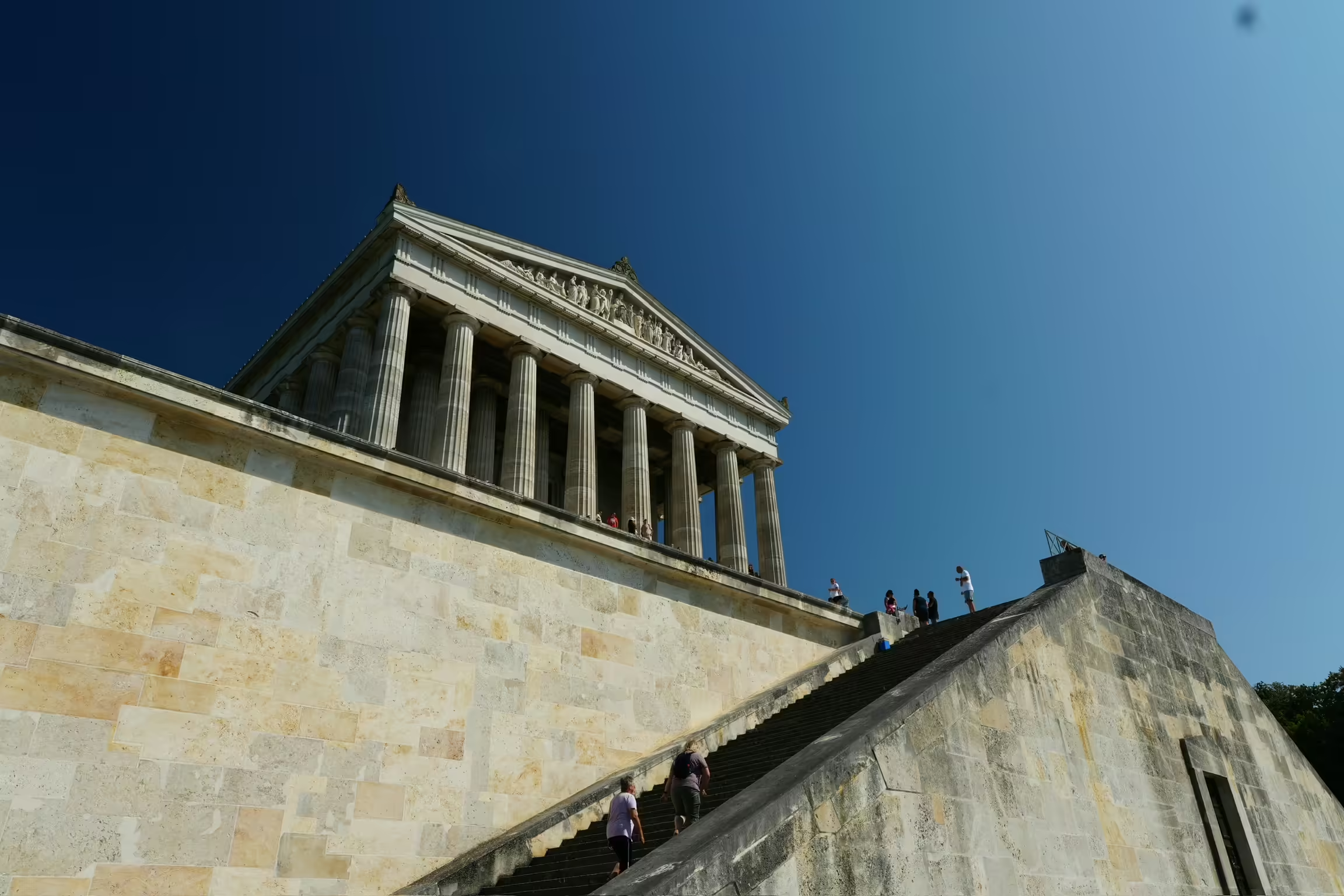
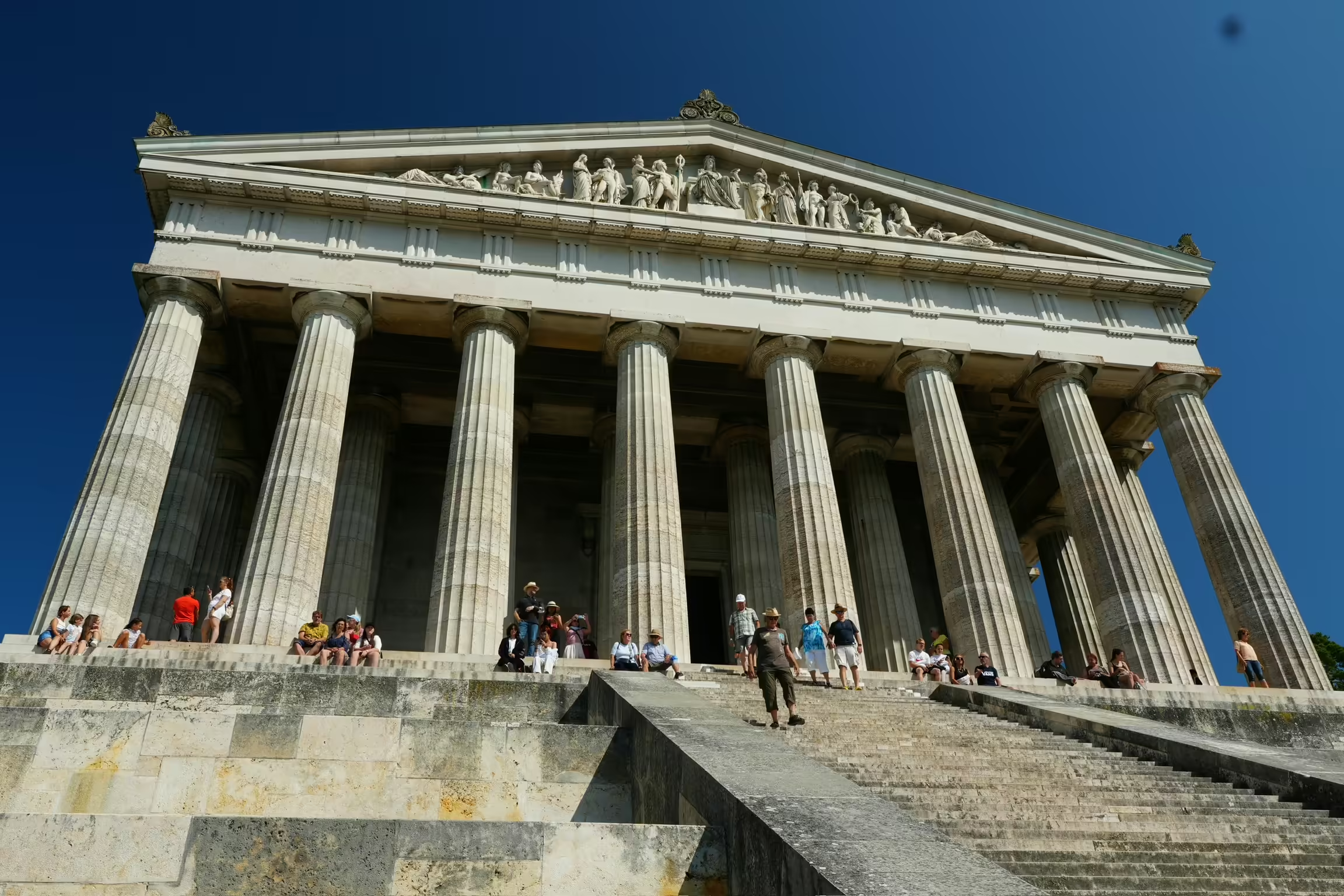
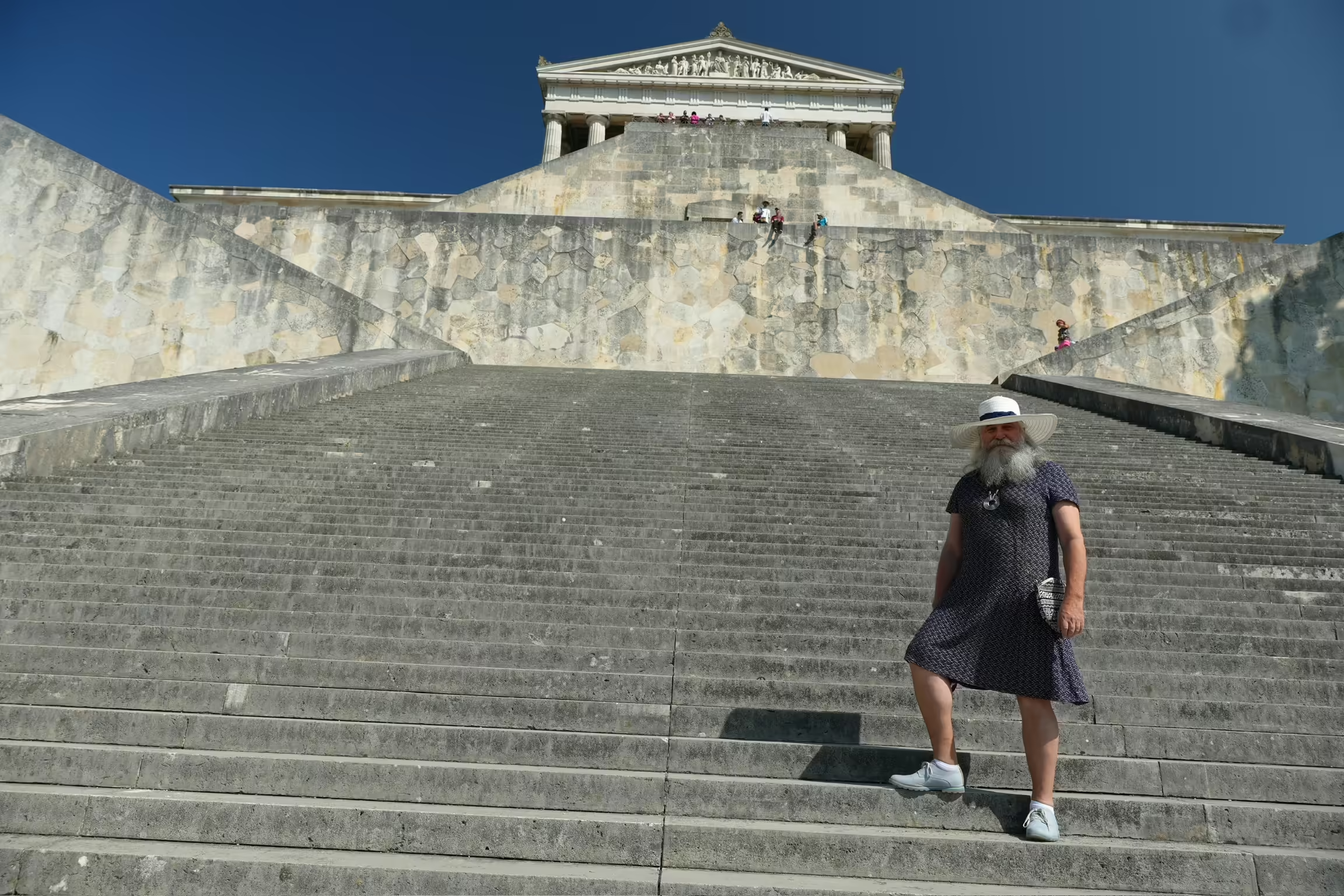
In a high position, which dominates the surrounding landscape, the Walhalla rises near Regensburg over the Danube. With this classicist building in the form of a temple surrounded by columns, one of the most important German national monuments of the 19th century was created here on behalf of the Bavarian King Ludwig I. (r. 1825-1848).
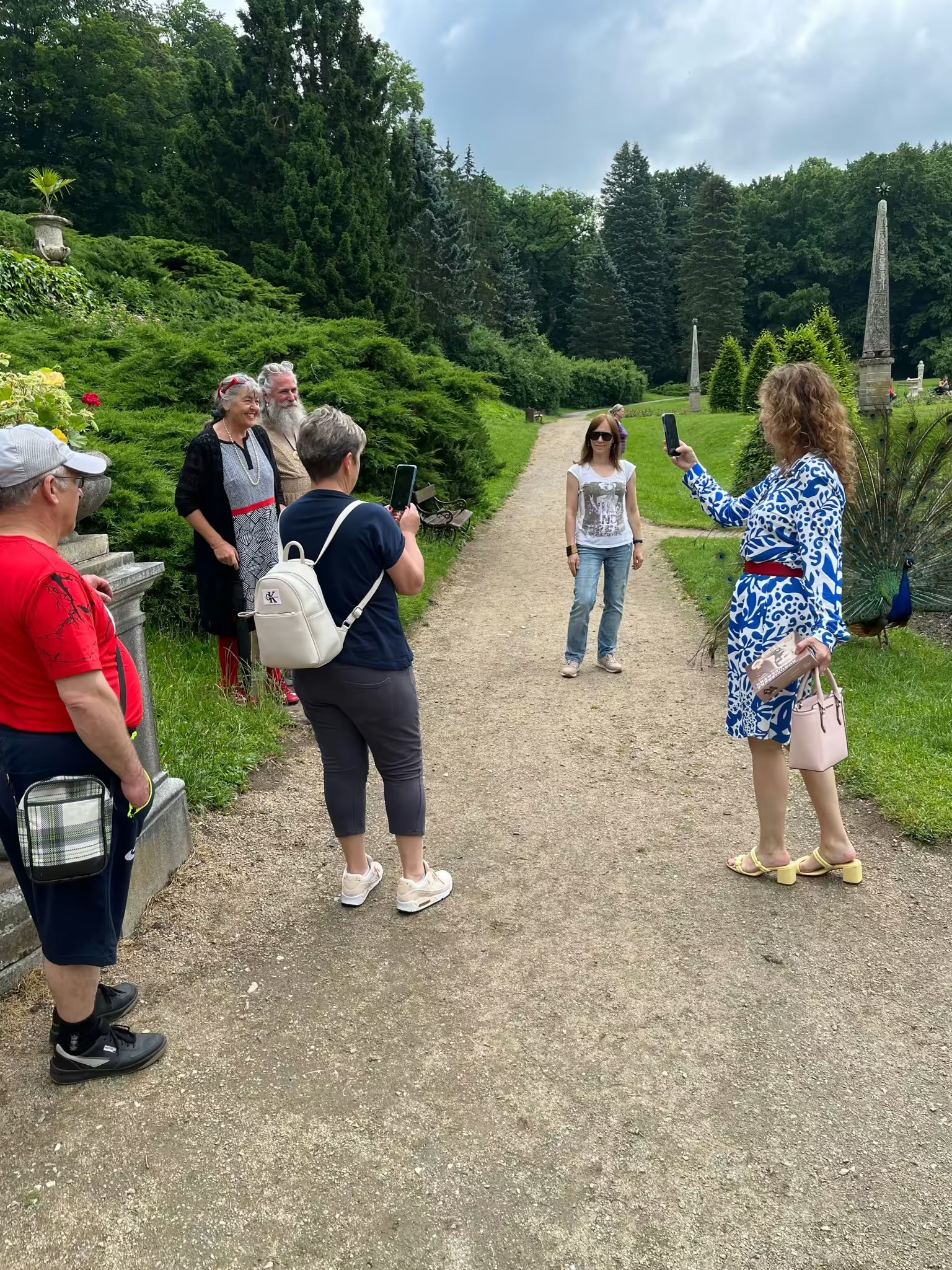
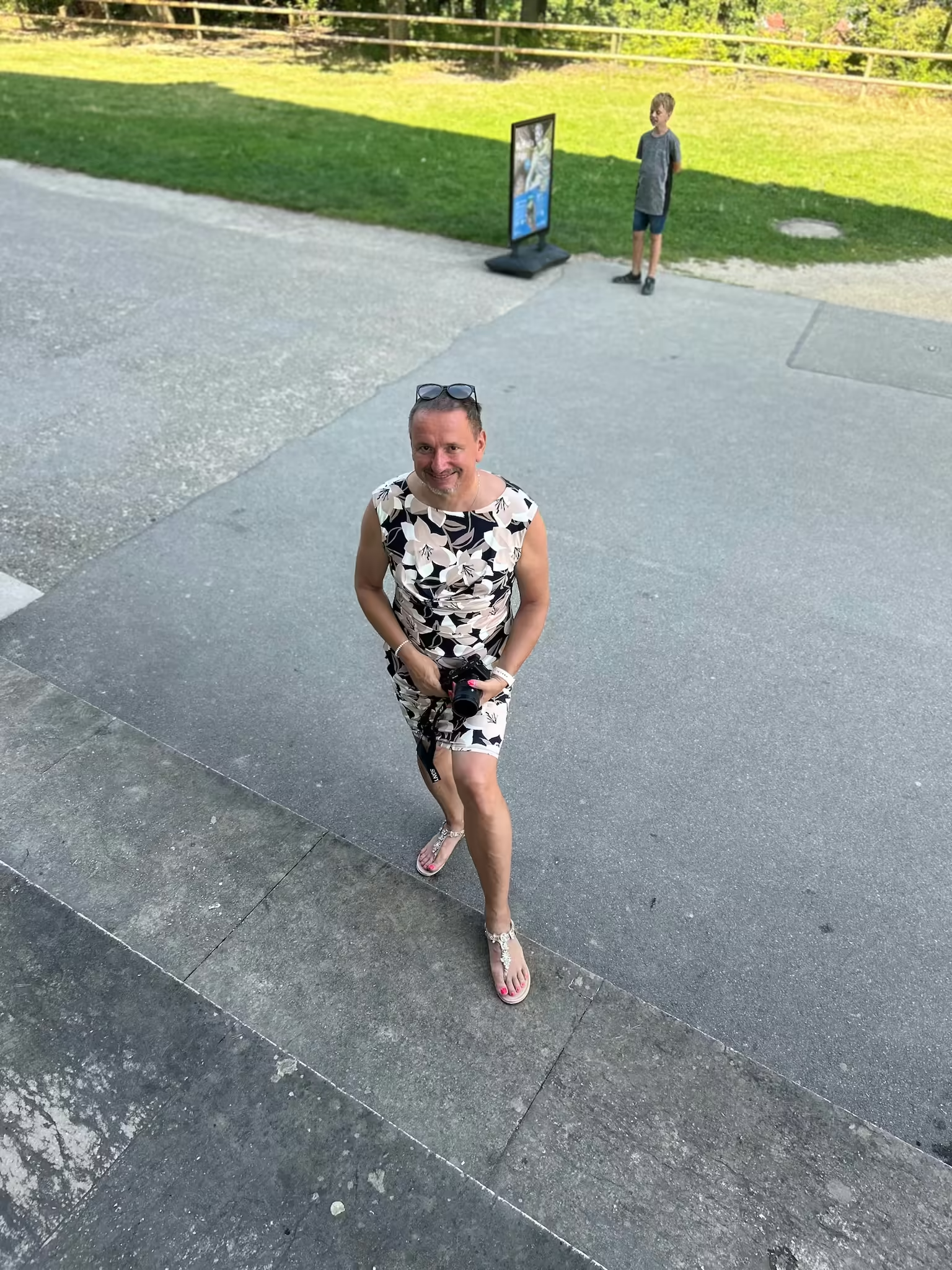
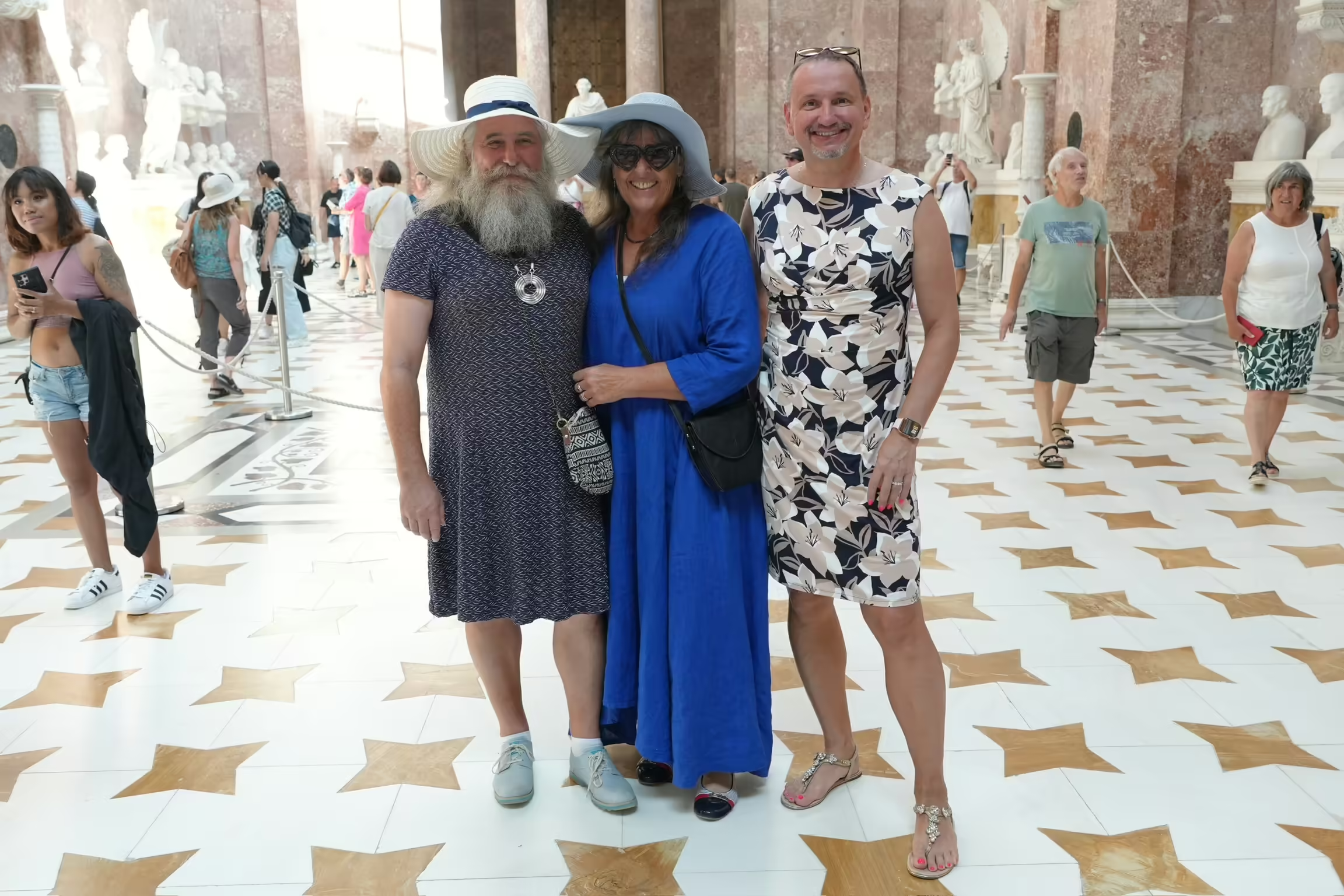
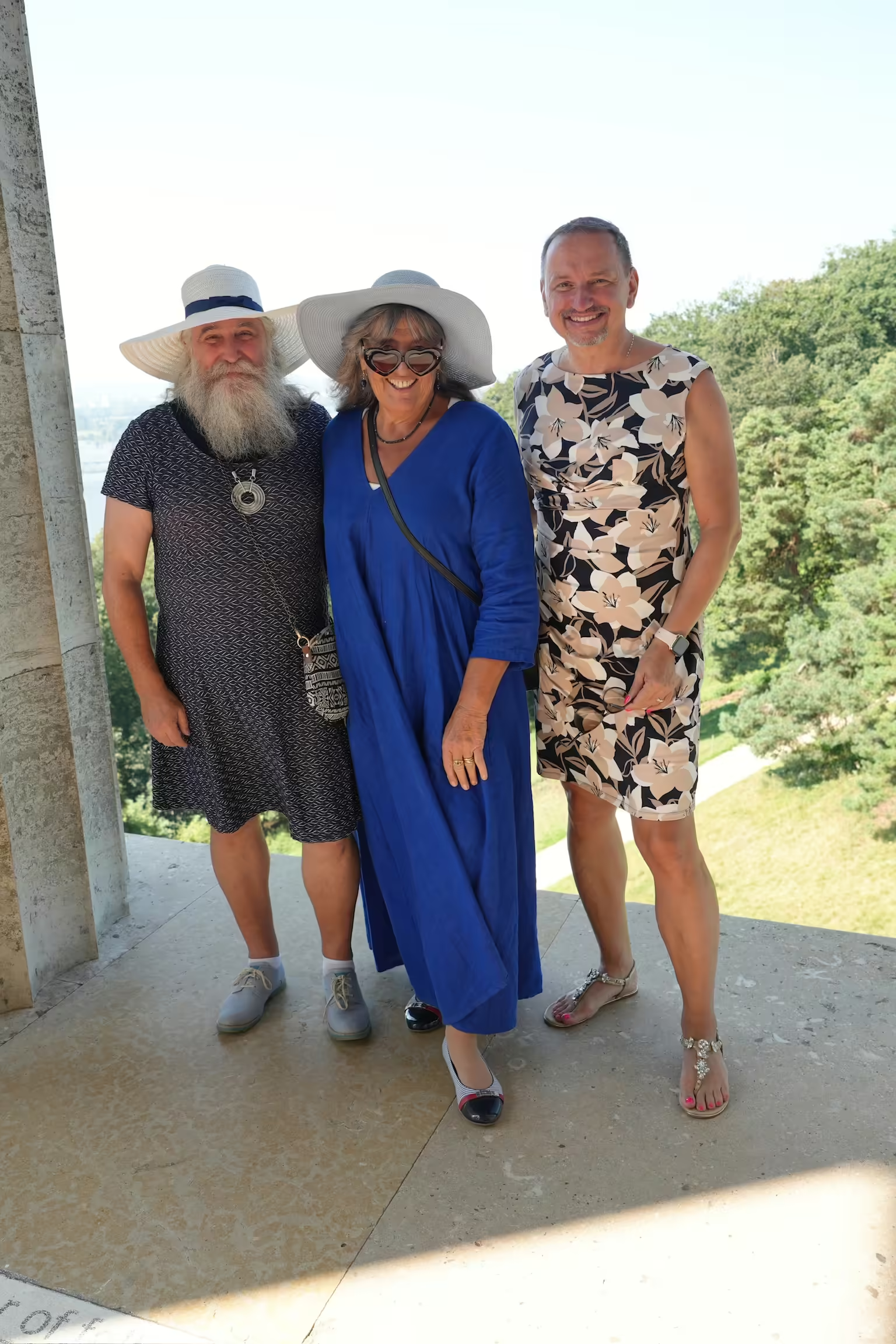
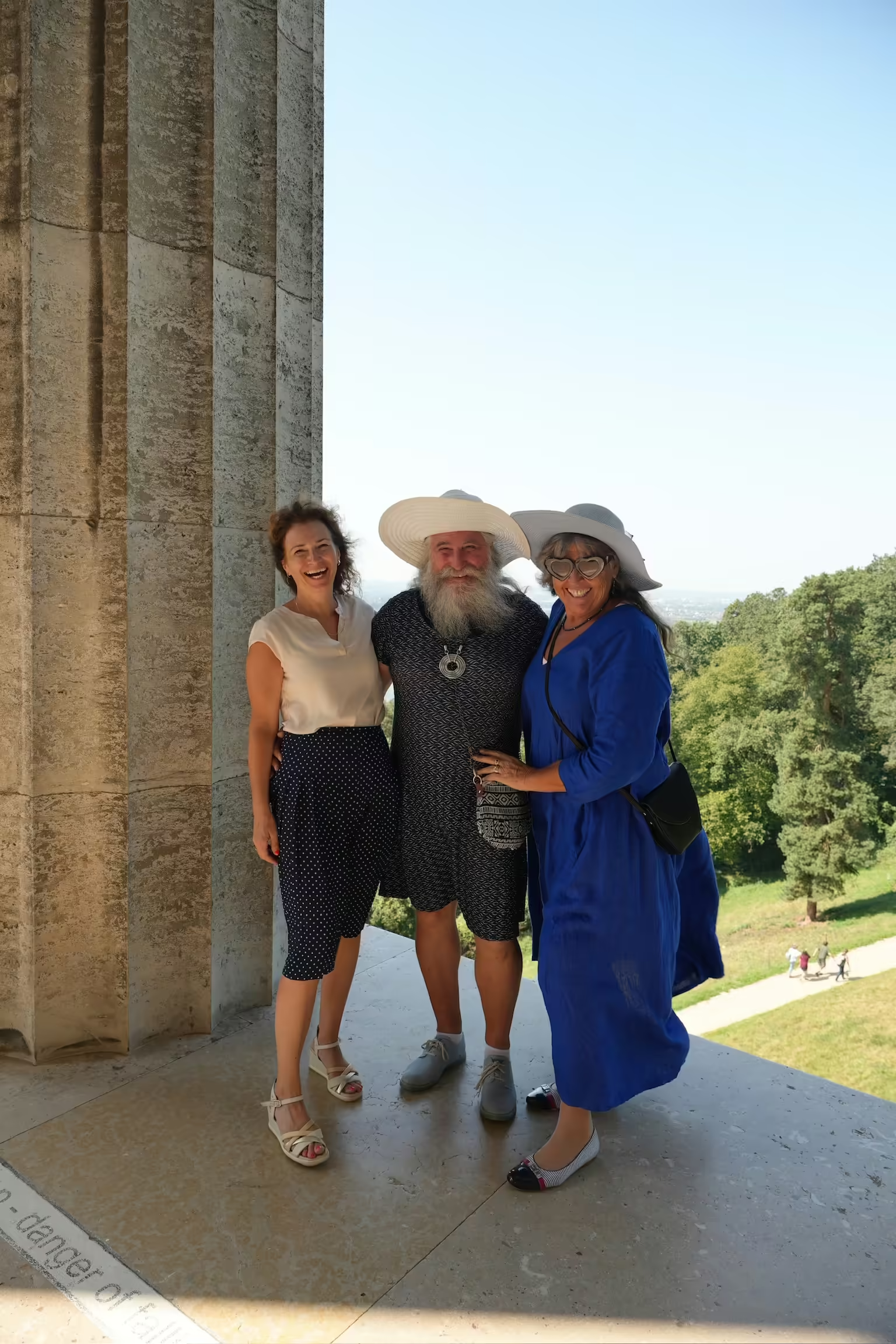
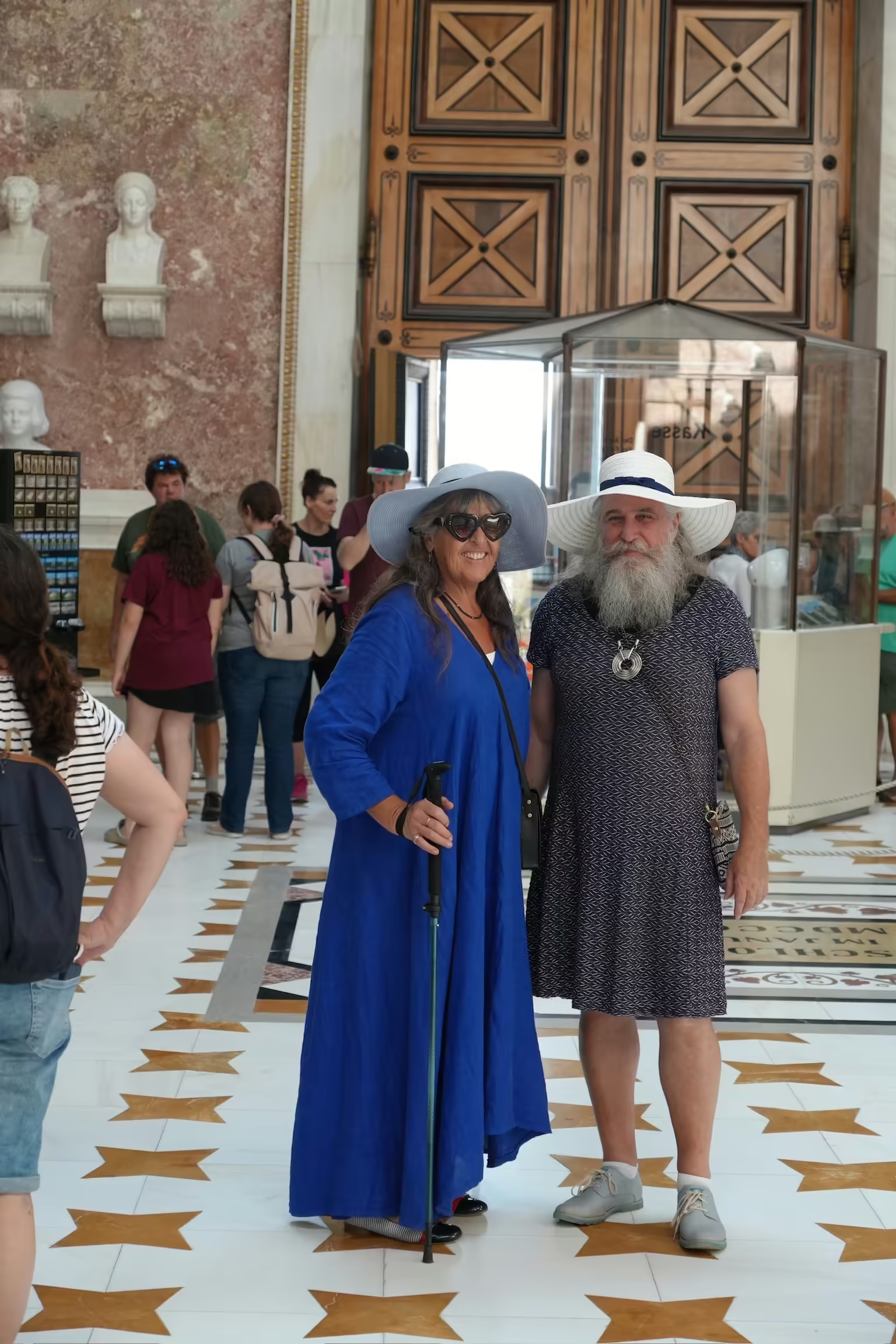
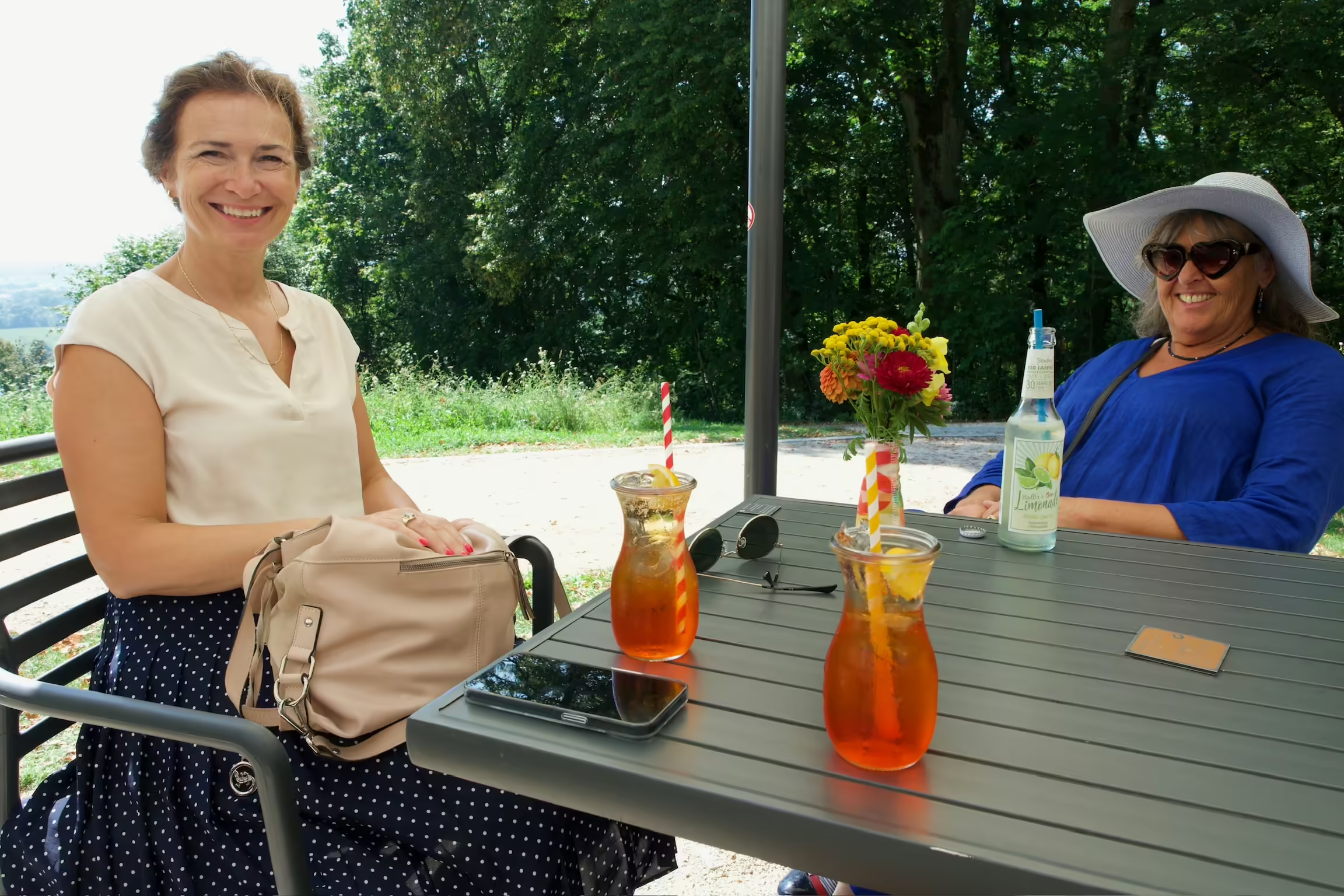
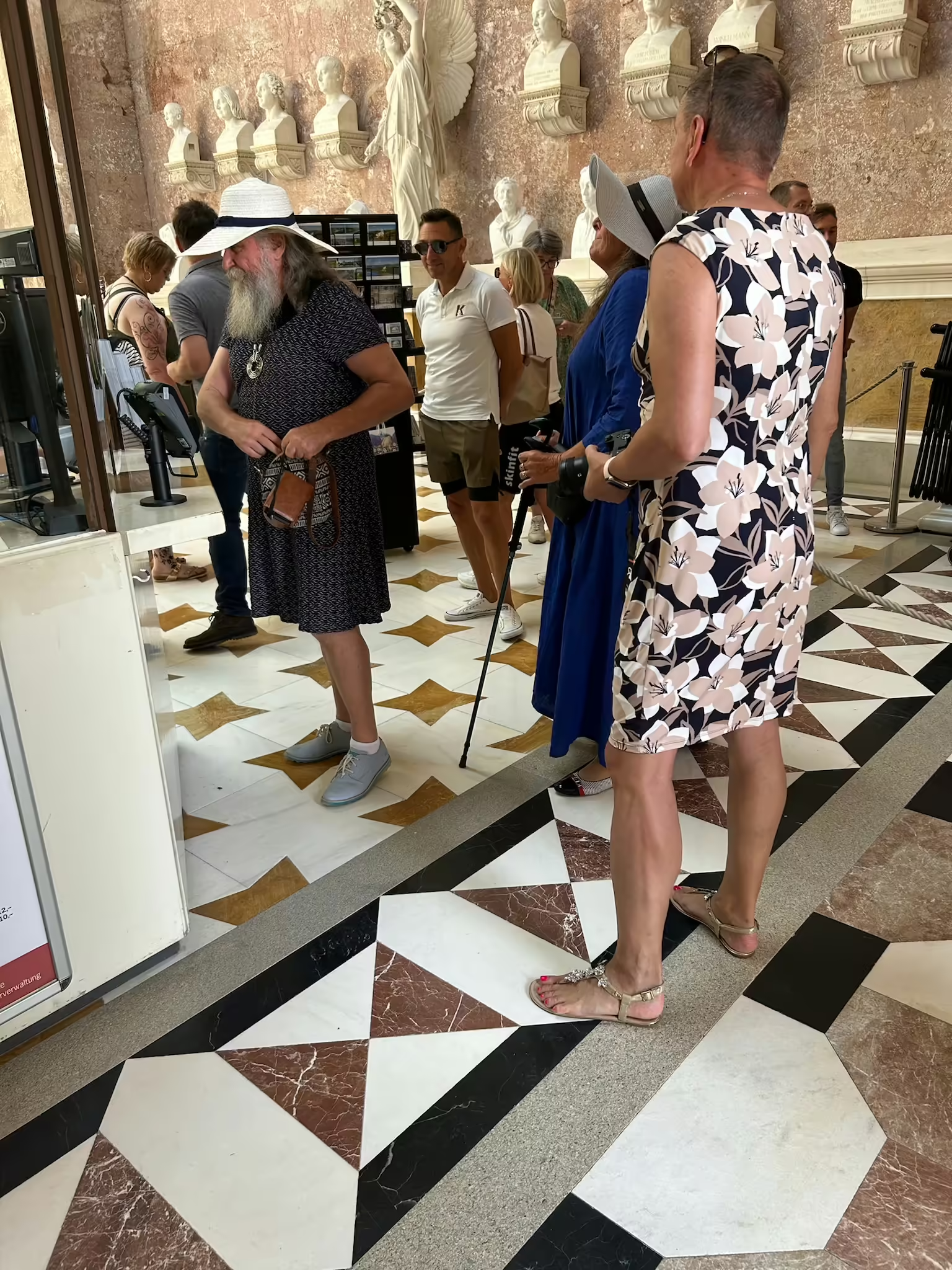
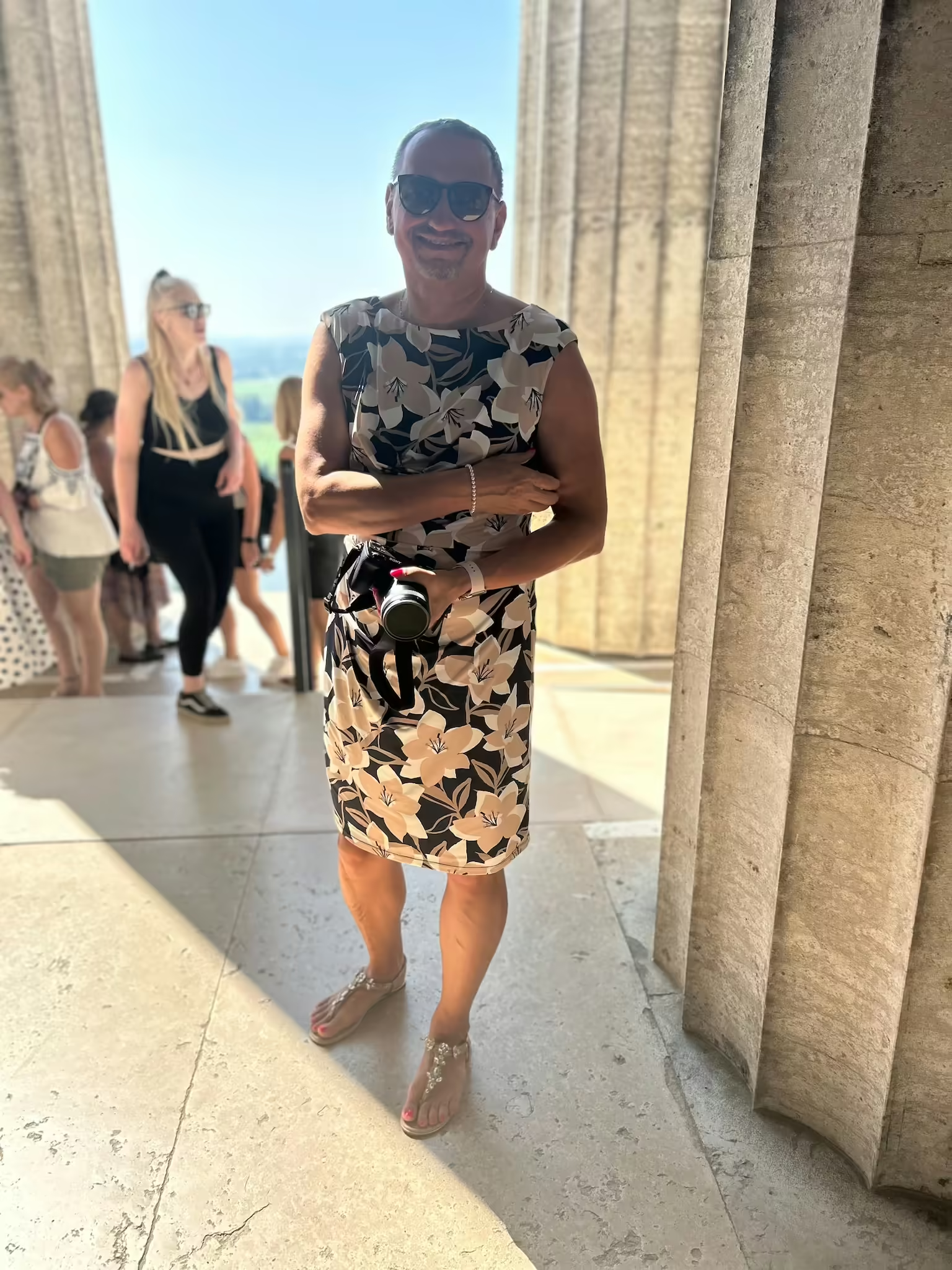
As you can see in the photos, our tour was a blast, not just for us but also for the other tourists who thought we were an attraction. One lady even asked Markus if we were some kind of “movement.” We laughed and said we definitely were, because we had to move a lot to climb all those steep stairs. But the funniest part was taking photos outside, where Markus’s hat kept flying off because of the strong wind. Míša was holding it from the back, Ingrid from the front, but she had to let go for the photo, and the hat immediately flipped up, making Markus look like Speedy Gonzales. 😀
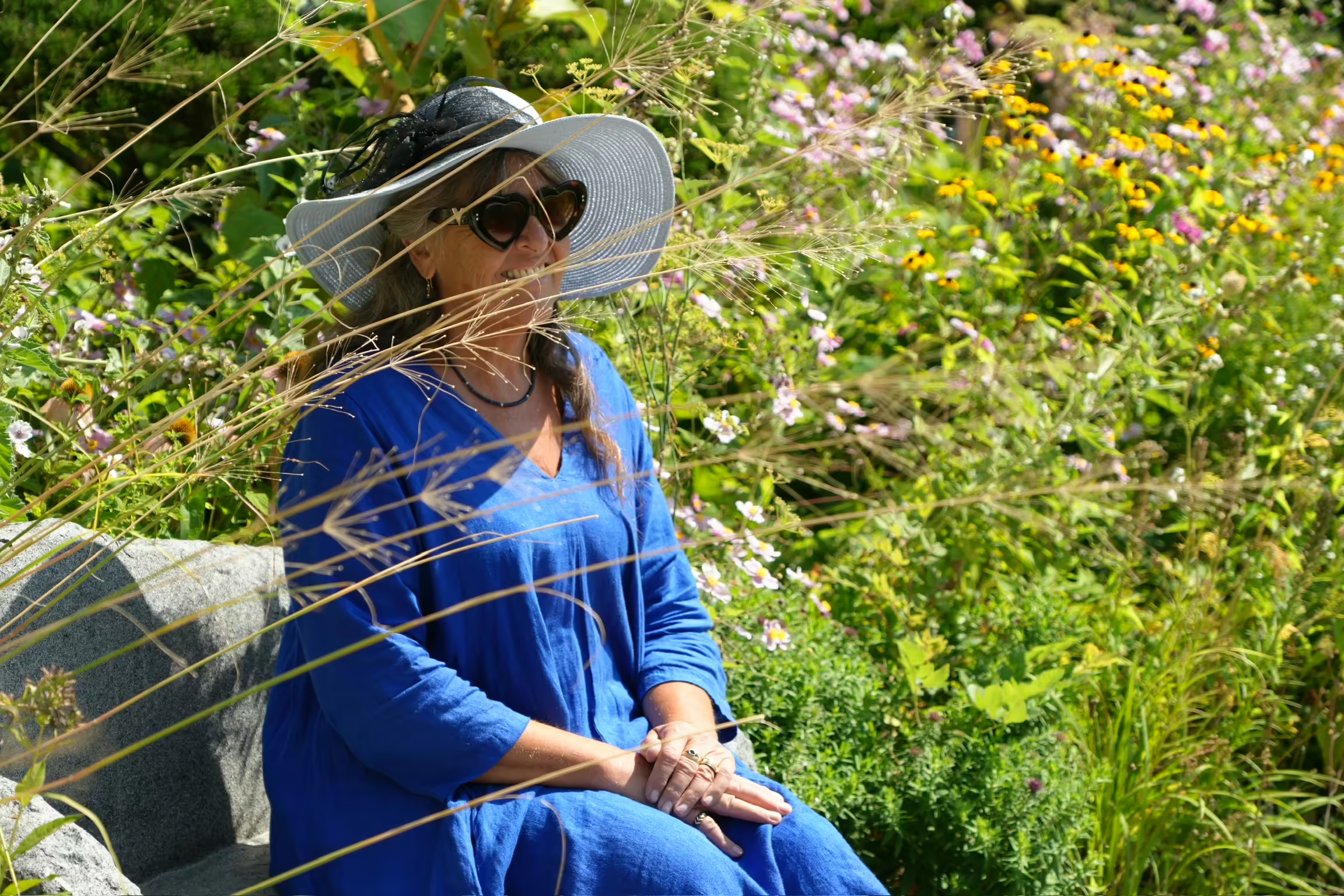
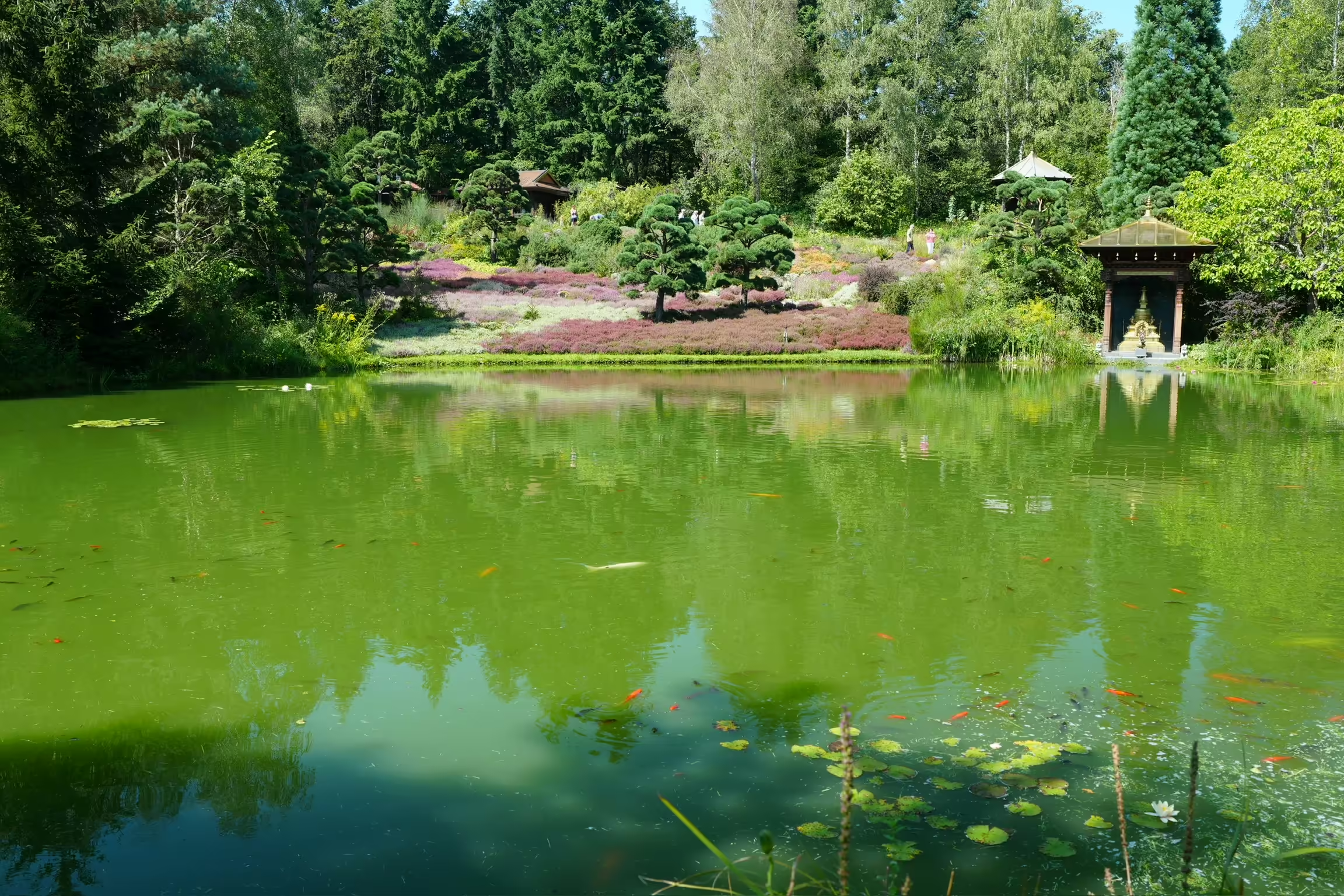
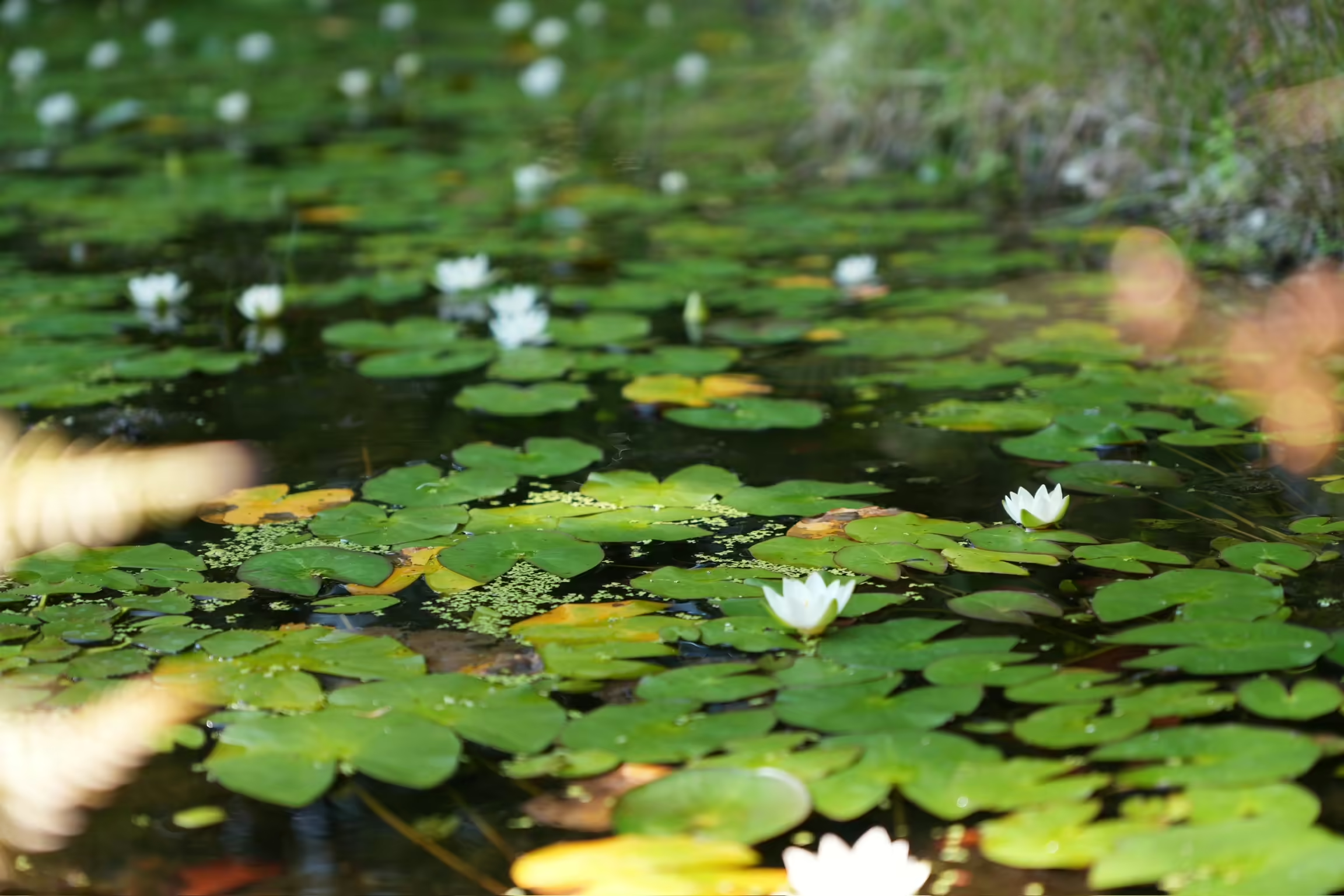
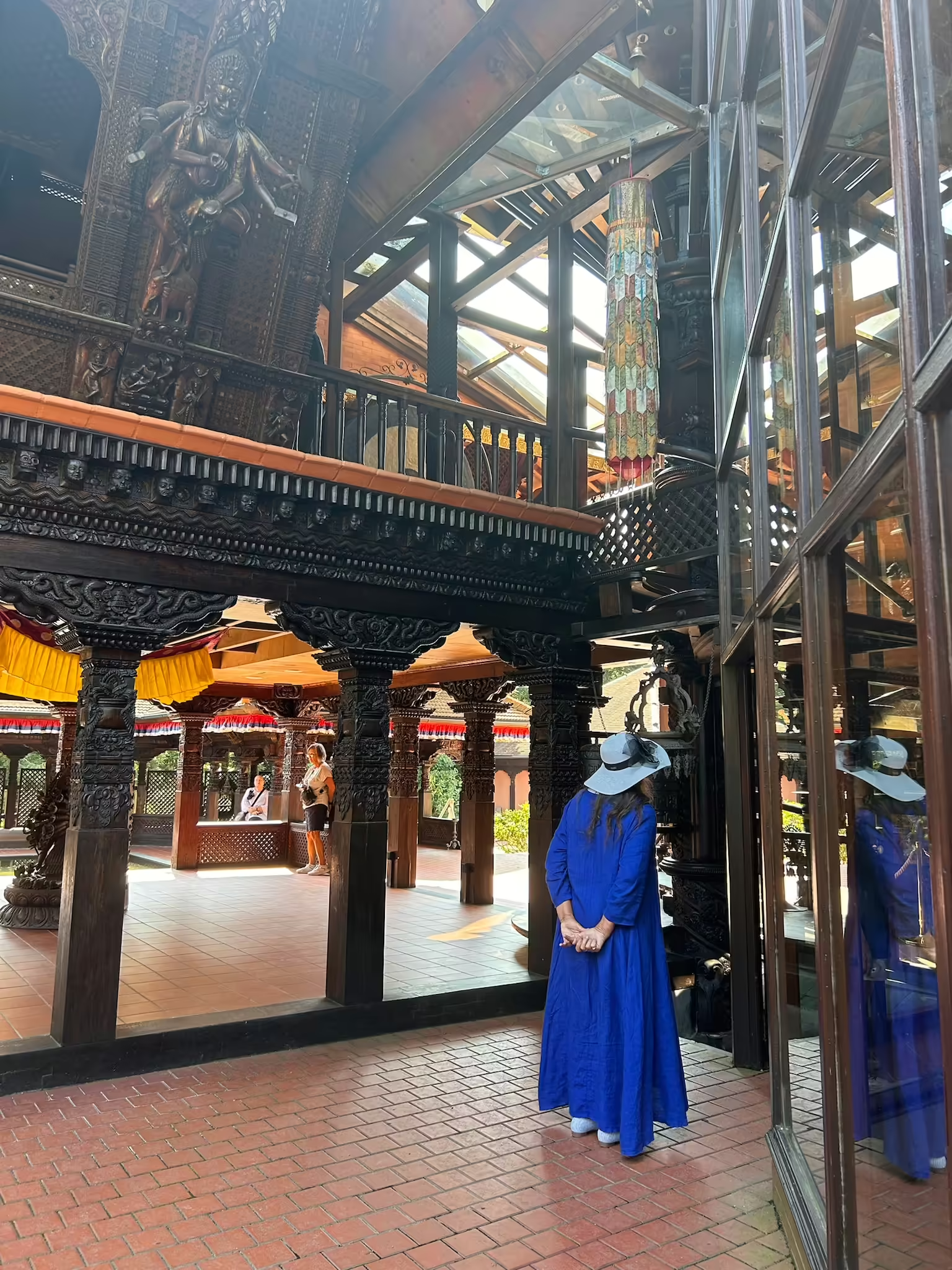
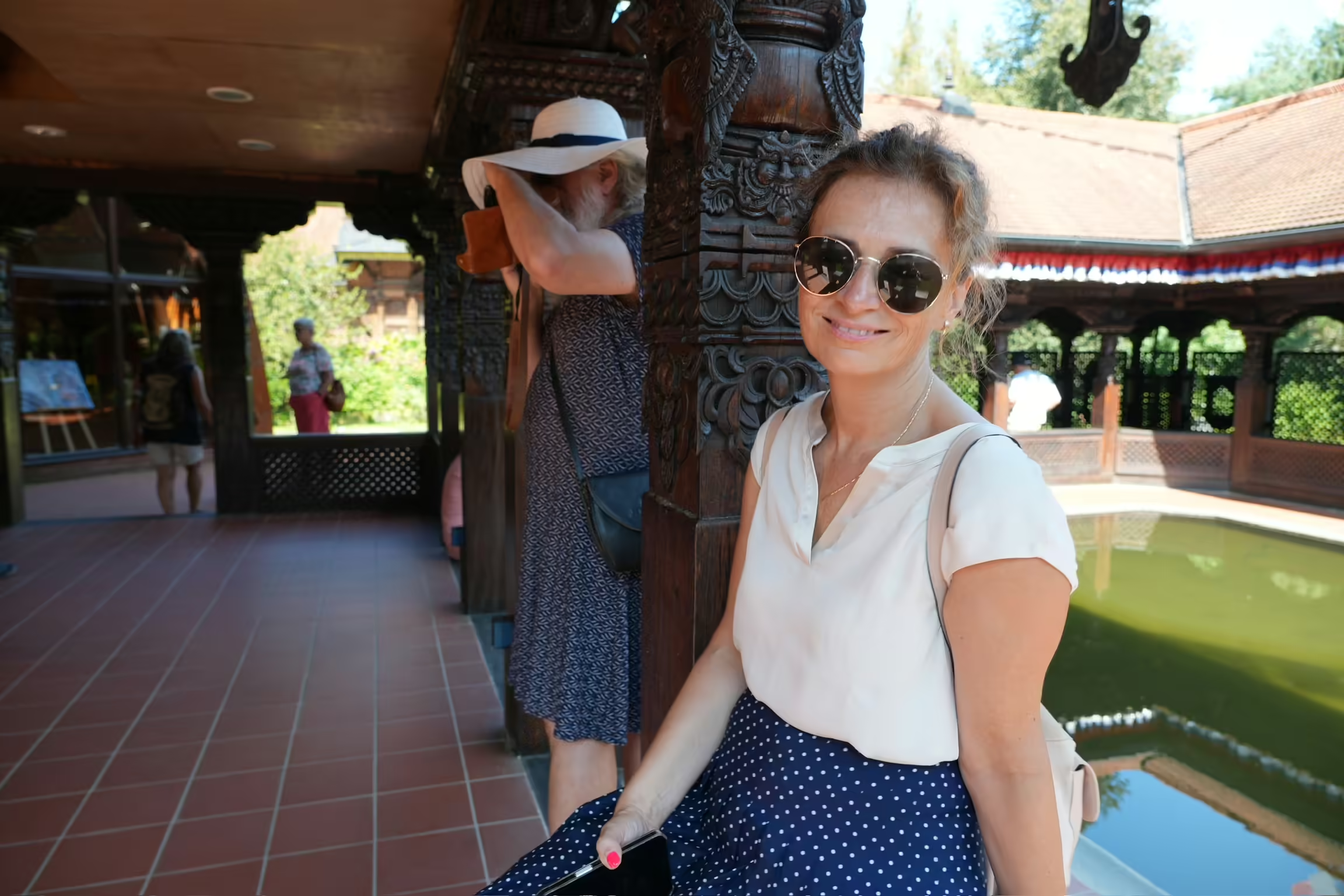
Nepal Himalaya Park
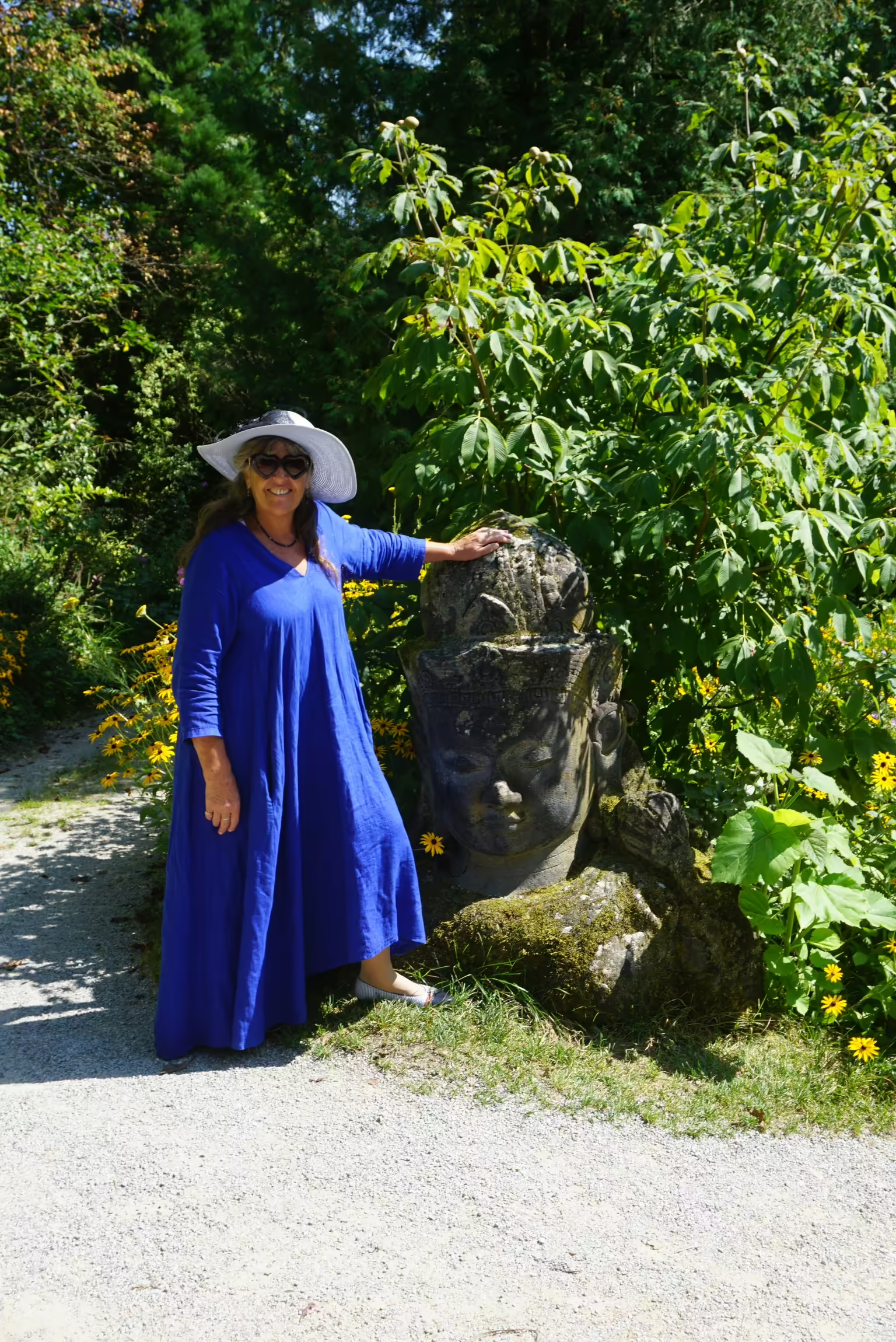
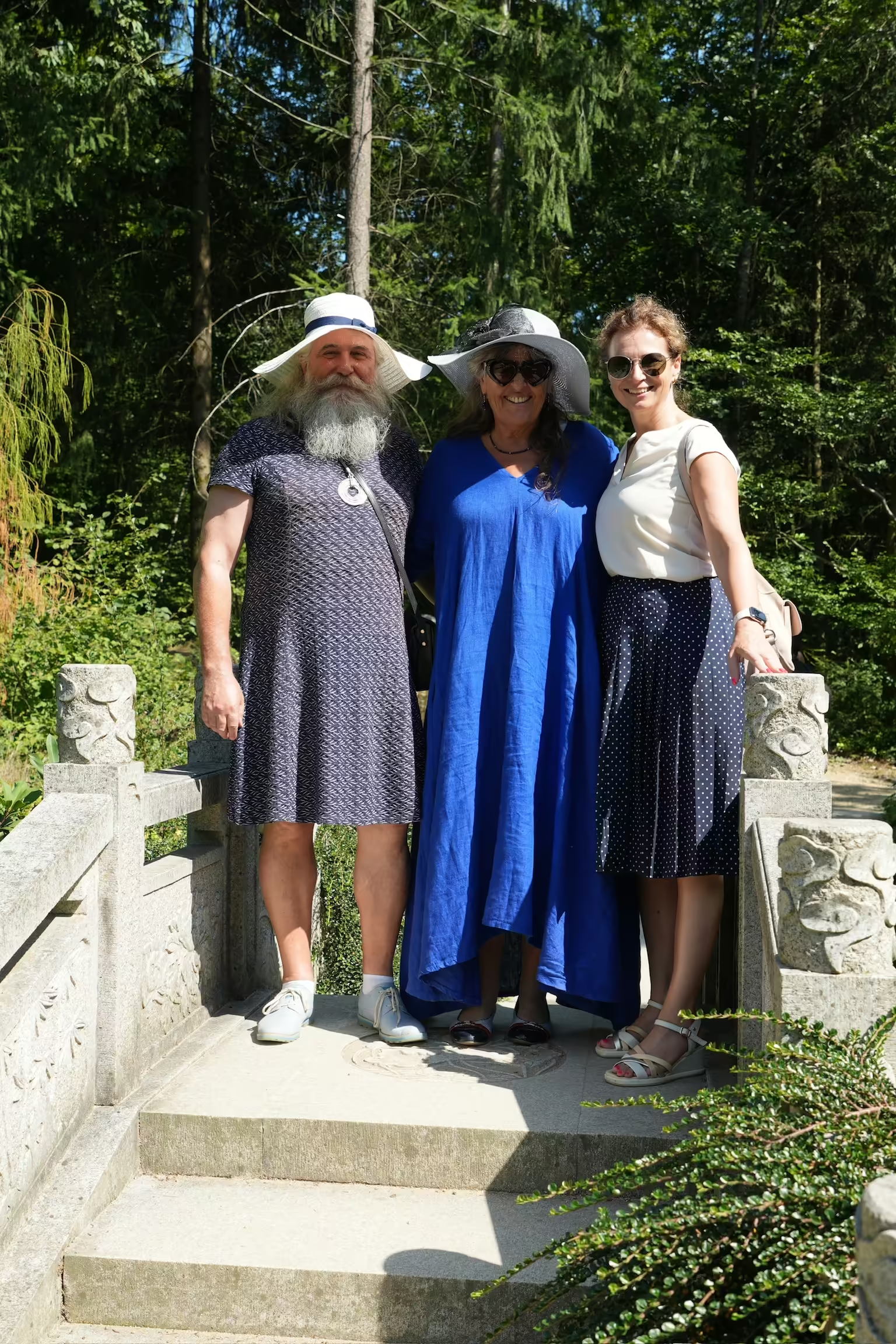
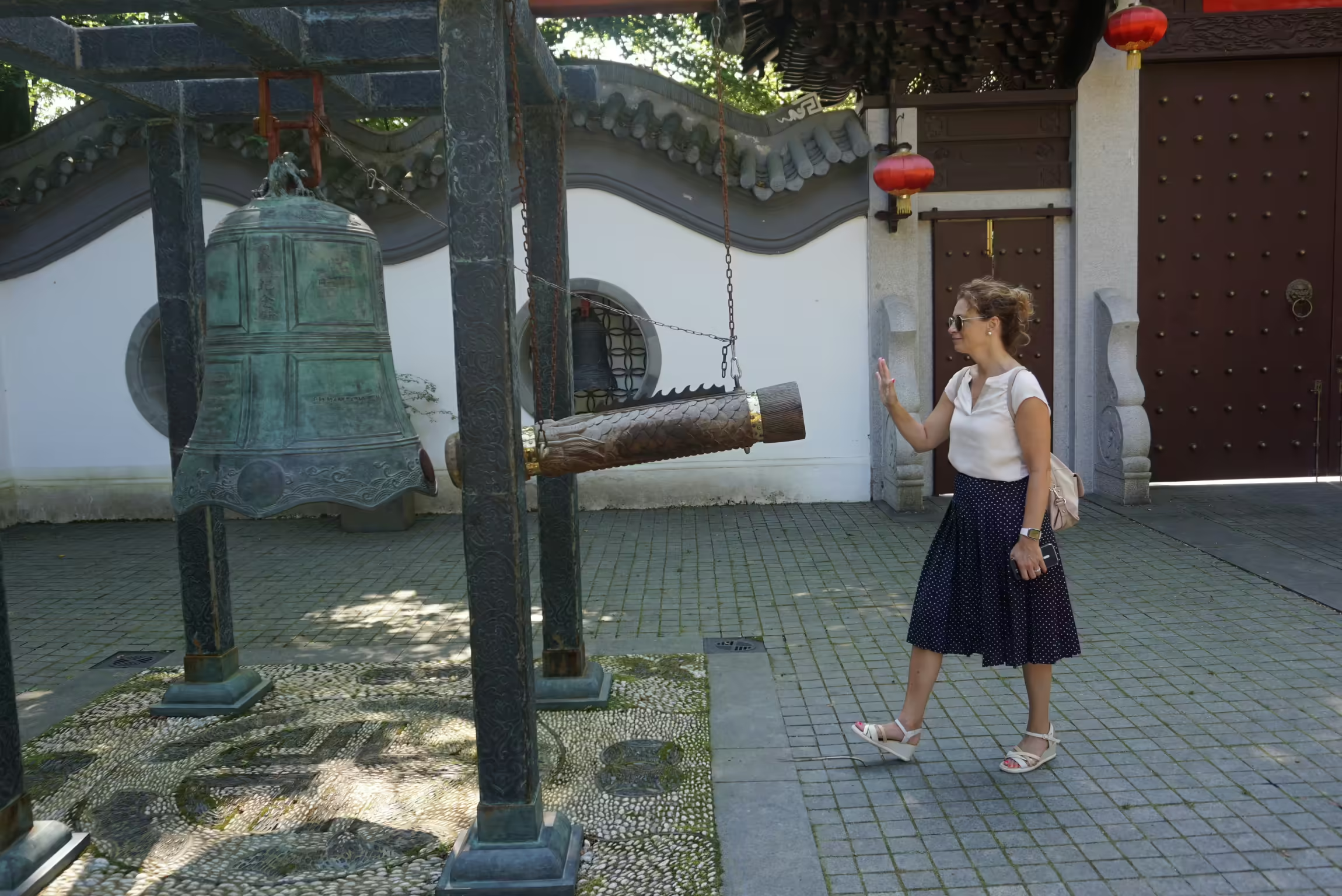
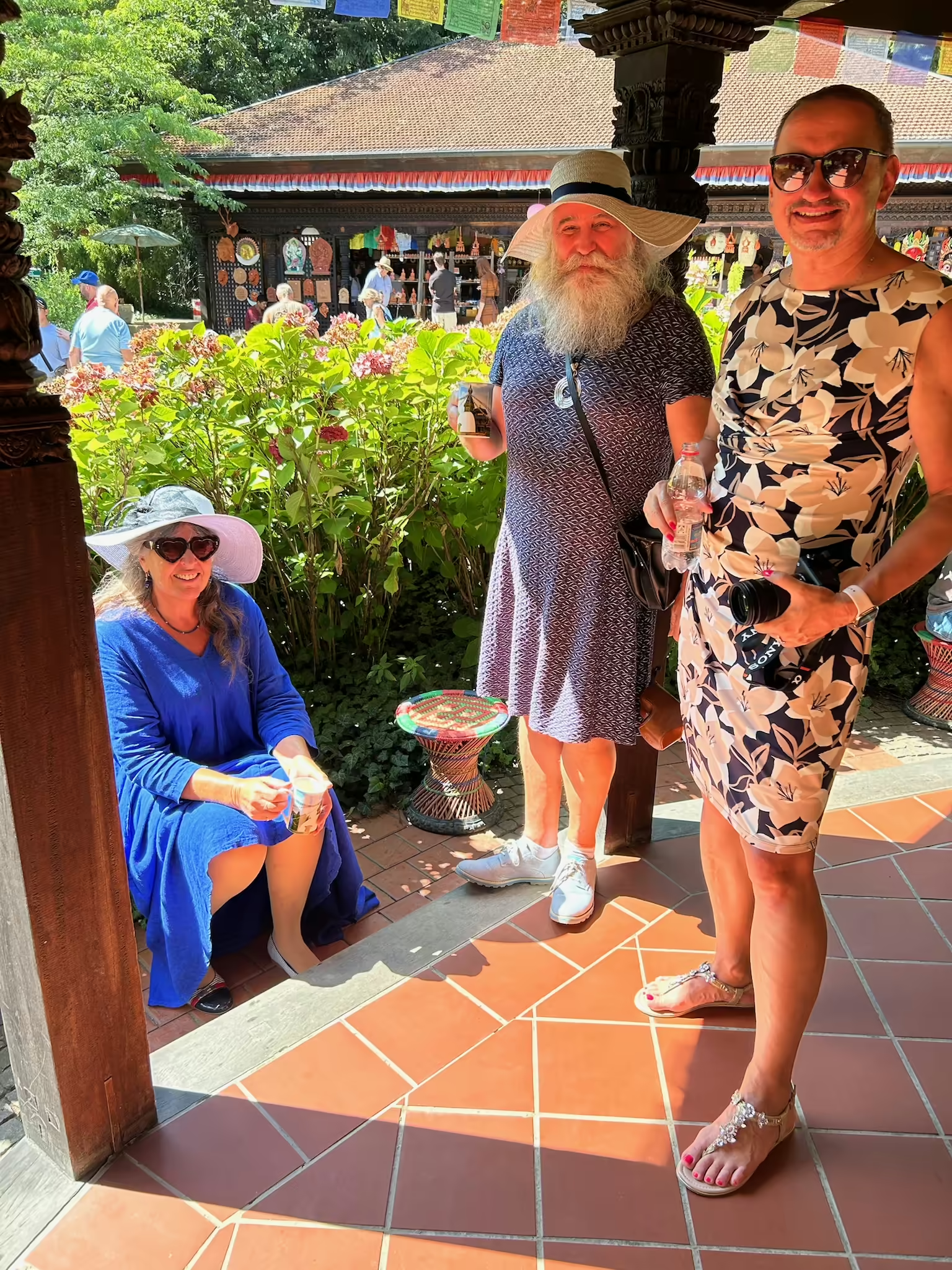
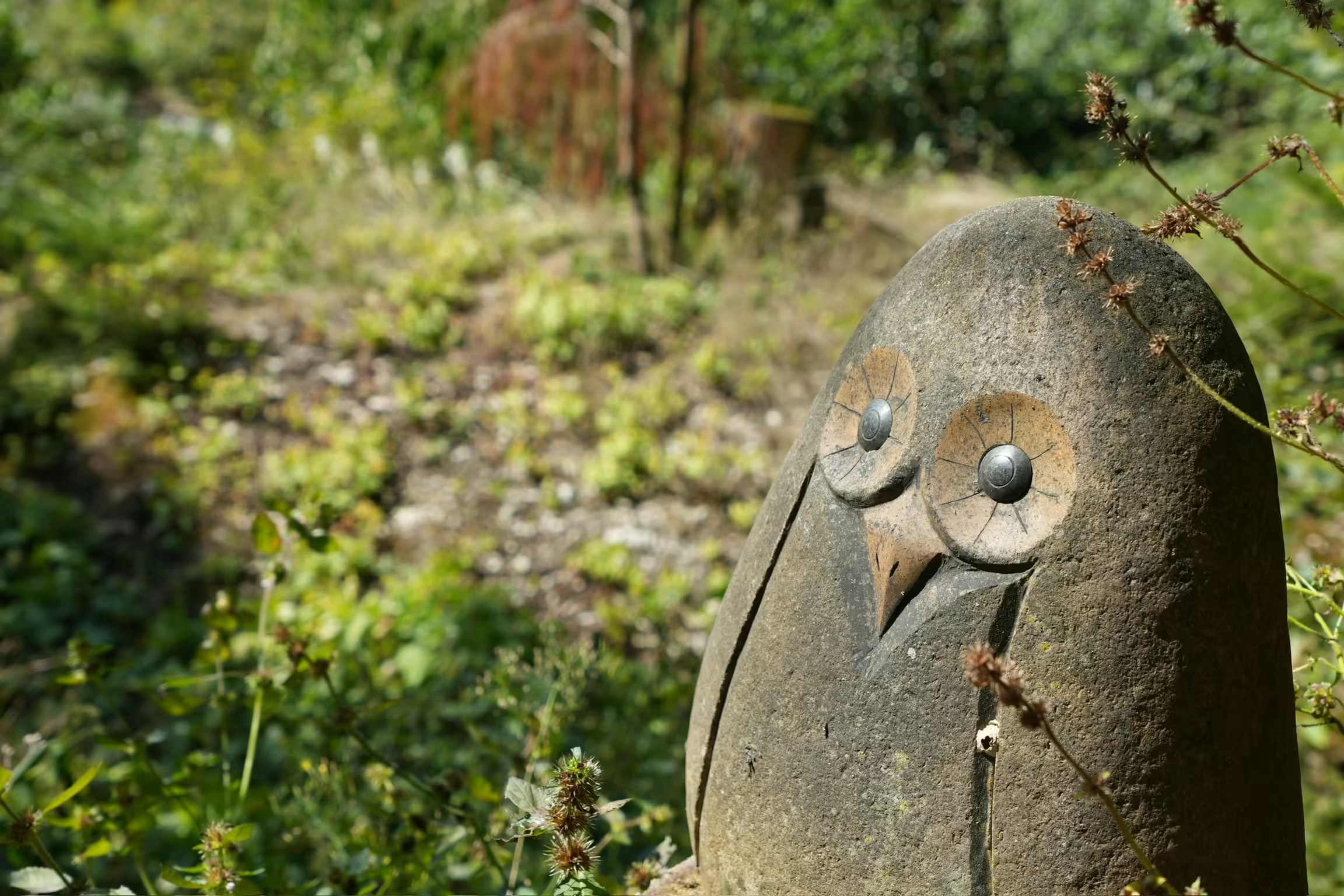
This visit was really hectic. In one day, we managed to visit the Bavarian Walhalla, the Nepalese Himalayas, and on our way home, we also stopped in Italy (a large Italian store in the center of Regensburg). We don’t have any photos from our visit to Italy, so please enjoy the ones from Nepal instead.
As you can see, it was challenging 😀
Although we just came from our last visit, we are already looking forward to the next one. Sort of… 😀
Over the weekend, after all the vacations we took with and without the kids last month, we stopped by Michaela’s parents in Ústí nad Labem for a visit and Saturday lunch. And since Ústí nad Labem is right on the German border and Dresden is just a stone’s throw away, we usually stop there too. And last weekend was no different.
We love Dresden for its laid-back atmosphere, reconstructed historic center, beautiful villa districts that rise above the Elbe River, friendly people, and the opportunity for a nice romantic walk along the water. And also for the shopping opportunities for fashionable clothing, which can often be found here at great discounts, and there is usually a larger selection than in stores in Prague. But we also like to come here just to stroll around the center, have a coffee or beer, enjoy good food, and then head back home to Prague.
And this time was no different. Since it was a beautiful summer day, we just went for a walk, had dinner, and then headed home.
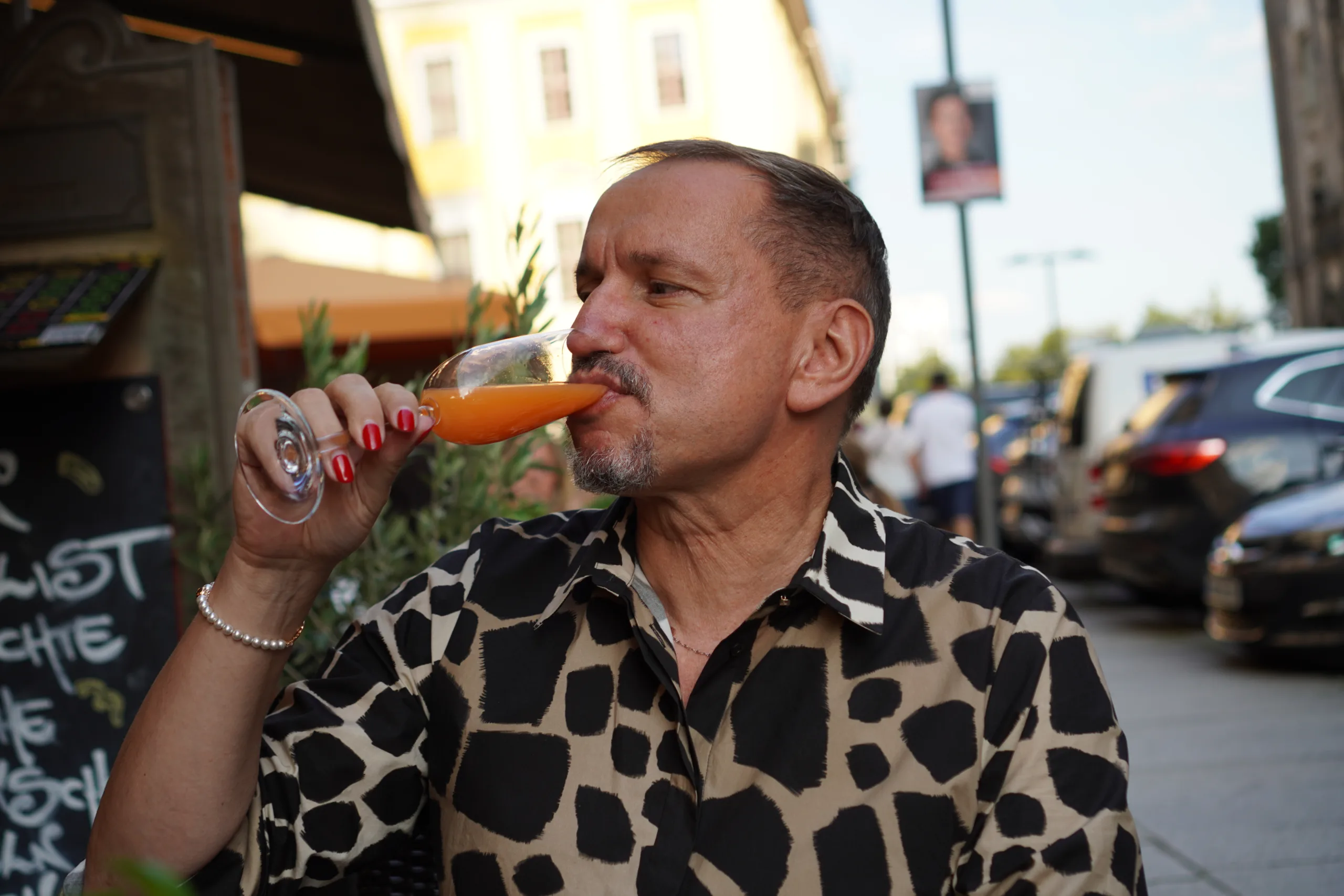
We usually take photos with our mobile phones, but this time we had our Sony mirrorless camera with us, so we had a bit of a harder time finding someone to take our picture, as the controls are a bit more complicated than on a mobile phone. So I looked around until I saw someone with a DSLR camera whom I could ask. And after a while, I noticed three older gentlemen with DSLRs in their hands passing by. Sometimes you see such groups, which are often part of a photography course, which seemed to be the case here. So I asked them if they could take a few photos of us.
And a funny situation ensued, which you can see from the photos. One of the men took our camera, and the others started giving him instructions – how to compose the shot, to take it vertically, horizontally, in detail, that he was too close, etc. We all had a great laugh. And only after we started talking did we find out that the gentlemen were friends from France, traveling around Europe together and just passing through Dresden. So once again, we thank them for the nice photos and lots of laughs.
And as a special treat, we included another photo from the “staring until our eyes fall out” series as the final image. 😀
Let me as a woman dive little deeper with the second tip mentioned in the post What the girls know, but no one told the boys. 🙂 So, what’s today’s topic? Do you think everyone can dress for the occasion? But is it really that simple?
When I got into the world of “Men in Dresses” thanks to Vlasta, I noticed one mistake guys sometimes make. They don’t consider the occasion and, in their excitement to wear what they want, they end up wearing everything they like, even if it’s not suitable for the occasion. You wouldn’t wear the same thing for a mountain trek as you would for brunch with friends, right? You wear different clothes to the theater and different ones for a trip and different ones for a rock concert. For official & business events, there’s usually a dress code you can easily find online, which makes it easier to decide what to wear, but what about other situations?
To explain, I’ll use specific example.
You’re going for a walk in the city on a beautiful autumn day. You put on heels, a short skirt, fishnet stockings, and a silk blouse. You might think, what’s wrong with that? Essentially, nothing—it’s nice clothing. But it’s not ideal for a walk. And how does it end? Your feet are burning from rubbing against the fishnets, your calves are cramping, and your blouse is sweaty. Basically, a disaster and your confidence is shot.
My advice? Save this outfit for an informal dinner, drinks with friends, or brunch. You’ll look great and stay elegant the whole time. Well, depending on how many drinks you have, but that’s another story, right?
And for a walk? Choose comfortable shoes with a smaller heel that you’ve already tried out. If you want to wear fishnet stockings, go ahead, but choose a skirt that reaches your knees or mid-calves. An elegant top or bodysuit will look great and you won’t have sweat stains under your arms.
So let’s look at a few examples
Nice comfortable flats & dress for a long walk in the parkComfortable clothes for walking around ViennaSailing time in CroatiaParty wear for the Carmen opera at the Arena di VeronaLet’s rock out to a punk concertVernissage of young artists in Prague
And my summary at the end
I hope we’ve conveyed our idea how to Dress for the Occasion to you. Even though it’s not entirely simple, fashion and clothing are about each person’s individuality. Remember, less is sometimes more, and every outfit has its occasion. You have it tougher than women, but it’s not impossible.
Here’s a tip to help you navigate this better. Always imagine what you would choose from a men’s wardrobe and what the woman by your side would usually wear.
Hope it helps and feel free to express your thoughts in comments bellow.
Good luck and don’t forget to subscribe if you haven’t already done so, so you don’t miss our articles!
Our first social event of the new season – the opera Don Pasquale at the Vienna State Opera. The performances and the opera were, as always, a wonderful experience. So far, the Vienna Opera has never disappointed us. Despite its age, the message of this play is still relevant, and any mature man who desires a young wife should definitely give this work a try. 😀 Thank you very much for the invitation and for the tickets to the Vienna Opera team that invited us.
It was quite hectic for us as we were getting up at 3am for the train to Vienna. And the very next day we were up again at 3 in the morning to go to the airport to Amsterdam. But it was definitely worth it! 😀
But we still managed to go to our favorite places. Before the opera, we went to lunch at Figlmuller’s for a steak as big as an elephant’s ear :-D. If you haven’t been here yet, it’s like not being in Vienna. 😀 We definitely recommend it, and we also recommend having one portion and splitting it with your partner. Otherwise you are unable to eat it. After all, it can be seen from the photos. 😀 Then we had coffee and cake at Gerstner’s in the early evening. For the first time, we had an old classic cake called Dobostorte, which is not at all easy to make. And the cake was delicious as always. And finally, after the opera, we went to the Black Camel for sandwiches and a glass of wine. We really like going here, because of the atmosphere that this very traditional restaurant with a lot of history has.
Originally published on 15.8.2021. The original printed version is here.
Author: Klára Zajíčková
Notice for mobile phone readers: This post is best viewed on PC or tablet. Google translated English version of the article follows after the original Czech version. Just scroll down, it’s really long. 🙂
Manželská dvojice si oblíbila trochu jinou módu a vzdoruje s ní společenským konvencím
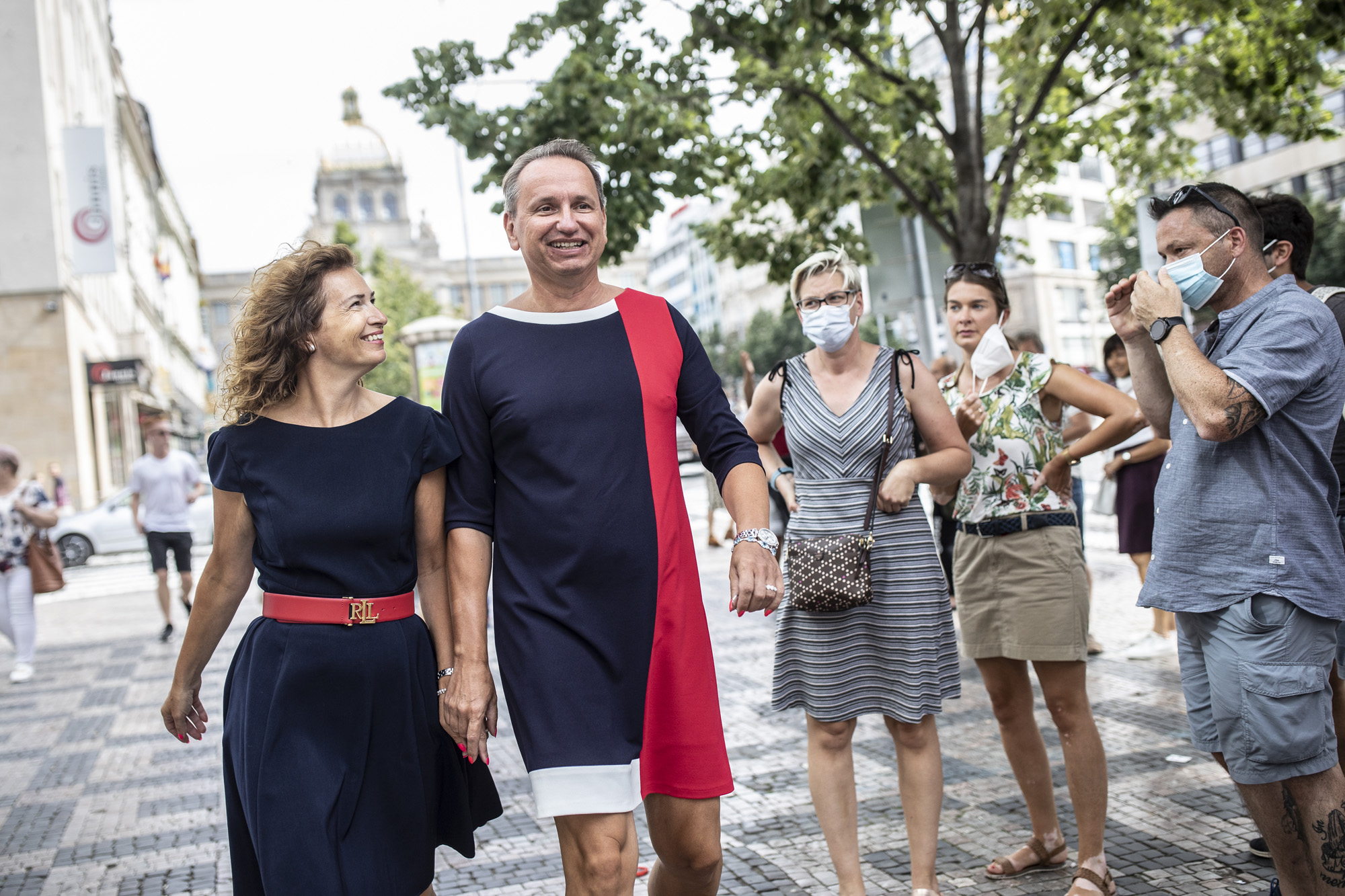
V patách mají často cizí lidi, kteří se je nenápadně snaží vyfotit. A nezáleží na tom, jestli si vykračují ulicemi Prahy, Vídně nebo Florencie. Na fakt, že spolehlivě přitahují pozornost, kamkoli se vrtnou, jsou už zvyklí. Na schůzku s novinářkou v centru Prahy manželé zvolili, jak je u nich zvykem, sladěné šaty: Michaela tmavé s bílými květy a nadýchanými rukávy, Vlastimil bílé pouzdrové, rovněž s květovaným vzorem. Na nohou mají stejný tvar sandálů na podpatku – ona hořčicové, on červené.
„Pro nás je to takový kontinuální sociologický experiment. Praha je velká, jezdíme po světě, většina lidí nás tedy vidí poprvé, takže na překvapené reakce jsme zvyklí,“ říká Vlastimil s tím, že odezva od kolemjdoucích je velmi různorodá, někdy až úsměvná. Když se lidé snaží z davu jasně vybočující dvojici někam přiřadit, často je napadá, že se jedná o sázku. Pochvaly vyjádřené zdviženým palcem nejčastěji přicházejí od mladších ročníků. „Modrý koktejlky a kožený lodičky,“ obrátil se prý na manžele rozzářeně mladý muž, když je v půlce února v noci míjel na piazzettě Národního divadla. Pamatoval si Vlastovo oblečení z listopadové návštěvy představení Kylián – Mosty času.
Podobných situací má za sebou manželská dvojice díky častému cestování, návštěvám kulturních akcí a plesů nepočítaně. A žádná z těch, které by se daly hodnotit jako negativní, nikdy nevyústila ve skutečný konflikt. Michaela ale dodává, že pro ni bylo v počátcích vztahu neutuchající množství pozornosti vyčerpávající. „Dneska už mi to nepřijde, ale ze začátku jsem byla vyřízená, že vypotřebuji tolik sil jen na to, abych někam došla nebo dojela metrem,“ říká.
Zejména jí vadilo, když se ji s Vlastou někdo snažil „tajně“ – za zády nebo s mobilem přilepeným na hrudi – vyfotit. Takovým lidem se dřív pokoušeli vysvětlit, že se něco podobného bez svolení nesluší. Postupně se však spolu dopracovali k nejúčinnějšímu a nejméně vyčerpávajícímu obrannému mechanismu: „Přestali jsme si toho všímat.“ Začali navíc o sobě sami psát a publikovat fotky na sociálních sítích. Před rokem založili anglicky psaný blog Gender Blender s podtitulem Fashion Freedom Blog a jejich stejnojmenný instagramový profil už nasbíral téměř šest tisíc sledujících.
Michaela
„Nakonec na partnerovi nemáte ráda jeho džíny nebo kecky“
Jen jeden pokus
Když Michaela dorazila před čtyřmi lety do kavárny na první společnou schůzku domluvenou na internetové seznamce, neonově růžové nehty na rukou naproti sedícího muže oblečeného tehdy do běžného trička a kalhot pro ni byly šokující a nejdříve ji napadlo, že se jedná o skrytou kameru. Když se zeptala na důvod, znělo jí vysvětlení až příliš prostě. „Protože se mi to líbí,“ usmál se tehdy Vlasta.
Dvojice spolu ale zůstala v kontaktu a po čase se domluvila na další schůzce. Na tu již Vlasta přišel v sukni. „Nakonec na partnerovi přece nemáte ráda jeho džíny nebo kecky. A Vlasta prostě toužil nosit šaty,“ vysvětluje Michaela, proč ji neobvyklé sklony neodradily. Naopak u svého nového partnera objevila zaujetí pro módu, které oceňuje. „Nikdy jsem u nikoho neviděla mít takovou radost z oblečení,“ říká Michaela.
Vlastův styl nebyl tématem ani pro její dvě odrostlé děti a překvapivě ani pro šestadevadesátiletou babičku. To bylo důležité, protože čtyřiapadesátiletý Vlasta jako obvykle neměl v úmyslu na počátku nově se rozvíjejícího vztahu nic skrývat. Ani by to podle něj nešlo. Záliba nosit oblečení zcela bez ohledu na společenské konvence měla u něj dlouhý vývoj a dala by se těžko vrátit zpět. „Že se vám to líbí, víte od dětství,“ vzpomíná Vlastimil s tím, že záliba v ženském oblékání se u něj nikdy nepojila s touhou změnit pohlaví a stát se ženou. Měl štěstí, že dospíval krátce před rokem 1989 a do škály nově nabytých svobod čerstvě dospělého muže se tedy vešla i chuť ignorovat konvence ve svém šatníku.
Obava z konfliktů a dopadů na rodinu či kariéru ale projev úplné volnosti celkem nadlouho pozdržela. A tak s nalakovanými nehty a v lodičkách začal vyrážet do ulic až před patnácti lety, když mu bylo zhruba čtyřicet. „Řekl jsem si, že mám jenom jeden život, jeden pokus. A budu ho žít podle sebe, nikomu tím neubližuju, děti nežeru,“ vysvětluje, jak se rozhodl odhodit zábrany. „Když jsem pak ale šel poprvé ven jako chlap v ženských šatech, měl jsem knedlík v krku už u dveří na chodbu.“ Ke svému překvapení však zjistil, že se vlastně nic zásadního neděje. „Najednou přestanete vnímat okolí, připouštět si, že by na tom bylo něco divného, a to vám dodává větší sebevědomí. A čím větší sebevědomí člověk nabývá, tím méně dostupnějším terčem je.“
Být svobodný
Vždy ho bavila móda a na nákupech – nejčastěji v Německu – zjišťoval, že kombinování oblečení může být zábavné. Do práce, kde se léta pohybuje na vyšší pozici v IT v oblasti zdravotnictví, poprvé přišel s rudými nehty před pěti lety. Měl štěstí na osvícenou ředitelku, která mu je pochválila a s humorem oběma vlastním se shodli, že barva nehtů patrně nebude mít vliv na kvalitu jeho práce, tudíž by s ní tedy neměli mít problém ani ostatní kolegové. Ve velkém kolektivu pak sice byla manikúra pár dní téma, ale jelikož ji Vlastimil nijak neschovával, zájem rychle opadl. „Přestalo to být zajímavé,“ shrnuje. Podobně to dopadá na všech místech, která s Michaelou pravidelně navštěvují: na jeho styl oblékání si okolí jednoduše zvykne.
Odvaha oblékat se tak, jak vždy toužil, mu po letech napětí přinesla úlevu, což se kromě duševní pohody pozitivně promítlo třeba na vzhledu jeho pleti. „Vnitřně jsem se osvobodil, uklidnil. Dostal jsem se k tomu, že mi nikdo neutrhne hlavu a je mi jedno, jestli mě budou lidé řešit doma u televize,“ doplňuje. Přesto však pro určitý typ schůzek zatím raději volí klasický oblek. A když pak takto oblečený vychází s manželkou ven, šťouchne do ní a spiklenecky řekne: „Tak když na nás budou dneska koukat, tak to bude na tebe.“
Čas navíc hraje pro něj. Pohled na světová přehlídková mola, třeba letošní pánský pařížský fashion week, jasně signalizuje, že se hranice oddělující pánské a dámské šatníky postupně bortí. Móda neohlížející se na gender měla samozřejmě vždy své průkopníky často z řad lidí z LGBT komunity, svou cestu si ale postupně klestí i do hlavního módního proudu. Na konci loňského roku pózoval zpěvák Harry Styles v róbě od Gucciho coby první muž na obálce americké edice časopisu Vogue nebo v dubnu vystoupil americký rapper Kid Cudi v televizní show Saturday Night Live v bílých šatech na ramínka s kvítky značky Off-White Virgila Abloha. Oba zmínění muži vyvolali na sociálních sítích bouřlivé reakce, ale zároveň konfrontovali širší publikum s představou svobodné a na společenských mantinelech nezávislé módy.
Vlasta
Nelze tvrdit, že by určité kusy oděvu „odjakživa“ přináležely ženám nebo mužům.
Zastánci trendu navíc argumentují, že i v historii se móda pro ženy a muže často prolínala. Starověcí Řekové a Římané považovali kalhoty za nepraktické a základním oděvem všech byla tunika. Boty na podpatku rovněž nebyly výhradně obuví žen. Ve skutečnosti si je dříve obouvali muži, zejména z aristokracie, proto nelze tvrdit, že by určité kusy oděvů „odjakživa“ přináležely striktně buď k ženské, nebo k mužské garderobě.
Řada současných designérů obuvi na vysokých podpatcích už ostatně zaměřila svoji pozornost na zákazníky s většími velikostmi. Oblíbencem designérů i módních magazínů po celém světě se během uplynulého roku stal v Německu žijící mechanický inženýr Mark Bryan. Fotky jeho „outfitů“ pořízené na nádraží cestou do práce, sestávajících z vysokých podpatků, různých sukní doplněných zpravidla košilemi, totiž sleduje na Instagramu už více než půl milionu lidí, včetně zpěvačky Rihanny.
Bryanův klíč k tomu, jak se beze strachu oblékat společenským konvencím navzdory, se shoduje s Vlastimilovým. „Nestává se příliš často, že by na mě lidé ukazovali nebo se mi smáli, většina mě stejně ignoruje. To je ten trik. Cítím svobodu dělat si, co chci, a to mi dává sebevědomí, které brání ostatním v tom, aby na mě útočili,“ popsal Bryan v březnu pro česko-slovenskou edici Vogue.
Úžasné dobrodružství
Do podobně svobodného stadia, minimálně pokud jde o oblečení, zjevně dospěli i Michaela s Vlastimilem. Když měli před dvěma lety v jednom z pražských kostelů svatbu, byli oblečeni téměř totožně. Fotka, na které jsou zachyceni před oltářem v šatech s vlečkou a každý se svou kyticí v ruce, se ocitla v reportáži odvysílané německou televizí RTL, která si snímku všimla na sociální síti. Oba manželé vzpomínají, že výběr svatebních šatů se v půjčovně řídil podle Vlasty. Vybrat je tak, aby dobře seděly a líbily se, pro něj kolikrát znamená vyzkoušet mnohonásobně více variant než pro Michaelu. „Takže když zapadneme do obchoďáku, je to na dýl,“ připouští Vlastimil. Podobně oblékání vypadá i doma: obvykle nejdříve vyberou oblečení pro Vlastu a Michaela se k němu doladí. S výjimkou svatebních šatů ale ze zásady nikdy nevolí stejný model, což ovšem neplatí pro boty, které se prý už dají bez problémů sehnat i ve velikosti 43. „I Jimmy Choo má třiačtyřicítky,“ prohodí nadšeně o botách známého návrháře, které si vzájemně nadělili k Vánocům.
Na to, jaký typ šatů a sukní mu skutečně sluší, prý Vlastimil postupně přicházel vedle Michaely. „Dneska už to díky ní vidím a vybírám si oblečení podle typu postavy a přiměřeně ke svému věku,“ říká Vlasta s tím, že nakonec některé ze svých prvních šatů rozdal známým. Na fotkách, jež zveřejňují na Instagramu, je k vidění v různých květovaných pouzdrových šatech, velkých večerních šatech nebo třeba ve vlajících plizovaných sukních. A výběr oblečení označuje za „úžasné dobrodružství“.
Začít s psaním zmíněného blogu Gender Blender se manželé rozhodli hlavně proto, aby dalším dvojicím nebo jednotlivcům dodali odvahu oblékat se na veřejnosti tak, jak si přejí. V záloze měli i několik textů s přímými módními radami, postupně ale přišli na to, že jejich publikum rozložené po celém světě spíše než o rady stojí o inspiraci v podobě jejich společných fotek. „A aniž bychom psali nějaké rady, postupně nám lidé začali přibývat, tak jsme si řekli, že stačí, když budeme ukazovat, jak to děláme my,“ shrnuje vývoj Vlasta.
Čtenáři se nakonec nejvíce zajímají o to, jaké byly jeho začátky a jak pro své oblékání nacházel odvahu. Jenže na to podle dvojice neexistuje univerzální rada, zvlášť pokud neví, z jakého prostředí daný člověk pochází. Sice se tedy snaží o povzbuzení, ale zároveň zdůrazňují: Dbej na své bezpečí. „Neumíme posoudit, jestli je dobré vyjít ven v sukni v Riu,“ míní Vlasta a zmiňuje dopisování s univerzitním profesorem z Brazílie, který stál o jejich módní rady a do soukromých zpráv jim posílal fotky svého oblečení. A pak se společně bavili o tom, jaké šaty by se pro něj v dusném počasí hodily.
Stejně tak se muži zajímají o to, jak je dobré svou touhu začít se oblékat jinak komunikovat s partnerkou, na což rovněž podle manželů neexistuje jednotná odpověď. „Nemůžeme říct třikrát se zatoč na patě a půjdete koupit šaty,“ krčí rameny Michaela. Přesto se prý ozval v Německu žijící starší lékař a obecní zastupitel, kterému právě fotky na Gender Blender dodaly odvahu svěřit se svojí manželce. „Ven sice takto oblečený zatím nechodí, ale když si pozvou domů přátele, tak už si šaty obleče,“ sděluje Vlasta a rozhovoří se o vlastní nedávné zkušenosti, která mu udělala radost. Při dobíhání tramvaje míjel dvě slečny oblečené ve stylu gotik. A pak se za ním ozvalo: „Pane, pane, moc vám to sluší.“
„Někdy je to taková sranda, volají na vás lidé ve věku vašich dětí, že vám to sluší,“ říká a k dobru také dává situaci, kdy potkal malou holčičku s maminkou, která bezelstně prohlásila: „Mami, ten pán vypadá jako naše babička.“ „Je to hrozně pestré a zajímavé z jednoho důvodu, lehce se seznamujete a poznáváte spoustu nových lidí, což by se vám normálně vůbec nepřihodilo,“ směje se Vlasta.
The married couple has taken a liking to a slightly different fashion and defies social conventions
They are often followed by strangers who discreetly try to take pictures of them. And it doesn’t matter if they walk the streets of Prague, Vienna or Florence. They are already used to the fact that they reliably attract attention wherever they go. For a meeting with a journalist in the center of Prague, the couple chose, as is their custom, matching dresses: Michaela’s dark with white flowers and puffy sleeves, Vlastimil white sheath, also with a floral pattern. On their feet are the same shape of heeled sandals – she mustard, he red.
“For us, it’s a continuous sociological experiment. Prague is big, we travel around the world, so most people see us for the first time, so we are used to surprised reactions,” says Vlastimil, adding that the response from passers-by is very diverse, sometimes even smiling. When people try to place a pair that stands out from the crowd, they often think that it is a bet. Thumbs-up compliments most often come from younger generations. “Blue cocktail dress and leather pumps,” said a beaming young man to the couple as he passed them on the piazzetta of the National Theater at night in mid-February. He remembered Vlasta’s outfit from the November visit to the Kylián – Bridges of Time performance.
The married couple has experienced countless similar situations thanks to frequent travel, visits to cultural events and balls. And none of the negatives ever resulted in actual conflict. But Michaela adds that in the early days of the relationship, the unrelenting amount of attention was exhausting for her. “Today it doesn’t feel like it anymore, but from the beginning I was determined that I would need so much strength just to get somewhere or take the subway,” she says.
She was especially bothered when someone tried to take a picture of her and Vlasta “secretly” – behind her back or with a mobile phone stuck to her chest. They used to try to explain to such people that something like this is inappropriate without permission. However, they gradually worked together to the most effective and least exhausting defense mechanism: “We stopped noticing it.” They also started writing about themselves and publishing photos on social networks. A year ago, they founded the English-language blog Gender Blender with the subtitle Fashion Freedom Blog, and their eponymous Instagram profile has already gathered almost six thousand followers.
Michaela
“You don’t like your partner because of his jeans or knickers”
Just one try
When Michaela arrived at the cafe four years ago for the first joint meeting arranged on an Internet dating site, the neon pink fingernails on the hands of a man sitting opposite, dressed in ordinary T-shirt and trousers, were shocking to her, and at first, she thought it was a hidden camera. When she asked why, the explanation sounded too simple to her. “Because I like it,” Vlasta smiled at the time.
However, the couple stayed in touch and agreed on another meeting after some time. Vlasta came here in a skirt. “After all, you don’t like your partner’s jeans or shorts. And Vlasta simply wanted to wear clothes,” explains Michaela, why her unusual inclinations did not deter her. On the contrary, she discovered a passion for fashion in her new partner, which she appreciates. “I’ve never seen anyone so happy with their clothes,” says Michaela.
Vlasta’s style was not a topic even for her two grown-up children and, surprisingly, not even for her ninety-six-year-old grandmother. This was important because, as usual, the fifty-four-year-old Vlasta had no intention of hiding anything at the beginning of a newly developing relationship. According to him, it wouldn’t even be possible. His penchant for wearing clothes without regard to social conventions had a long history and would be difficult to reverse. “You’ve known that you like it since childhood,” recalls Vlastimil, adding that his interest in women’s clothing was never combined with his desire to change gender and become a woman. He was lucky to have come of age shortly before 1989, and the new-found freedoms of a newly grown man included the desire to ignore the conventions of his wardrobe.
However, the fear of conflicts and impacts on family or career delayed the expression of complete freedom for quite a long time. And so, with painted nails and in pumps, he started hitting the streets only fifteen years ago, when he was about forty. “I told myself that I only have one life, one try. And I’m going to live it my way, I’m not harming anyone, I’m not eating children,” he explains how he decided to throw away his inhibitions. “But when I went out for the first time as a man in women’s clothes, I had a lump in my throat already at the door to the corridor.” However, to his surprise, he discovered that nothing major was actually happening. “Suddenly you stop noticing your surroundings, admitting that there is something strange about it, and that gives you more self-confidence. And the more self-confidence a person gains, the less accessible a target is.’
To be free
He always enjoyed fashion, and while shopping – most often in Germany – he discovered that combining clothes can be fun. He first came to work with red nails five years ago, where he has been moving to a higher position in healthcare IT for years. He was lucky to have an enlightened director who complimented him and with humor both of them agreed that the color of the nails would probably not affect the quality of his work, so other colleagues should not have a problem with it either. In the large group, manicure was a topic for a few days, but since Vlastimil did not hide it in any way, interest quickly waned. “It stopped being interesting,” he sums up. The same happens in all the places he and Michaela visit regularly: the people around him simply get used to his style of dressing.
Having the courage to dress the way he always wanted brought him relief after years of tension, which, in addition to mental well-being, had a positive effect on the appearance of his skin, for example. “Inwardly I freed myself, calmed down. I’ve come to the point where no one will tear my head off and I don’t care if people talk about me at home watching TV,” he adds. Nevertheless, for a certain type of meeting, he still prefers to choose a classic suit. And when he goes out dressed like this with his wife, he nudges her and says conspiratorially: “So if they’re looking at us today, it’s going to be on you.”
The extra time plays for him. A look at the world’s catwalks, such as this year’s men’s Paris fashion week, clearly signals that the border separating men’s and women’s wardrobes is gradually breaking down. Of course, gender-neutral fashion has always had its pioneers, often from among people from the LGBT community, but it is gradually making its way into mainstream fashion. At the end of last year, the singer Harry Styles posed in a Gucci gown as the first man on the cover of the American edition of Vogue magazine, or in April, the American rapper Kid Cudi appeared on the TV show Saturday Night Live in a white strapless dress with Off-White flowers by Virgil Abloh. Both mentioned men provoked stormy reactions on social networks, but at the same time confronted a wider audience with the idea of free and socially independent fashion.
Vlasta
It cannot be said that certain pieces of clothing have “always” belonged strictly to either a woman’s or a man’s wardrobe
In addition, supporters of the trend argue that, even in history, fashion for women and men often overlapped. The ancient Greeks and Romans considered trousers impractical and everyone’s basic garment was the tunic. Heeled shoes were also not exclusively women’s footwear. In fact, they used to be worn by men, especially from the aristocracy, so it cannot be said that certain pieces of clothing have “always” belonged strictly to either a woman’s or a man’s wardrobe.
After all, a number of contemporary high-heeled shoe designers have already focused their attention on customers with larger sizes. Mark Bryan, a mechanical engineer living in Germany, became a favorite of designers and fashion magazines around the world during the past year. Photos of his “outfits” taken at the train station on the way to work, consisting of high heels, various skirts usually supplemented with shirts, are already followed on Instagram by more than half a million people, including the singer Rihanna.
Bryan’s key to dressing fearlessly in defiance of social convention coincides with Vlastimil’s. “It’s not very often that people point or laugh at me, most ignore me anyway. That’s the trick. I feel the freedom to do what I want, and that gives me the self-confidence that prevents others from attacking me,” Bryan described for the Czech-Slovak edition of Vogue in March.
An amazing adventure
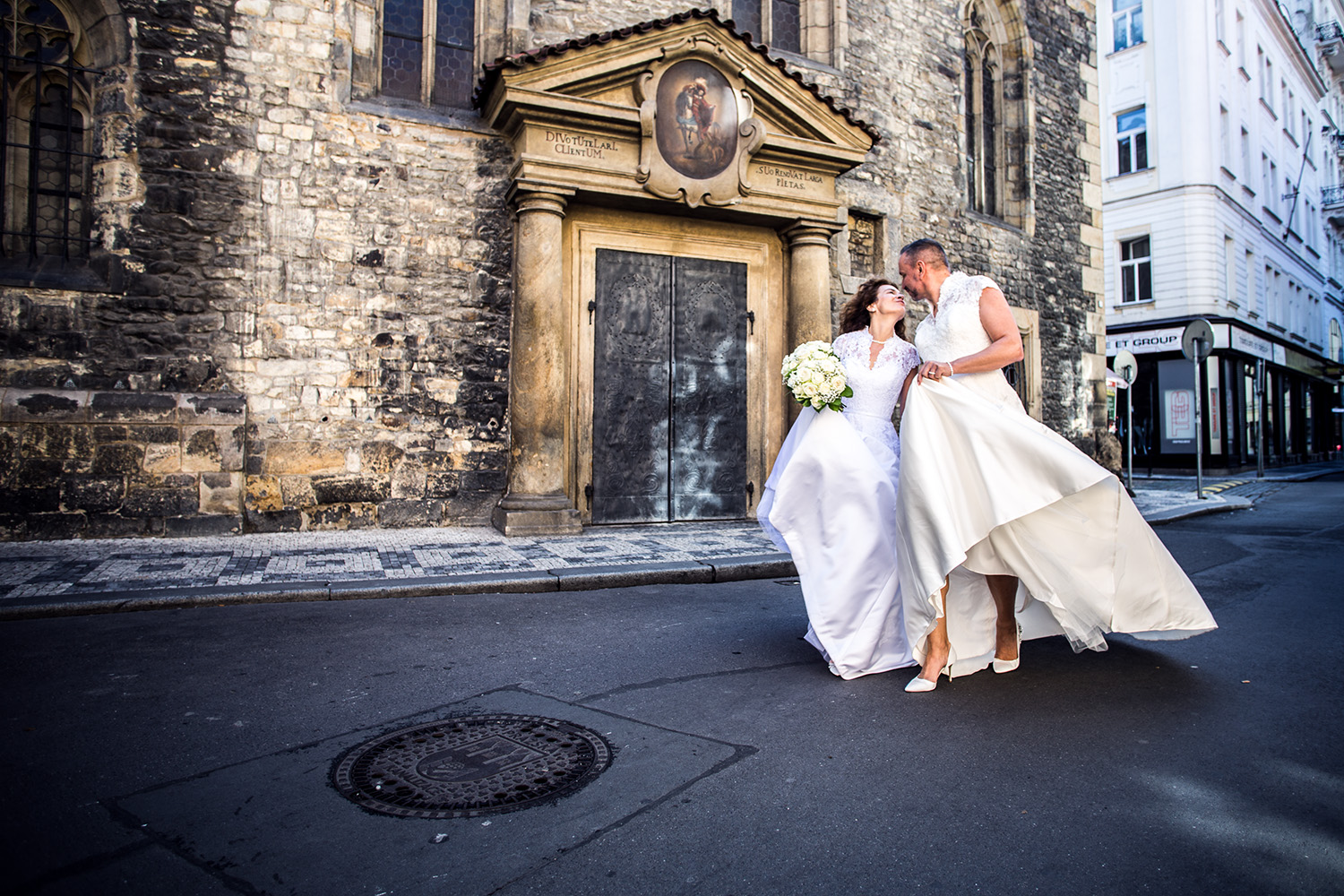
Apparently, Michaela and Vlastimil have reached a similarly free stage, at least when it comes to clothes. When they had a wedding two years ago in one of Prague’s churches, they were dressed almost identically. The photo, in which they are captured in front of the altar in a dress with a train and each with a bouquet in hand, appeared in a report broadcast by the German television RTL, which noticed the picture on the social network. Both spouses remember that the selection of wedding dresses was guided by Vlasta at the rental company. Choosing them in such a way that they fit well and are liked means for him to try many times more variants than for Michaela. “So when we fit into the mall, it’s a no-brainer,” admits Vlastimil. Dressing looks similar at home: they usually choose clothes for Vlasta first, and Michael adjusts to them. With the exception of wedding dresses, they never choose the same model as a rule, which of course does not apply to shoes, which are said to be easily available in size 43. “Even Jimmy Choo is in his 43s,” she says enthusiastically about the well-known designer’s shoes, which they gave each other for Christmas.
It is said that Vlastimil gradually approached Michaela about what type of dresses and skirts really suit him. “Today, thanks to her, I can already see it and choose clothes according to my body type and appropriately for my age,” says Vlasta, adding that he eventually gave away some of his first clothes to friends. In the photos they publish on Instagram, they can be seen in various floral sheath dresses, large evening dresses or perhaps in flowing pleated skirts. And he describes the choice of clothes as a “wonderful adventure”.
The couple decided to start writing the aforementioned Gender Blender blog mainly to give other couples or individuals the courage to dress as they wish in public. They also had a few texts with direct fashion advice in reserve, but they gradually realized that their audience spread all over the world was more interested in inspiration in the form of their photos together than advice. “And without writing any advice, people gradually started to come to us, so we thought it would be enough if we show how we do it,” summarizes the development of Vlasta.
In the end, readers are most interested in what his beginnings were like and how he found the courage to dress. But according to the couple, there is no universal advice, especially if they don’t know what environment the person in question comes from. Although they try to encourage, they also emphasize: Take care of your safety. “We can’t judge whether it’s good to go out in a skirt in Rio,” says Vlasta, mentioning correspondence with a university professor from Brazil, who asked for their fashion advice and sent them photos of his clothes in private messages. And then they talked together about what kind of clothes would be suitable for him in the sultry weather.
In the same way, men are interested in how well it is to communicate their desire to start dressing differently with their partner, to which, according to husbands, there is no uniform answer. “We can’t say spin three times and you’ll go buy a dress,” shrugs Michaela. Nevertheless, it is said that an elderly doctor and municipal representative living in Germany spoke up, to whom it was the photos on Gender Blender that gave him the courage to confide in his wife. “He doesn’t go out dressed like this yet, but when friends are invited home, he puts on the clothes,” says Vlasta and talks about his own recent experience that made him happy. While catching up with the tram, he passed two ladies dressed in gothic style. And then there was a voice behind him: “Sir, sir, it suits you very well.”
“Sometimes it’s so funny, people your children’s age call you that you look good,” he says, and he also credits a situation where he met a little girl with a mother who innocently declared: “Mom, that man looks like our grandmother.” “It’s very varied and interesting for one reason, you get to know each other easily and get to know a lot of new people, which normally wouldn’t happen to you at all,” laughs Vlasta.
We decided to add some events that have already taken place in the distant past, but still could be interesting and inspiring for someone.
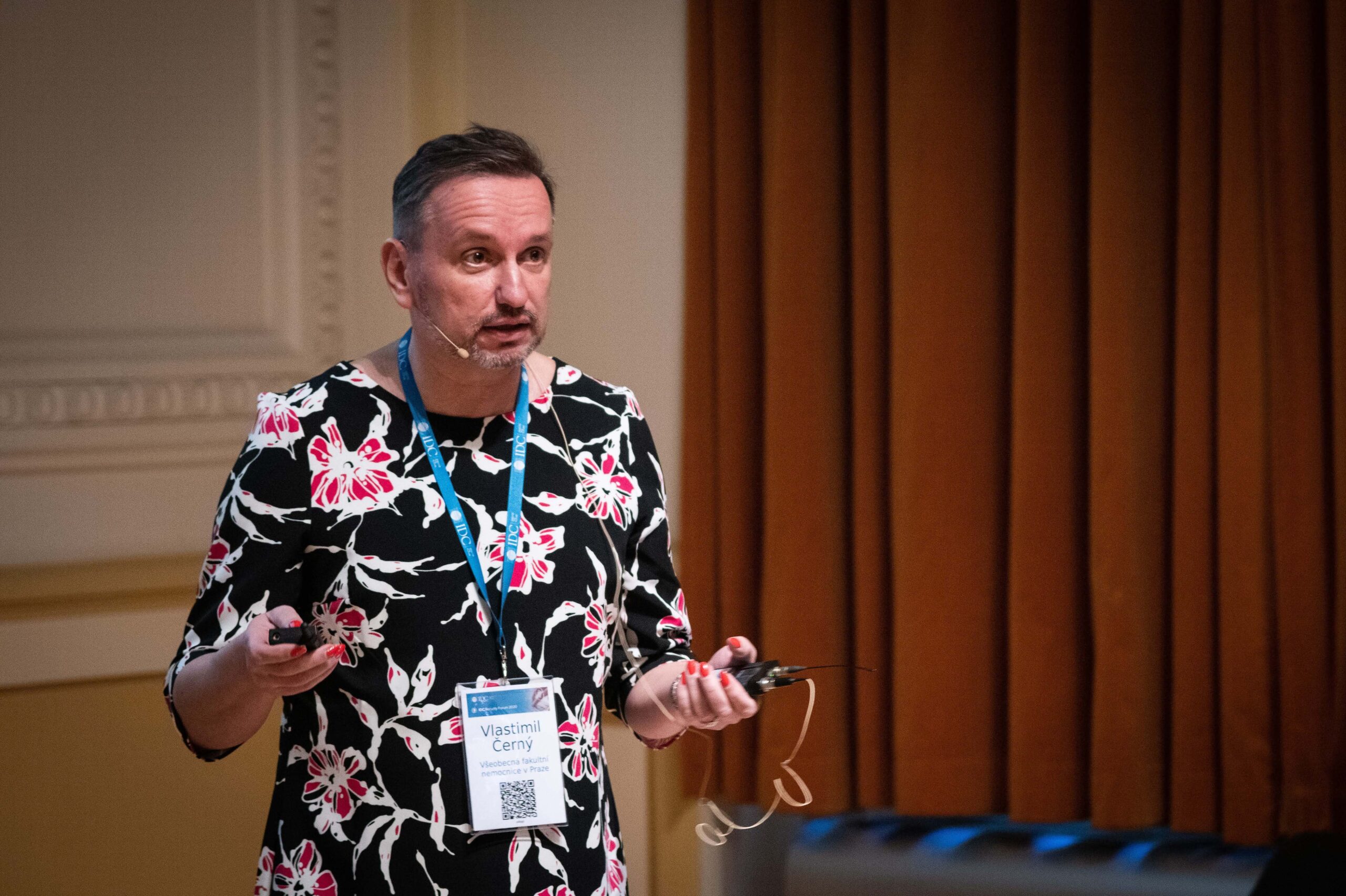
In March 4th 2020, I was as a CIO of the General University Hospital in Prague, one of the speakers at the IDC Security Forum conference at the Czech National Bank. I gave a presentation in one of the parallel sessions on the topic of healthcare users security, who have the impression that they are not “Amazon workers” (I apologize to the Amazon workers), and that they are so intelligent that they cannot fall for any computer attack. Which was completely wrong, of course. 😀
In the fall, an interview with us was published in the British online magazine Injection. We were interviewed by Carola Kolbeck, and it was one of the best and most enjoyable we’ve ever had. It stretched from the original hour to three, and we would certainly have talked longer if we didn’t have other obligations. We hope you enjoy the article as much as we enjoyed the interview. We’d love to read your thoughts in the comments.
Women wear men’s clothes and get hailed for their masculine style. But what happens when the high heel is literally on a male foot?
INJECTION spoke to married couple Vlasta and Michaela, who embrace fashion freedom and celebrate Vlasta’s love for what society labels ‘women’s’ clothes and shoes.
The first thing I notice about Vlastimil and his wife Michaela when I meet them virtually for our interview is their smiles. I have rarely come across an expression so full of light and power, warmth and welcoming. We talk about Prague Pride which just concluded, and its rainbow parade, which took part the previous day. Both Vlasta and Michaela were taking part, with Vlasta organising IBM’s involvement, and Michaela baking cakes for participants.
They say they’re tired from the weekend but appear in good spirits. Just a normal couple chatting to INJECTION Mag on a Sunday night. The only thing is, Vlasta is wearing a women’s dress and has bright pink nails.
The couple are somewhat famous on social media for their open and affirming attitude towards non-binary and gender fluid fashion. Vlasta wears what society normally classifies as ‘women’s clothes and shoes,’ and the nearly 10,000 followers of their Instagram account @genderblender1 are here for it.
The couple met in 2018 and married a year later. Their blog champions fashion freedom and shares details of their journey, as well as tips for anyone looking for advice. Men wearing what’s categorised as women’s clothing is nothing new, looking at celebrities such as actor Billy Porter, fashion designer Marc Jacobs and singer and actor Harry Styles prove. Seeing this reproduced in everyday life, however, is still a rarity. INJECTION Mag spoke to Vlasta and Michaela about their story, issues and triumphs with being authentically themselves, as well as inclusivity and acceptance in the workplace and society.
Michaela, in one of your first blog posts you write about your reaction to meeting Vlasta for the first time in real life. You are very open about your initial thoughts. Can you describe these initial feelings and how they developed?
Michaela: We met on Tinder; his profile was a little bit different than the others because he described what he was looking for and he had also asked a question, wondering if somebody was able to find the answer and I found that interesting. So, I wrote to him and said that, although I’m not the one he’s looking for, I was wondering if the answer to his question was right. And because I had given him the correct answer, we subsequently started exchanging messages. Because I wasn’t the one he was looking for, there was no pressure. It was just fun exchanging messages and having a laugh.
We had this kind of contact via Tinder for a couple of months. Eventually, Vlasta asked me for breakfast, and I said yes. During our conversations, Vlasta didn’t mention that he liked painting his nails and dressing in women’s clothes, but occasionally he would mention that he wasn’t normal, not a regular guy. And I said, that’s OK, nobody is normal. Finally, when we met for breakfast, I was a little bit late and Vlasta was already sitting there, in a T-shirt and jeans. But he had bright orange nails! And I panicked. I thought: ‘It’s impossible this is happening,’ and my second thought was that there must be hidden cameras. But then I remembered our messages and that they always made me laugh. So, I took all the courage I had, and I thought ‘OK, I will sit, and we’ll see.’ We had breakfast, and apart from the initial shock, it was lovely, but I was still thinking: Why?
I had never before met a guy who liked to have his nails painted and at the time I didn’t know that he also liked to dress in skirts and dresses. I couldn’t imagine that there might be a guy who likes that and still wants to meet a woman.
Vlasta, tell us a little about yourself and your journey to defying gender conformed dressing.
Vlasta: Well, one of my reasons is: They are just clothes! So why shouldn’t I be wearing them? I’ve been feeling like this for as long as I can remember. However, it used to be difficult because we were born deep into the communist era so there wasn’t any freedom. Then we went through a revolution and times were changing, not only in the former Eastern bloc, but everywhere around the world. I often say that my brain is divided into two sections: One is highly analytical and the other one is much more creative. I’ve also been playing drums from the age of 16; I have a punk band and we’re still playing. As you go through life you have to think about what’s important to you. Of course, there’s always the question of why I dress in women’s clothes and I say: I just like it, so why not?
Do you remember the first time stepping out wearing what you wanted to wear, Vlasta? How did that feel?
Vlasta: I was scared to death. I thought that, if someone sees me, the world will collapse. And then I found out that this wasn’t the case. Nothing happened. But yes, I was scared but at the same time I felt excited, I liked it. It’s just like a drug. It felt good and I wanted to feel that feeling again. Of course, it wasn’t from zero to hero. At first, I was really scared to go out in the evenings or even just to open the front door. But I had to find the courage to open the door and to walk outside.
And Michaela, how did you feel the first time stepping out with Vlasta wearing whatever he wants?
Michaela: I didn’t care. But what did surprise me was, and this will probably never change, that I’m invisible when I’m with Vlasta. As a woman, you are used to people looking at you. They want to talk to you or compliment your outfit and when I’m with Vlasta, none of that happens. People want to talk to him and all the attention is on him. At the beginning, this was really exhausting for me, all this attention whilst we were just trying to do regular stuff, like buying milk.
Vlasta: Sometimes, when we’re out and about, and I am standing somewhere, maybe waiting, and I’m looking around, I see that people are staring and I’m wondering: ‘What’s the reason, why are they staring?’ And then I realise: Oh, yes, it’s me. [laughs]
In one of your social media posts you highlight the prejudices Vlasta faced looking for work. What can be done to make the world of business more inclusive?
Vlasta: That’s a difficult question. Usually, it’s not the policy of the company but the people that are the problem. So even in companies which are very open to diversity and inclusion, you can find that people internally aren’t so in sync with the company values and policies. Of course, they don’t say that being different is a reason they won’t hire you and sometimes it really just isn’t the right fit.
What I’ve experienced, however, is that if you have really happy employees who don’t have to hide something, then they’re much better employees than if you have employees who can’t be themselves, who live in constant fear that their true identity might be a problem in their workplace. That would be my message to these companies: You have no idea what kind of power you have, to help those people and to help them find their way in life, and to be themselves.
What are your biggest triumphs so far in being truly yourself?
Vlasta: I think the biggest triumph is that feeling of freedom and that’s something you don’t even realise before you reach that stage. When I was in my 40s, I still had really bad acne. Then I met Michaela and she helped me with my confidence. And like a miracle, because of this internal freedom, I don’t have acne anymore. I have only one life, so why should I care what these people in the streets, who I’ll probably never meet again, think about me and what I’m doing? I’m not hurting them or anyone else.
You got married in 2019, just before Covid, and your wedding dresses are beautiful. Did you go wedding dress shopping together?
Vlasta: Well, around this time in 2019, was the Prague Pride Parade. On the Friday before we were having some beers in a restaurant and afterwards we were passing some wedding studios and so we stopped and went in. There was a young girl working and we told her that we’d like to try some wedding dresses. And she just said: ‘Yeah, OK.’
Michaela asked her to start with me as it will be much more difficult for me to find a dress which will fit. When we found my dress, we asked if they had the same dress in Michaela’s size, and they did. Afterwards, we were talking about our wedding and that it would probably take a year or so to plan. And I asked her why we should wait for another year because we won’t be any younger or any prettier! That Sunday, we had lunch with Michaela’s parents and I asked them for permission to marry their daughter. After that, we bought our wedding rings, spoke to a priest and booked a restaurant. So, within three days, we had everything arranged for our wedding.
Michaela and Vlasta, finally, what advice would you like to give to a society that is still so full of prejudices, loves to categorise people and defines people as normal or abnormal?
Michaela: People should try to imagine how it would be if it was their children. Some people think that they and everyone around them is ‘normal,’ but that is just not the case. So what would you do if one of your children was homosexual, or liked to dress differently? Would you say ‘we don’t like you anymore’?
Also, it’s really about something much bigger here. One question we get a lot on our blog and social media is if I like men wearing women’s clothes. And I say: ‘No. I don’t specifically like men wearing women’s clothes. I like Vlasta.’ And that’s it. It doesn’t matter if you wear a dress or jeans. You like the person.
Vlasta: Social prejudices will always be there. It depends what we, in society, do with them. For example, lots of men write to us, saying how lucky I am that Michaela allows or tolerates me wearing dresses and high heels. Or that it should be “normal and allowed by society” to dress the way we want, and they point out that women wear trousers or men’s wear.
We try to explain to them that this is a completely wrong mindset. Because Michaela doesn’t “allow” me to do anything. She rather tells me that she can’t imagine that someone would tell her what she can and can’t wear. And she is not “tolerating” anything either. It’s about our freedom and happiness. You can’t wait for someone to “allow” you to wear a skirt or a dress. After all, no one forbids men. If men want to wear what they want, they have to fight for it themselves, just like women fought for it. No one told women “Okay, and from now on you can wear trousers, you’re allowed.” They had to go their own way and overcome social prejudices. And it wasn’t just about trousers, but about the overall emancipation of women.
Michaela: A lot of our followers on social media ask us for our advice to help them and we always say it’s difficult for us to give advice if we don’t know their lives, families and environment. There are still places in this world where our advice, to just go out and wear what you want, might get them killed, attacked or seriously injured. Our life we see through our lenses, but the circumstances may be completely different a couple of hundred of kilometres down the road. Sometimes, when people are shouting something at us, I just say that this is the price we pay for the freedom to do what we like, to be who we want to be, because, fifteen, twenty years ago, they would probably have just locked you up in a psychiatric hospital. So we’re grateful for freedom and for what we have achieved so far.
Vlasta: The world is changing and within our generation dressing as you please might be difficult for some to digest. However, for our kids it’s less of a problem. Prague Pride Parade was attended by 60,000 people and the majority of them were young. They are open minded, driving change. To give you a last example, in the Czech Republic, 16 to 17 year olds who go to school also learn ball dancing in the evening. Once their course is finished, they celebrate by having a formal evening ball, where they invite their parents to dance. Michaela spoke with her son to ask if he felt comfortable with me wearing a dress. If not, she’d told him, I’d be happy to wear a suit and tie. Her son’s response was: “Mum, everyone knows. He can wear a dress.”
As we come to the end of the interview, I want to stay online and keep talking to Michaela and Vlasta. There is an incredible force of determination and conviction which radiates from them, that living life on our own terms and setting an example by being truthful to ourselves is a priceless way to contribute positively to society and give courage and strength to others during their own struggles with adversity.
Although they are in no way delusional about the problems and prejudices in a modern society and the differences in cultures across the world, they are hopeful and excited for the future, one that allows everyone to overcome gender-biased stereotypes and find confidence in dressing whichever way they want.
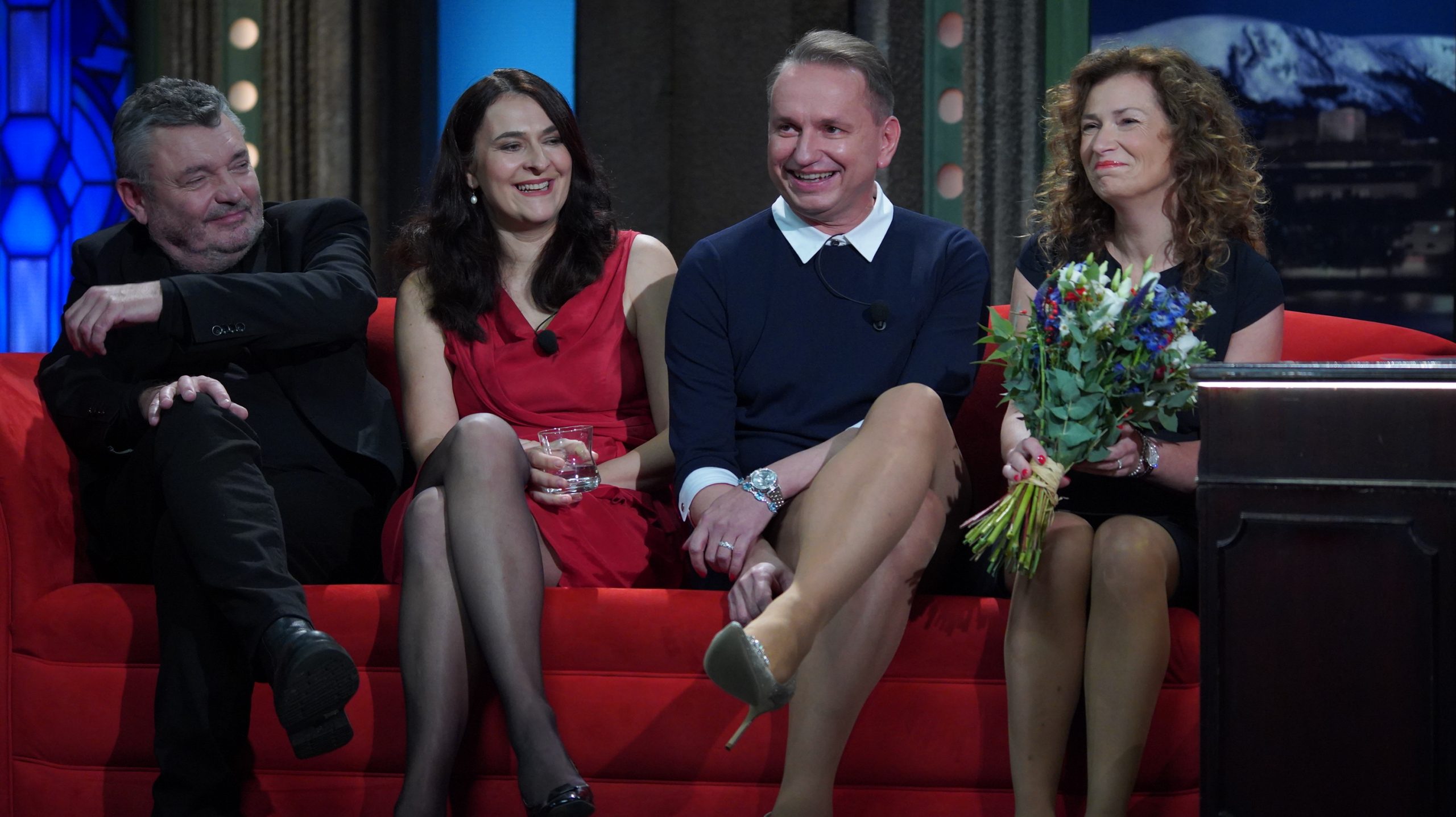
We are very proud we have been invited and featured in one of the most popular TV talk show in Czech Republic the Show Jana Krause. It was very pleasant and funny experience as always, as Jan Kraus is very smart & funny talk show host, we have enjoyed it very much and we hope he enjoyed it too. 😉
Teaser from Jan Kraus official site
In the end, we move into the world of fashion, otherness and breaking down stereotypes with husband and wife Michaela and Vlastimil Černý, who in the words of the moderator “do not observe the bad habit that a man dresses differently than a woman.” “As we are not completely traditional, it is not completely traditional for a man to receive a flower,” says Mrs. Michaela as she hands over the beautiful bouquet to Jan Kraus, remembering their first date. “Vlasta came with varnished nails, but in men’s clothes.” “And that was enough to scare her enough and to keep me out of the draw,” adds Vlastimil, who is not ashamed of his extravagance at work. “For example, a small selection in men’s fashion led me to do that,” he explains his motives. “Look at that selection somewhere in the mall. Three floors of women’s fashion and then somewhere in the basement of men’s fashion.” Clothes are said to be an expression of freedom for him and being able to do whatever he wants. “I said to myself that I have only one life, only one attempt, so I will do what I want.” What complications does Vlastimil’s attitude in everyday life bring? How did Michael’s friends view their relationship? And what harmonized models will the couple show us in a small fashion show? You will learn this and much more in this part of the Jan Kraus Show!
Videos
You can see the whole broadcasted episode, pre-filming questions and what didn’t fit into the show in the following videos. Unfortunately, the videos are only in Czech language and do not contain English subtitles. 🙁
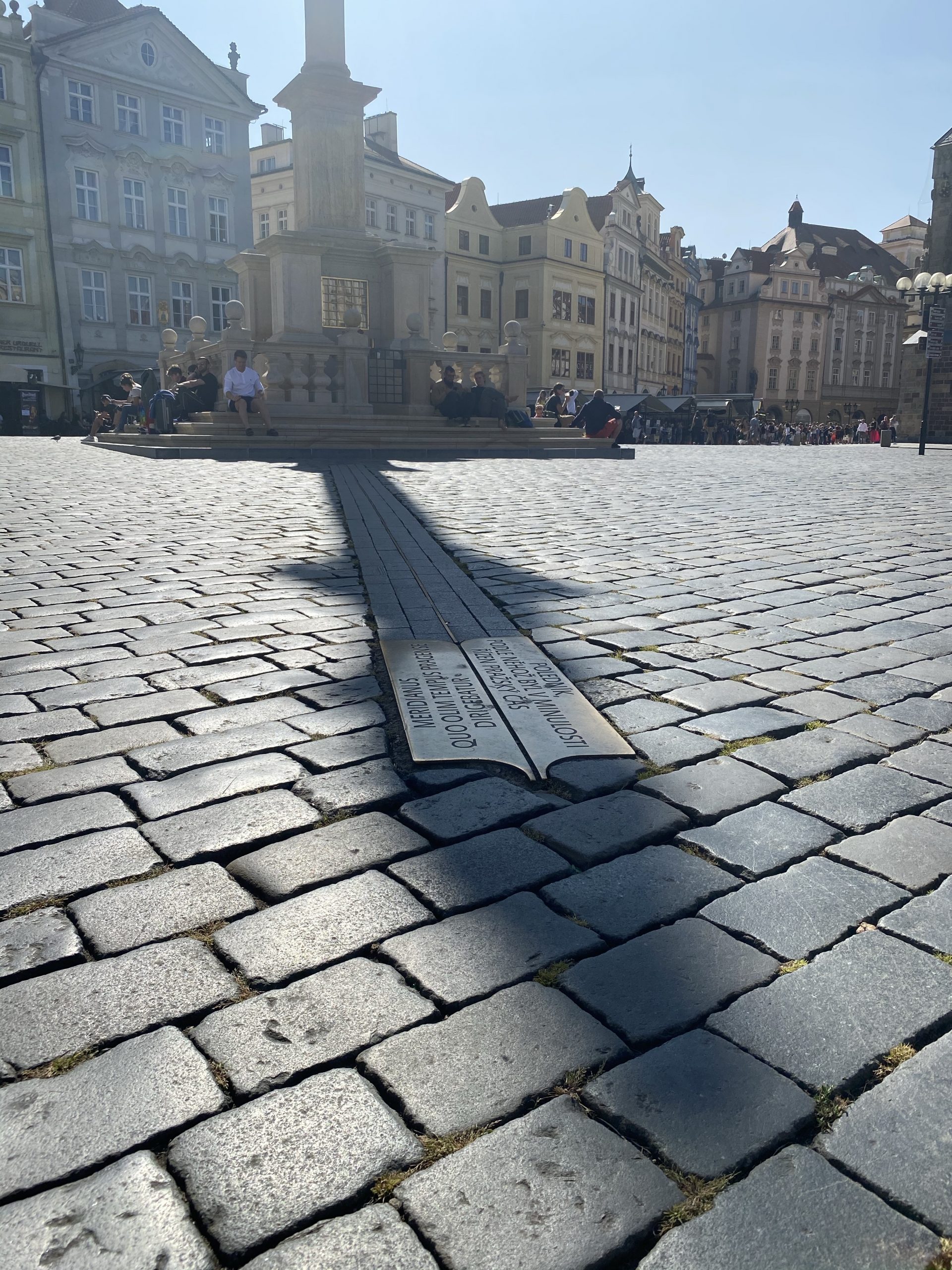
Today was a beautiful warm sunny day in Prague, so we went for a walk to the newly built replica of the original Marian column on the Old Town Square. Column stood here for almost 370 years, and was overthrown by an enraged mob after the declaration of Czechoslovak independence in 1918.
The Marian Column on the Old Town Square also indicated the local Prague time. Although mechanical clocks date back to the 14th century and the Old Town Astronomical Clock dates back to the early 15th century, their adjustment depended on solar time. Each village had its own time given by the meridian that passed through the village. The line that defined the Prague meridian was marked by three strips of paving stones and headed north from the center of the column.
After a hundred years of walking around the square without the column, it was no longer clear to many of us why the meridian was marked in the pavement. But with the construction of the replica it became clear. So today we went to see how the column measures noon again. The shadow showed noon thanks to daylight saving time at 12:58 – 2 minutes ahead. 🙂
Michaela picked for me combination of polka-dot dress with new jacket. We were surprised at how well it matched together. On the way home we stopped at the Swarovski store to look at some bracelets, and then we were glad to relax with cafe in the House of the Black Madonna.
We have seen Tosca at The State Opera yesterday. The performance was breathtaking. And we finally enjoyed the opportunity to wear evening dress. 🙂
Due to the covid pandemic, the performance was moved from the spring term, and took place in a slightly modified mode. The individual groups of visitors were separated from each other, including separate entrances. We thought for a while if we should go at all, but in the end we were glad we did. Even though the performance was sold out, in the end one third of visitors did not arrive. So even the social distancing was artificially created.